
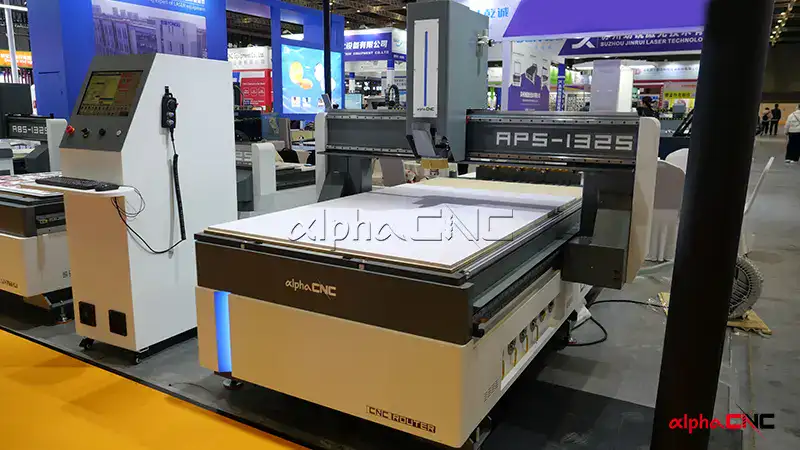
Introduction to CNC Routers for Woodworking
CNC routers for woodworking are common core machines for furniture factories, cabinet manufacturers, wooden door manufacturers and various custom woodworking businesses.
Different from traditional woodworking equipment, this type of CNC router controls the machine head movement through a computer and can complete various woodworking processes such as cutting, drilling, carving, and shaping. A wood CNC router provides stable machining accuracy, helping maintain consistent workpiece dimensions and reduce variation during batch production.
According to different production needs, the CNC router for woodworking has multiple configurations to choose from, including 3-axis, 4-axis, 5-axis, automatic tool changer (ATC), and large-format CNC routers, which can match the production and processing needs of different customers.
This guide will introduce the main types, core components, application scenarios, and key points for selection in detail, helping you choose the most suitable CNC router for your woodworking business.
What Is a CNC Router Machine for Woodworking?
A woodworking CNC router is a machine that uses a computer numerical control system to automatically control the tools to cut, carve, groove, drill, and shape materials such as wood, MDF, and plywood.
According to Encyclopaedia Britannica, computer numerical control (CNC) systems enable machines to perform cutting and shaping operations with high precision, repeatability, and automation. These characteristics make CNC-based equipment particularly well suited for manufacturing environments where consistent quality and efficiency are essential, including woodworking and furniture production.
- Source: Encyclopaedia Britannica – Numerical control (NC)
- Direct link:https://www.britannica.com/technology/numerical-control
Understanding CNC Router Types and Capabilities
The world of CNC routers for woodworking offers diverse options to suit specific needs.
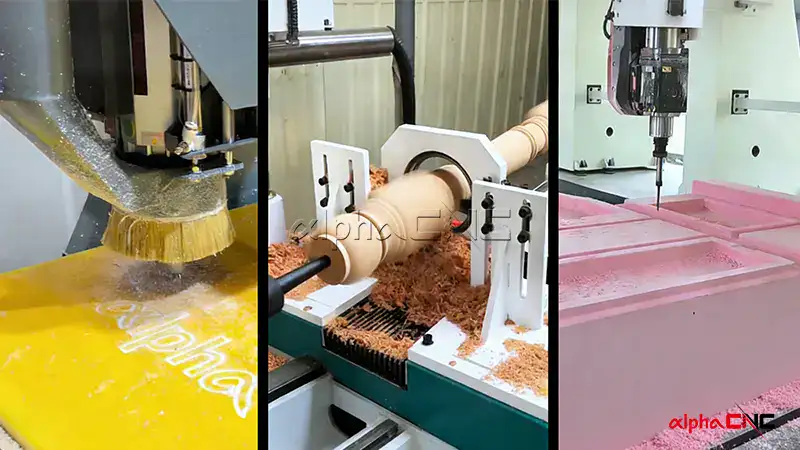
3-Axis, 4th-Axis, and 5-Axis CNC Routers
- 3-Axis Machines: These are the most common, offering movement along the X, Y, and Z axes. They are ideal for standard routing tasks, flat surface carving, and basic 2D engraving. They are a fantastic starting point for hobbyists and small businesses.
- 4th-Axis Rotary Machines: These add a rotational axis, allowing for the machining of cylindrical workpieces like table legs or spindles, enabling rotational symmetry projects and multi-angle profiling.
- 5-Axis Machines: With two additional rotational axes, these machines offer unparalleled flexibility for complex 3D contouring, significantly reducing setup time and achieving high precision on irregular surfaces. These are typically found in advanced commercial applications.
Choosing the Right CNC Router Machine Sizes and Working Areas
The work area of your CNC router is a critical factor.
Popular CNC Router Table Sizes: 2×2, 4×4, 4×8,and 7×10
- 4×8 Tables: This is the industry standard for large-scale production, capable of handling full-size cabinet components and supporting commercial-grade workflows. When searching for 4×8 CNC routers for woodworking, this size offers maximum efficiency for many woodworking businesses.
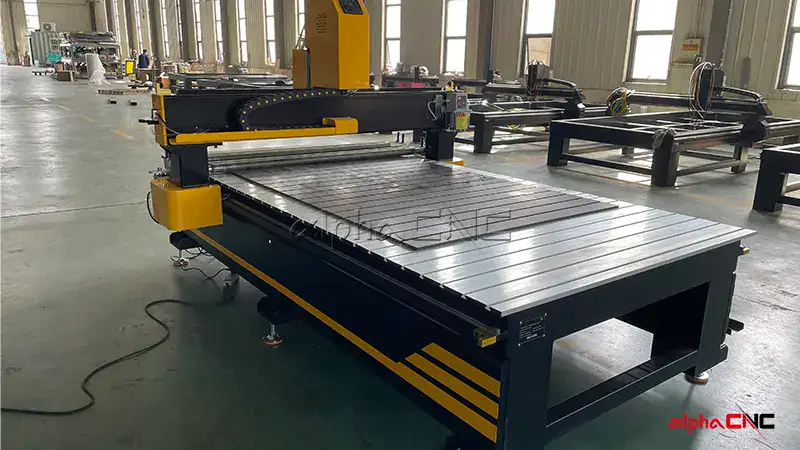
- 7×10 Tables: 7×10 CNC router machines are built for large-format woodworking and industrial production environments. This table size allows to process oversized panels, nested cabinet jobs, and multiple parts, significantly reducing material handling time. A 7×10 table supports higher output, better nesting efficiency, and smoother integration.
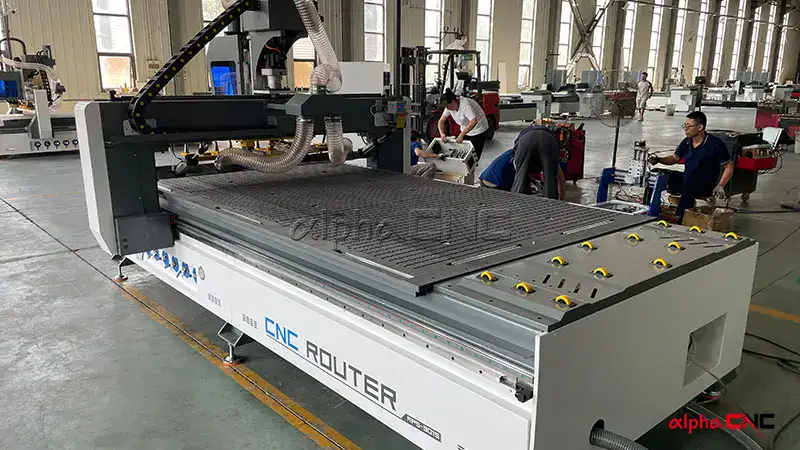
- 2×2 Tables: Ideal for small hobby projects, these have a compact footprint and offer a low-cost entry point into CNC.
- 4×4 Tables: A versatile mid-size option, suitable for cabinets, furniture components, and a balanced performance-to-space ratio.
Key CNC Router Machine Components and Considerations
Selecting the right CNC router involves understanding its core components.
Spindle Kits, Motors, and Frames
- The spindle kit is the heart of the cutting process, housing the motor assembly, collet, and cooling system.

- Motors drive the machine’s movement; stepper motors are common in entry-level machines offering cost-effectiveness, while servo motors provide higher precision and speed for demanding applications.

- The frame provides stability; steel frames offer superior durability and rigidity, while aluminum frames are lighter and easier to assemble, often found in smaller or portable machines.

Component | Typical Hobbyist Choice | Our Commercial Recommendation | Key Benefit of Recommendation |
Frame | Aluminum | Steel | Superior rigidity, vibration dampening, longer lifespan |
Motor | Stepper | Servo | Increased accuracy, faster movement, better high-speed performance |
Spindle (kW) | 1.5 - 3 kW | 5 - 10 kW | Handles hardwoods efficiently, faster material removal |
- Based on our ten years of industry experience, we recommend using a steel frame for CNC routers in woodworking applications. This not only provides superior durability and rigidity but also ensures consistent high-quality output even during prolonged continuous operation. Especially for commercial use exceeding 8 hours daily, a steel frame effectively reduces errors caused by vibration and deformation.
- Regarding motor selection, while stepper motors are suitable for beginners and small projects due to their cost-effectiveness, we strongly recommend servo motors for commercial applications requiring higher precision and speed. Servo motors significantly improve processing accuracy and speed, reducing the processing time for complex projects by an average of approximately 15%.
- As for woodworking cnc routers spindle power, our recommendation is: for hobbyists and softwoods, a 1.5 kW to 3 kW spindle is sufficient, while for large-scale commercial production requiring the processing of hardwoods and continuous operation, a 5 kW to 10 kW spindle is recommended. These higher-powered spindles ensure efficiency and cutting quality during extended operation.
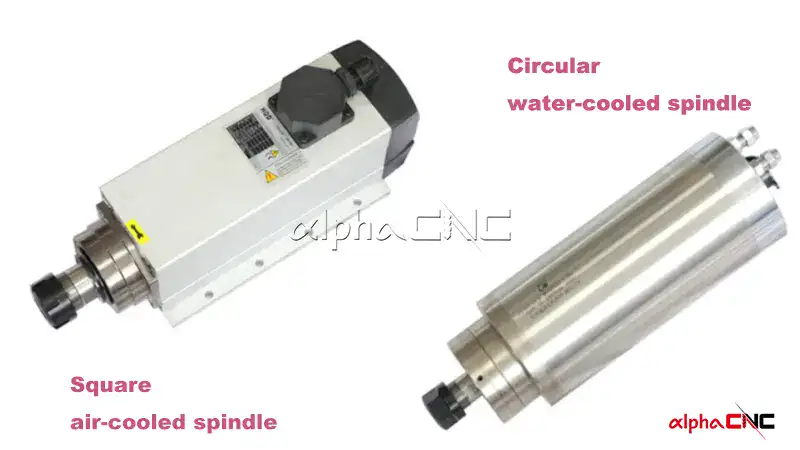
Choosing the Right Spindle for CNC Routers for Woodworking
The spindle determines cutting quality and productivity.
- Air-cooled spindles: Simple, low maintenance
- Water-cooled spindles: Better for long-duration, high-load commercial jobs
- Selecting the right spindle ensures optimal performance across hardwoods, MDF, plywood, and composite materials.
Software and Controls for a CNC Router Machine
Effective use of a CNC router machine relies on intuitive software.
- CAD (Computer-Aided Design) software like Fusion 360 or SketchUp is used to create designs.
- CAM (Computer-Aided Manufacturing) software then translates these designs into toolpaths and G-code.
- The controller is the machine’s brain, and it must be compatible with G-code and your chosen motor drivers for real-time control.

Workholding, Bits, and Tooling for CNC Routing
Secure workholding and the right tooling are essential for quality cuts.
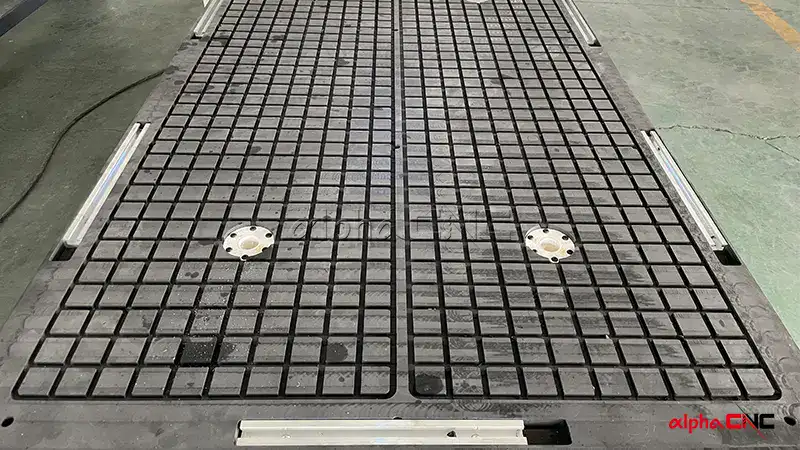
- T-slot tables offer a modular fixturing system, while vacuum tables provide a strong hold for flat surfaces without clamps, ideal for large panels. A spoilboard is crucial for protecting the machine’s table; proper installation and leveling ensure accuracy.
- Woodworking bits come in various profiles (straight, flush-trim, chamfer, V-bit, ball nose) for different tasks.
- Understanding feed and speed is vital for smooth finishes and tool longevity. Regular bit maintenance and ensuring proper collet seating before each job are critical for consistent results.
Setup, Calibration, and Maintenance Best Practices for CNC Routers for Woodworking
Proper setup extends machine life and ensures accuracy.
Key steps include:
- Machine leveling and alignment
- Spindle runout checks
- Tool length probing
- Test cuts using scrap wood
Routine maintenance includes:
- Lubrication schedules
- Belt inspections
- Dust collection cleaning
- Spindle bearing service tracking
Regular maintenance is key to the lifespan of your CNC router machine.A lubrication schedule for linear rails and lead screws, regular inspection of belts and drives, maintaining the dust collection system, and tracking spindle bearing service intervals will prevent costly repairs and ensure optimal performance.
Safety First: Operating CNC Routers Responsibly
Safety is paramount when operating any CNC equipment.

Safety Protocols and Dust Extraction
Operators must use appropriate Personal Protective Equipment (PPE), including safety glasses, hearing protection, and dust masks. Emergency stop procedures and lockout/tagout protocols must be clearly defined and practiced. For commercial use, a robust dust extraction system is crucial for both operator health and machine longevity, complying with industry standards.
Buying Woodworking CNC Routers for Sale for Commercial Use
For businesses evaluating woodworking CNC routers for sale, consider:
- Upfront vs. operating costs
- Production volume and throughput needs
- Warranty, technical support, and spare parts availability
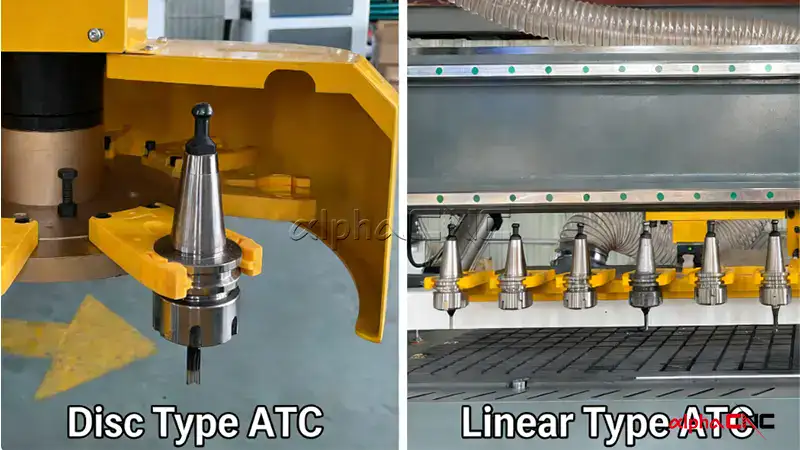
- Automation options such as ATC and vacuum systems
When comparing brands and models, look for features like Automatic Tool Changers (ATC) and suitable spindle power for your intended applications, especially when considering larger formats like 4×8 CNC routers for woodworking.Commercial buyers often achieve ROI within 12–24 months, depending on production scale and pricing strategy.
We’ve observed that the integration of features like Automatic Tool Changers (ATC) and efficient dust collection systems can directly impact operational efficiency. Our data shows that machines equipped with ATC experience an average of 20% less downtime per week compared to manual tool changes, especially on jobs requiring multiple tool paths. Furthermore, a well-designed dust collection system can reduce component wear by up to 30%, lowering long-term maintenance costs.
Stage 1: Design & Planning
Description: Creating project plans and toolpaths using CAD/CAM software.
Key Considerations: Software choice, design complexity.
Data Relevance: This stage’s efficiency is primarily software-dependent.Based on our extensive industry experience and client feedback, We strongly recommend Cabinet Vision for comprehensive functionality, industry-standard status, powerful integration, and vast user base make it the undisputed leader in the North American cabinet industry. As its primary competitor, Microvellum also enjoys significant recognition and a substantial user base in the same market.
Data Relevance: While critical, this stage’s efficiency is primarily software-dependent.
⬇
Stage 2: Material Setup & Fixturing
Description: Preparing the material and securing it to the CNC router bed.
Key Considerations: Workholding methods (T-slot, vacuum), material handling.
Data Relevance: We’ve found that for lighter materials or intricate cutouts, vacuum tables offer superior holding power and reduce setup time by an average of 10%-20%. Conversely, for heavier or less uniform materials, robust T-slot solutions, combined with strategic clamping, have proven most effective, minimizing workpiece shift and ensuring cut accuracy, often by as much as 5%-10% compared to less secure methods.
⬇
Stage 3: CNC Machining Process
Description: This is the core where the CNC router precisely cuts and shapes your material. Our most impactful data points are evident here.
Sub-Process: Tool Changes、Dust & Debris Management
Key Considerations: Tooling selection, feed rates, spindle speed, workholding integrity, dust extraction effectiveness.
Data Relevance:
Manual Tool Changes vs. Automatic Tool Changer (ATC) Equipped: Based on our project analysis, facilities with ATC-equipped machines experience an average of 20%-30% less downtime due to tool changes compared to manual systems. This translates to a significant increase in operational uptime and improved overall production efficiency.
Inadequate Dust Collection vs. Optimized Dust Collection: Our historical maintenance logs reveal that machines with inadequate dust collection systems incur up to 15%-20% higher repair costs over their lifespan due to increased wear and tear on components. Conversely, optimized dust collection significantly boosts machine reliability and contributes to lower long-term operating expenses.
⬇
Stage 4: Finishing & Assembly
Description: Post-machining steps like sanding, joining, and sealing.
Key Considerations: Quality of cuts from the CNC, material properties.
Data Relevance: Directly benefits from the precision achieved in Stage 3.
⬇
Stage 5: Delivery & Revenue Generation
Description: Shipping finished products and generating income.
Key Considerations: Project completion time, order fulfillment capacity.
Data Relevance: Data Relevance: The substantial gains in operational uptime and throughput achieved in Stage 3 (e.g., through ATC systems and optimized dust collection) directly contribute to faster project completion. We’ve observed that companies leveraging these efficiencies can increase their order fulfillment capacity by an average of 10%-20%, leading to a more robust revenue stream and a stronger competitive advantage.
Overall Business Impact & Return on Investment (ROI)
- Average Commercial ROI Timeframe: 12–24 Months
- Key Influencing Factors:
- Machine Purchase Price
- Material Costs
- Labor Efficiency (significantly boosted by ATC and good dust collection)
- Production Volume
- Product Pricing Strategy
- Reduced Downtime & Maintenance Costs (from optimized systems)
Conclusion: How to Choose the Best CNC Router for Woodworking

Investing in a CNC router for woodworking is a significant step towards enhanced productivity and creativity. Selecting the right CNC router requires balancing budget, project scope, table size, spindle power, and automation needs. By understanding the different machine types, components, software, and crucial setup procedures, you can confidently select the right CNC router machine for your needs, whether you’re a hobbyist exploring woodworking cnc routers for sale or a business owner optimizing production. For most commercial workshops, 4×8 CNC routers for woodworking provide the best combination of capacity, efficiency, and scalability.
Ready to revolutionize your woodworking? At Alpha CNC, we design, manufacture, and sell a comprehensive range of CNC machines, from versatile routers to specialized five-axis centers. We’re your one-stop solution, serving over 100 countries with 24/7 support and flexible payment options.
Contact Our Expert Team
📞Phone
+8618615409281
info@alphacnc.com
Let’s build your perfect machine.
Contact us today for a free consultation and custom quote!


