
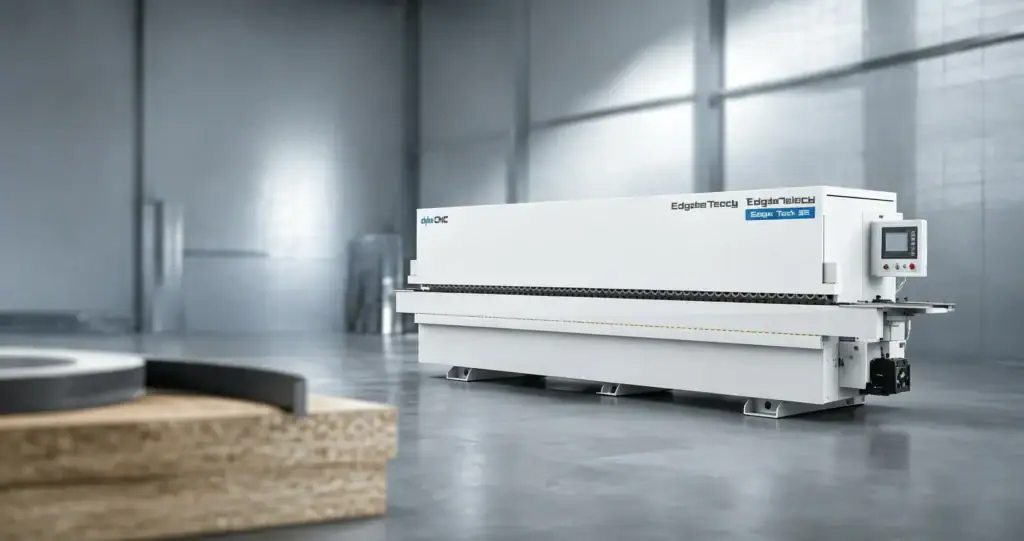
Edge banding machine is a key machine in the production of panel furniture, but different functions correspond to different processing requirements and edge banding effects. This article will introduce the common functions and their roles, helping you choose the right functional configuration according to your actual needs.
1. What is an Edge Banding Machine?
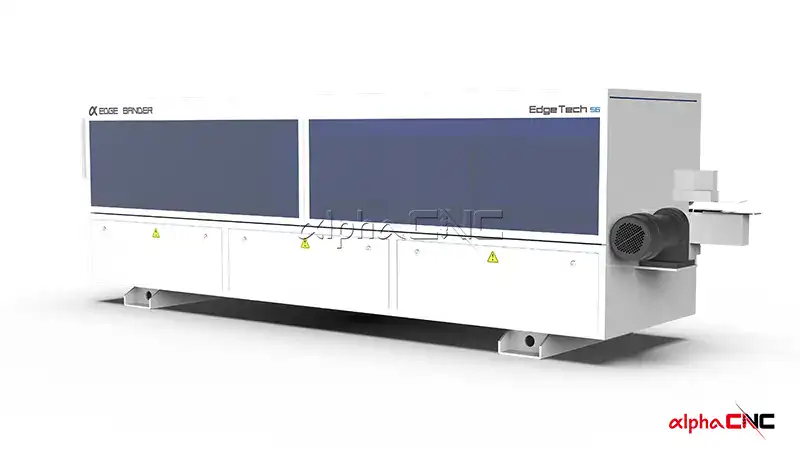
Edge banding machine is a woodworking machine that mainly functions to paste edge banding strips, trim edges, and perform precision machining on the sides of sheet.
Sealing the exposed section of the board can prevent moisture, formaldehyde release, aesthetics, collision and wear. High quality edge bander can not only improve the edge quality of the board, but also reduce manual post-processing procedures, improve edge banding quality and production efficiency, and reduce production costs. It is widely used in the production of panel furniture such as cabinets and wardrobes.
2. Basic Functions of Edge Banding Machine
Gluing System
- How It Works
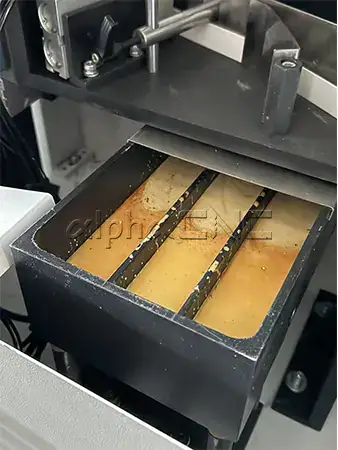
Heat and melt the glue in a glue pot, evenly apply it to the edge of the panel, and then firmly bond the edge banding to the end face of the board through a pressure roller to complete a stable edge banding.
- Key Benefits
There are usually two options: upper glue pot and lower glue pot. The use of EVA glue in the lower glue pot can meet the production needs of traditional edge sealing; EVA glue and PUR glue can be used in upper glue pot, which is more suitable for high demand applications such as thick door panels. The adhesive adheres evenly to the end face of the board, reducing the risk of adhesive cracking, moisture, and detachment in the later stage.
- Who Needs It
Small and medium-sized furniture factories can choose EVA lower glue pots; factories that produce indoor doors, thick cabinet door panels, high-end moisture-proof furniture, or undertake high-end export orders are more suitable for configuring PUR upper glue pots.
Edge Band Feeding & Pressing
- How it works
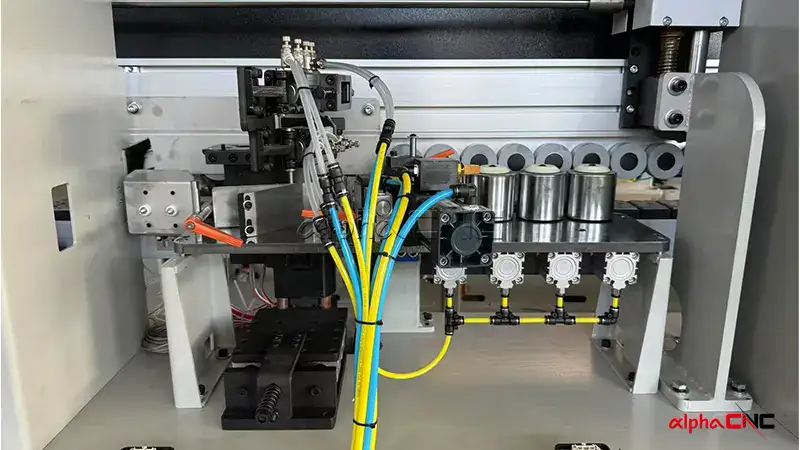
After gluing, the edge banding is synchronously fed onto the sheet and continuously pressed by the pressure roller group to make the edge banding tightly adhere to the end face of the sheet.
- Key benefits
Ensure that the edge banding is tightly adhered to the board, reducing loose bonding, hollowing, and edge banding tape peeling, and minimizing manual cost and waste.
- Who needs it
Suitable for edge banding production lines such as panel furniture, whole house customization, cabinet and wooden door processing, it is the basic process of edge banding processing.
End Cutting
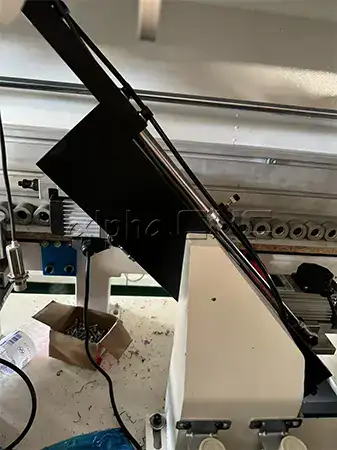
- How it works
Divided into single guide rail and double guide rail structures, the excess edge banding material at the front and rear ends of the sheet is cut by a motor.
- Key benefits
Single guide rail can meet common production needs. Double guide rail provides high-speed end cutting, which ensures stable and fast cutting. It reduces end edge banding defects such as uneven edge banding lengths and edge curling.
- Who needs it
Single guide rail is suitable for small processing plants; Double guide rails are suitable for medium to large furniture factories and continuous mass production lines.
Trimming
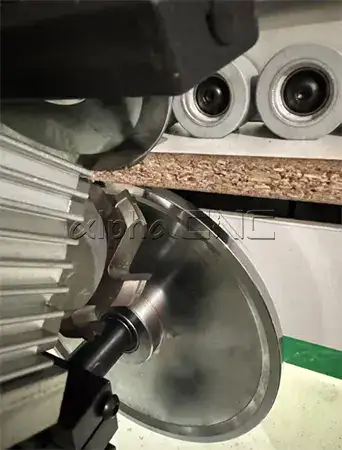
- How it works
It includes two processes: rough trimming and fine trimming. First, scrape off the excess edge banding material on the top and bottom of the board for rough trimming. Fine trimming is process on the basis of rough trimming to create smooth R-shaped transitions. Some production lines with limited budgets can only retain the fine trimming modules.
- Key benefits
Eliminate the excess edge banding material from the board, making the edges smooth and rounded, reducing sharp edges and improving the finished product effect.
- Who needs it
Rough and fine trimming are suitable for most custom furniture factories such as cabinets and wardrobes; Small processing workshops with limited budget and low production capacity can only be equipped with precision trimming processes.
Scraping
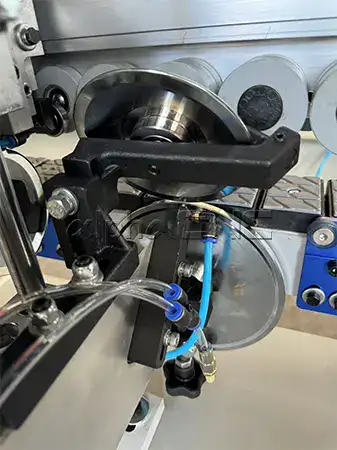
- How it works
Basic edge scraping to remove residual wavy knife marks after finishing; Further clean the residual adhesive lines at the edges of the board with a flexible flat scraper.
- Key benefits
Reduce uneven marks and residual glue after fine trimming, making the edge banding smoother; Flexible flat scraping can reduce visible adhesive lines and improve the edge sealing effect of dark colored boards.
- Who needs it
Basic edge scraping is suitable for conventional edge sealing production; Flexible flat scraper is suitable for factories producing dark colored boards, high-end customized furniture, and export furniture.
Polishing
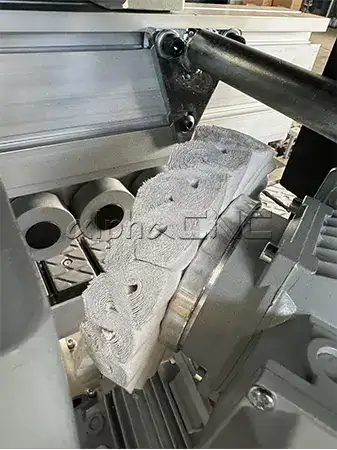
- How it works
Relying on the polishing roller to polish the surface of the edge banding at high speed, smooth out fine scratches, and unify the gloss of the board and edge banding.
- Key benefits
Improve the roughness and matte appearance of the edge banding surface after scraping, reduce the gloss difference of dark boards, and make the edge banding more natural.
- Who needs it
Suitable for manufacturers of panel furniture; Especially suitable for dark decorative panels, acrylic edge banding, and whole house customization factories with high requirements for finished product appearance.
3. Advanced Optional Edge Banding Functions
Pre-Milling
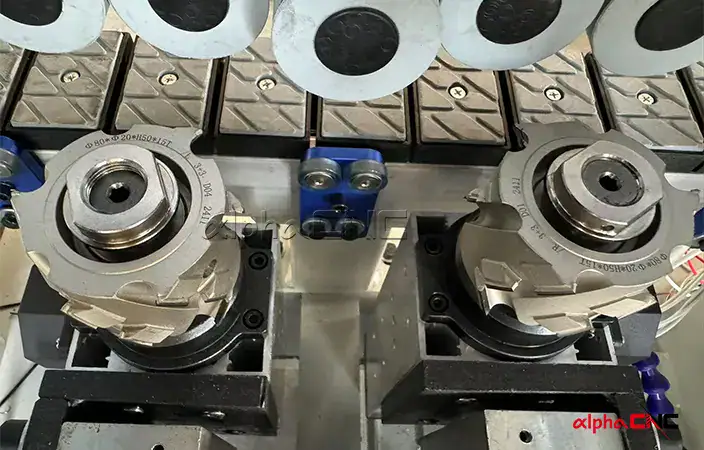
- How it works
The pre-milling cutter group is installed at the forefront of the edge banding process. Before the edge banding of the sheet, it cuts and removes the broken edges, burrs, and uneven surface caused by the cutting of the sheet, and re-trims the sheet to create a regular vertical end face.
- Key benefits & production problems solved
It repairs edge defects caused by cutting, such as chipping and wavy edges. It reduces the gaps and obvious glue lines after edge banding, making the edge banding tighter and reducing rework and defect rates.
- Who needs it
Suitable for medium to large furniture factories, factories that produce cabinets in bulk, and factories that customize wholehouse panels, especially for materials with fragile edges such as particle board and MDF, as well as export orders with high requirements for edge banding quality.
- Is it worth upgrading?
Based on our experience serving different furniture production lines, pre-milling is one of the features with a high return on investment for improving edge stability. It can repair the broken edges and unevenness caused by cutting in advance, reducing subsequent rework, so it is usually worth configuring for batch production and export furniture orders.
Corner Trimming
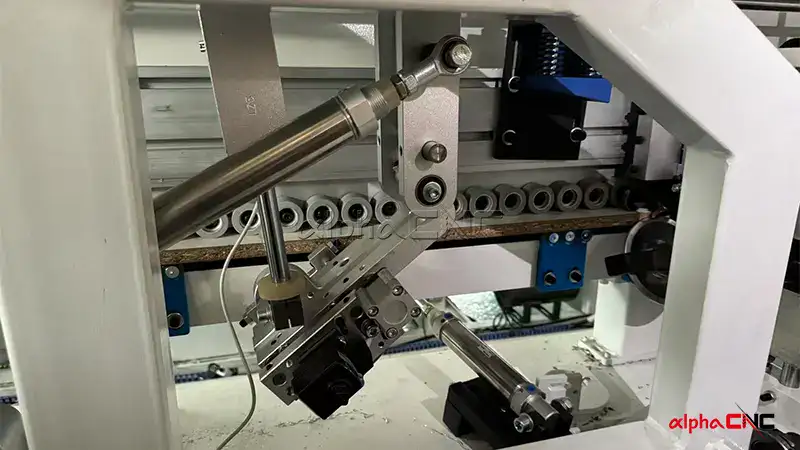
- How it works
By independently tracking the motor and tool, it automatically follows the four corner trajectories of the sheet and mills out a uniform R-shape.
- Key benefits & production problems solved
It replaces manual polishing to reduce the problems of inconsistent arc sizes and excessively sharp edges. Completes the four corner arc machining in one go to improve machining efficiency and consistency and make the finished products more beautiful.
- Who needs it
Suitable for custom furniture factories that produce a large number of exposed cabinet doors, bathroom cabinet doors, display cabinets, as well as production lines that require high consistency in appearance and automation.
- Is it worth upgrading?
For production lines that require batch processing of rounded door panels, Corner Trimming can reduce manual polishing and improve the consistency of rounded corner processing, which is worth considering for configuration.
Flexible Scraper
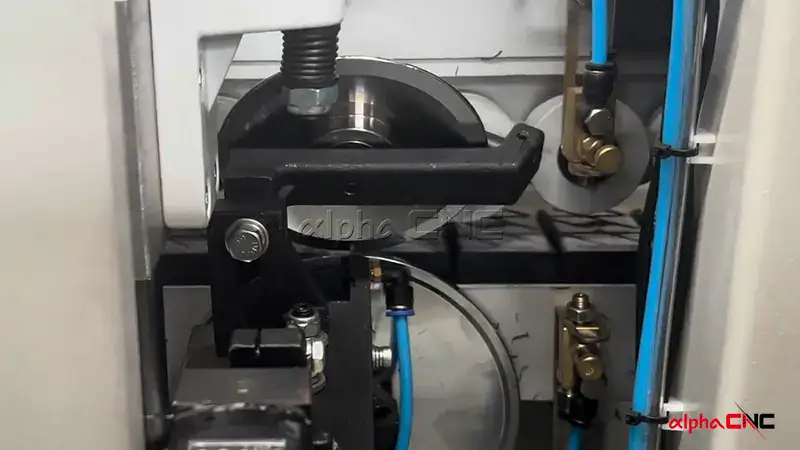
- How it works
As an option to the scraping module upgrade, the flexible floating tool adapts to the slight thickness deviations of the board and gently scrapes off the residual glue overflowing from the edge of the board.
- Key benefits & production problems solved
Reduce minor glue overflow that is difficult to clean with ordinary scraping, fade the edge banding glue line, and improve the edge banding effect of dark and glossy boards.
- Who needs it
Suitable for furniture factories that process dark colored boards, acrylic, and high gloss door panels, as well as export and custom furniture manufacturers with high requirements for finished product appearance.
- Is it worth upgrading?
We have found that many quality complaints in high-end furniture orders do not come from the firmness of the edge banding, but rather from minor glue lines affecting the appearance. If the factory processes dark colored boards, high gloss boards, or export orders, it is recommended to consider upgrading.
Cleaning
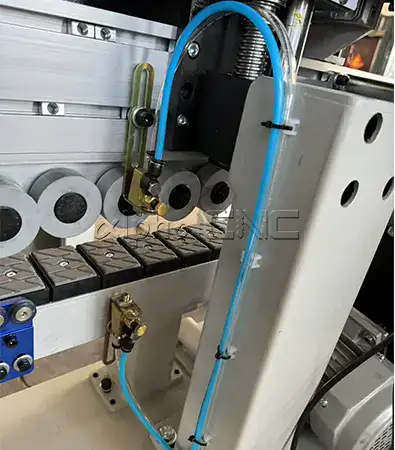
- How it works
The cleaning unit uses a specialized cleaning agent to wipe the rollers and clean the EVA and PUR glue residue from the surface of the board, while also cleaning the surface stains of the edge banding.
- Key benefits & production problems solved
Reduce residual glue generated during the gluing and edge pressing processes, avoid time-consuming manual wiping and scratching the board surface, and reduce rework.
- Who needs it
Suitable for production lines using PUR glue pots, high gloss boards, or PET door panels, as well as export furniture factories with high requirements for surface quality.
- Is it worth upgrading?
For factories that use PUR glue, high gloss boards, or high standard export orders, residual glue cleaning has high upgrade value.
Dual Glue Pot System
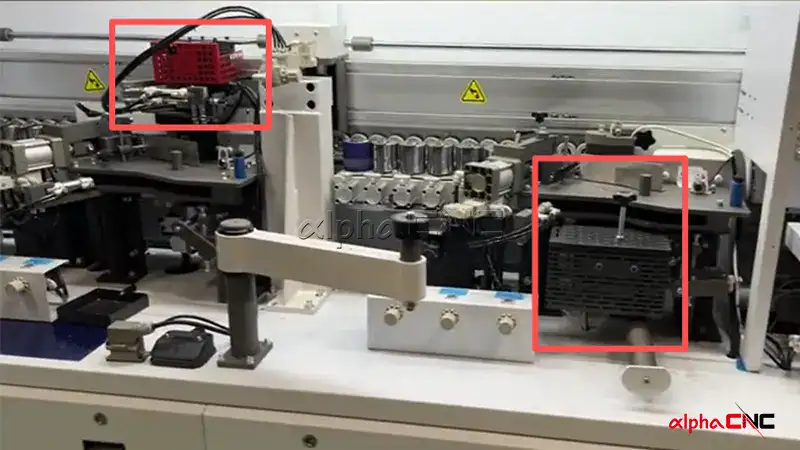
- How it works
Most customers will pair two independent glue pots, one lower glue pot and one upper glue pot. Conventional production uses an EVA glue pot. Production switches to a PUR glue pot when producing moisture-proof high-end boards and thick door panels.
- Key benefits & production problems solved
EVA is suitable for conventional boards, while PUR is more suitable for moisture-proof boards and thick door panels. The double glue pot allows one machine to achieve both ordinary orders and high-end moisture-proof orders, and flexibly adapts to diversified production.
- Who needs it
Suitable for large and medium-sized furniture factories that produce ordinary cabinets, moisture-proof door panels, and indoor doors simultaneously, as well as production enterprises that undertake different types of overseas orders. Suitable for importers who mainly promote high-end edge bander models.
- Is it worth upgrading?
From the perspective of long-term production demand, the greatest value of double glue pots is not simply to increase speed, but to enhance production flexibility. If there are multiple types of products that need to balance ordinary boards and high-end moisture-proof products, double glue pots can improve production flexibility and are worth upgrading.
4. What Problems Do Edge Bander Functions Solve?
When many furniture factories face edge banding problems, they often think about the sheet or glue first. But in fact, many edge banding defects are related to edge bander function configurations. So choosing the right function of the edge banding machine can avoid these troubles.
| Common Production Defects | Matching Edge Banding Machine Functions | Practical Improvement Value |
| The nick and uneven surface on the panel can cause gaps in the edge banding. | Pre-Milling | Trim cutting defects before edge banding to ensure edge banding tight fit and reduce rework. |
| Glue line is very obvious, especially prominent on dark colored boards, which affects the appearance. | Trimming, Flexible Scraper, Cleaning | Clean up excess glue and dilute glue lines, suitable for dark-colored boards and high-end furniture, and the finished product has a better appearance. |
| Edge banding end strip varies in length and is prone to warping. | End Cutting (Dual-Guide High-Speed Option) | End trimming cuts more accurately and neatly, avoiding uneven ends and improving production efficiency. |
| Edges of sheet are sharp and uneven, requiring manual polishing. | Corner Trimming, Trimming | Automatic corner trimming reduces the need for manual polishing, ensuring consistent final product quality. |
| Edge banding has scratches and uneven gloss. | Polishing | Polishing the surface of the edge banding strip to make the gloss of the edge banding strip match the surface of the board more closely. |
| Thick door panels and humid environments can easily cause the edge banding to peel off. | PUR Upper Glue Pot / Dual Glue Pot System | PUR glue has stronger adhesion and moisture resistance, suitable for the production of door panels, indoor doors, and moisture resistant furniture |
| Adhesive force of the edge banding is weak, resulting in gaps and easy detachment | Edge Band Feeding & Pressing System | Make the edge banding tightly adhere to the board to enhance the adhesive strength. |
| After the edge banding is completed, there may be residual glue on the surface of the board. | Cleaning | Clean the residual glue during the production process, reduce manual cleaning, and protect the surface of the board. |
Industrial automatic edge banding machines can process various edge banding materials, and different materials need to be matched with different functional configurations. Common processing materials include PVC, ABS, acrylic/high gloss PET, solid wood veneer, and melamine.
Many procurement personnel choose edge banding machines with fewer functions in order to reduce budget. Although the machine cost was reduced in the early stage, it may not be possible to match multiple edge banding materials in the later stage, resulting in rework, scrap of boards, and after-sales issues. It will increase labor costs and extend project ROI cycle.
5. How to Choose Edge Banding Machine Function Based On Production Scale
5.1.1 Small Workshops
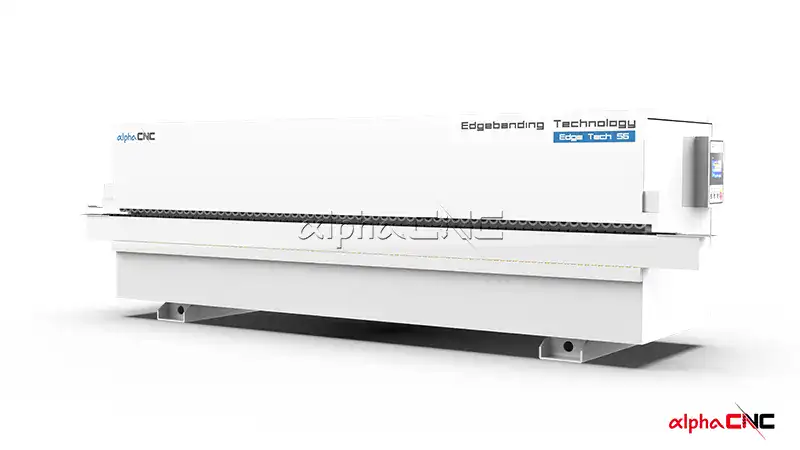
Applicable factories
Suitable for small shops with low budgets, unstable order volumes, and low daily processing volumes, mainly producing ordinary cabinet products.
Recommended Configuration
Basic function configuration: glue pot, edge pressing, front and rear single-guide rail end cutting, rough trimming, fine trimming, basic scraping and polishing.
Practical suggestions
It is not recommended for small factories to invest too much budget in buying optional functions at the beginning, and priority should be given to using the complete basic edge banding function. The basic functions have met the requirements of ordinary PVC and melamine.
Optional configurations not required
Pre-milling, corner trimming, flexible flat scraping, residual glue cleaning, PUR glue pot.
Suitable for processing materials
Ordinary PVC edge banding and melamine edge banding.
5.1.2 Medium-Volume Furniture Manufacturing Factories
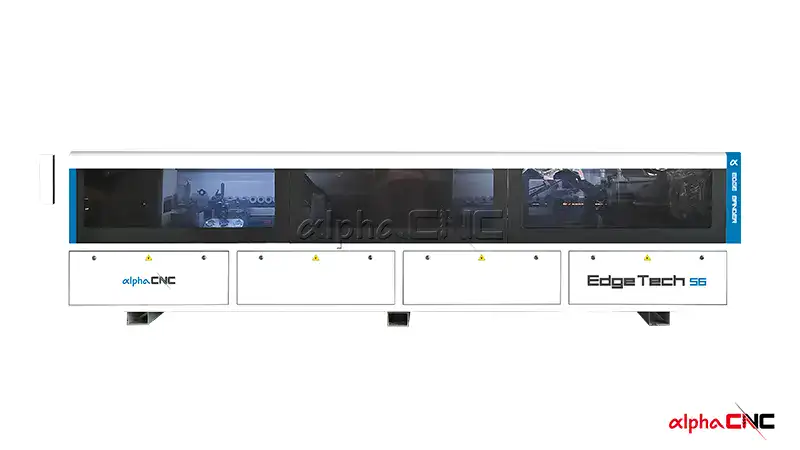
Applicable factories
Suitable for furniture factories with mass production of cabinets, wardrobes, and whole-house customized products. Their orders are stable, they have fixed production lines, and they have a large daily processing volume.
Recommended Configuration
Basic functional configuration, pre-milling, dual rail high-speed end cutting, flexible flat scraping.
Practical suggestions
Medium-sized factories are more concerned with production stability and reducing rework rates. Pre-milling can solve the common edge chipping of particle board and density board; Double guide rail end cutting is suitable for continuous production and improves processing stability; Flexible flat scraping can reduce glue lines and improve the edge banding effect of dark colored boards.
Add configurations as needed
Mass production of door panels can increase corner trimming; Long term processing of high gloss boards may consider residual adhesive cleaning units.
Suitable for processing materials
PVC, ABS, Dark colored board edge banding, ordinary wood veneer.
5.1.3 High-End Furniture Customization Factories and Manufacturers
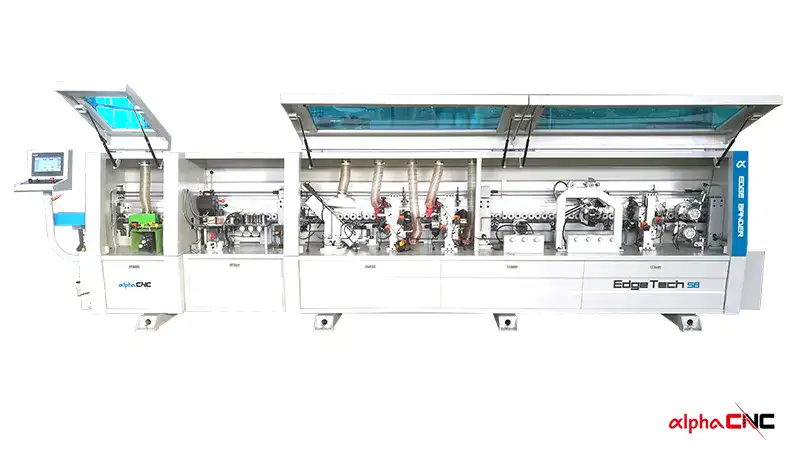
Applicable factories
Suitable for high-end customization factories and furniture export manufacturers, mainly producing high gloss door panels, bathroom cabinets, indoor doors and other products. They have high requirements for edge sealing appearance and moisture resistance.
Recommended Configuration
In addition to basic functions, it is recommended to add pre-milling, dual guide rail end cutting, corner trimming, flexible flat scraping, residual glue cleaning, and double glue pots.
Practical suggestions
Customized orders have high requirements for edge banding effect, and edge banding defects can easily lead to customer complaints and rework. PUR glue pot can improve moisture resistance and is suitable for export markets. Full set of functions can reduce glue lines and improve product consistency.
Suitable for processing materials
Acrylic, PET high gloss sheet. ABS, Solid wood, thin leather, high-end moisture-proof door panel edge banding material.
5.2 How Edge Banding Machine Functions Affect Production Cost
| Upgrade | Main Benefit |
| Pre-milling | Reduce edge gaps and degumming, minimize rework and edge tape waste. |
| Corner Trimming | Replace manual corner trimming and reduce labor time. |
| Flexible Scraper | Uniformly remove excess glue, reduce glue lines and manual cleaning work. |
| Cleaning System | Prevent glue residue from hardening, reduce manual cleaning and downtime. |
| Dual Glue Pot System | Support different boards to reduce glue waste and production waiting time. |
The above content is only for reference. The actual configuration also needs to consider the processing materials, target market, and local production requirements.
6. Common Questions about Edge Bander Functions
What is the most important function of automatic edge banding machine?
Gluing and pressing are the most basic and important functions of edge banding machines. If the bonding is unstable, even after scraping and polishing, hollow spots and raised edge banding may occur. Not all functions are essential. You can add functions according to your product needs to further improve the quality of edge banding.
What types of functions do modern edge banders offer for woodworking?
Modern industrial automatic edge banding machines are divided into two types: basic functions and optional functions. Basic functions can meet daily edge banding requirements, including gluing, pressing, trimming, scraping, and polishing. Optional functions include pre-milling, corner trimming, flexible flat scraping, cleaning, and a double glue pot system. You can choose functions based on different production needs.
Which functions should be included in an automatic edge bander for commercial use?
Commercial edge banding production requires gluing, pressing, end trimming, R scraping, and polishing. If your factory has mass production needs, maybe you can add pre-milling. Besides, if you have high-end customized and export orders, corner trimming, glue cleaning, and PUR double glue pot should be added, which can improve edge banding quality.
What does an edge bander machine do?
The edge banding machine is used to band the exposed edges of boards such as MDF, particleboard, and plywood. The machine automatically completes the entire process of gluing, pressing, end cutting, scraping, and polishing. Banding and trimming the edges of the board can not only improve its appearance, but also prevent the board from getting damp and improve the quality of the finished furniture.
How do edge banding machines work?
The principle of the edge banding machine is to apply hot melt glue on the edge of the board, feed it into the edge banding strip, and then press it tightly with a pressure roller. Afterwards, the machine will cut off excess edge banding material, treat surface defects, and polish to achieve a smooth and uniform edge banding effect. Choosing different configurations can further improve the quality of edge banding and production efficiency.
7. Final Thought
There is no standard answer for the edge banding machine’s function configuration. Lower configurations may lead to rework and loss, and higher configurations may cause cost waste.
If you are not sure how to choose functions, please tell us your daily output and sheet materials; we will provide suitable solutions and prices.


