
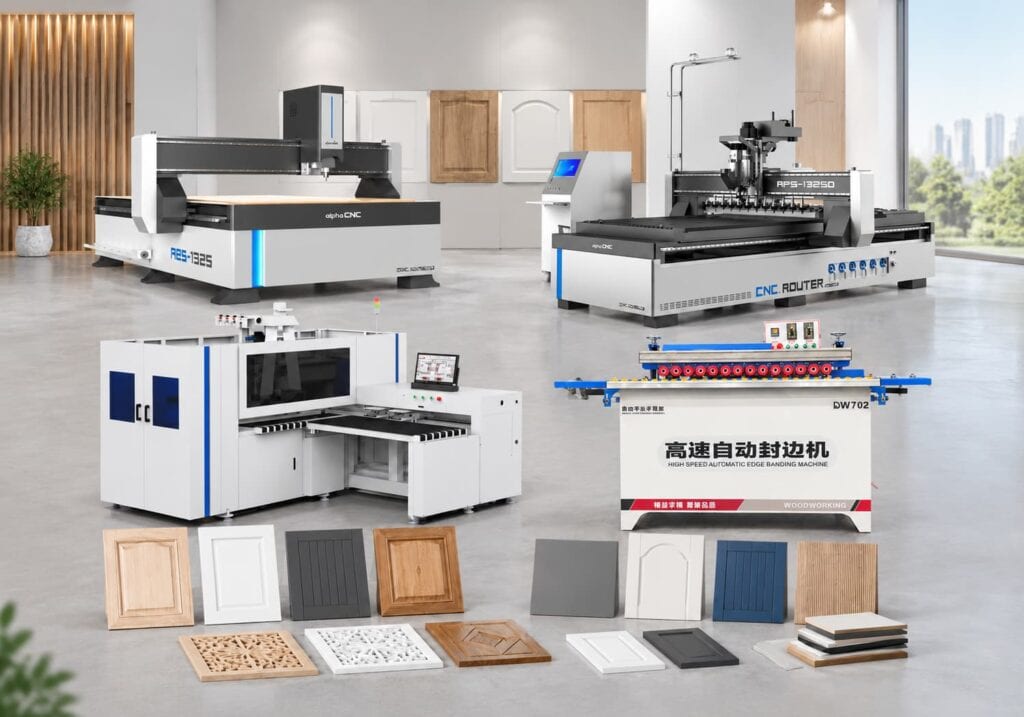
If you are manufacturing cabinet doors, CNC machining can help you complete cutting, door profile machining, and various decorative details. There are many types of CNC machines for cabinet doors. You need to determine whether to use a CNC router or further configure drilling, edge banding, and other equipment according to the structure, materials, machining processes, and production volume of the cabinet doors. This guide will help you establish a complete CNC cabinet door production process from the aspects of cabinet door types, commonly used materials, equipment selection, and actual machining processes.
1. What Are CNC Cabinet Doors?
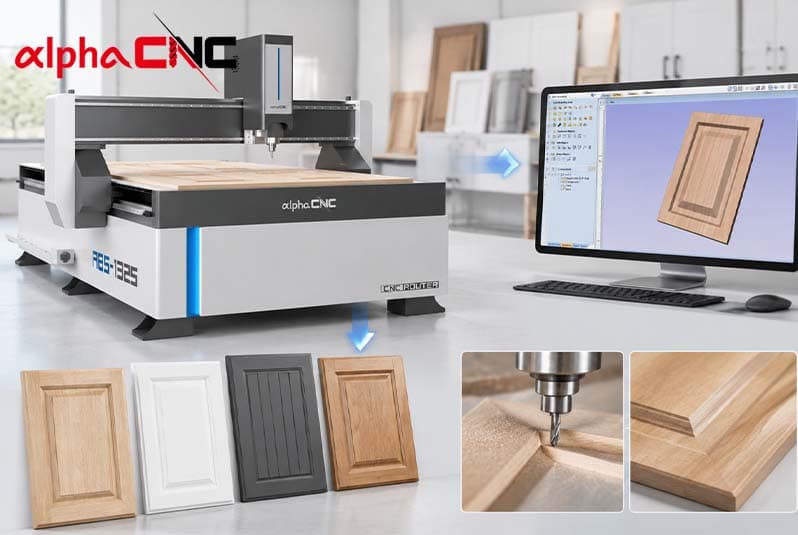
CNC cabinet doors are manufactured using computer-controlled CNC machines, which process door panels according to digital design files. Common styles include Shaker, raised panel, and slab doors. A CNC router can perform profile milling and other panel machining operations in one setup, helping achieve precise dimensions and consistent details.
Types of CNC Cabinet Doors
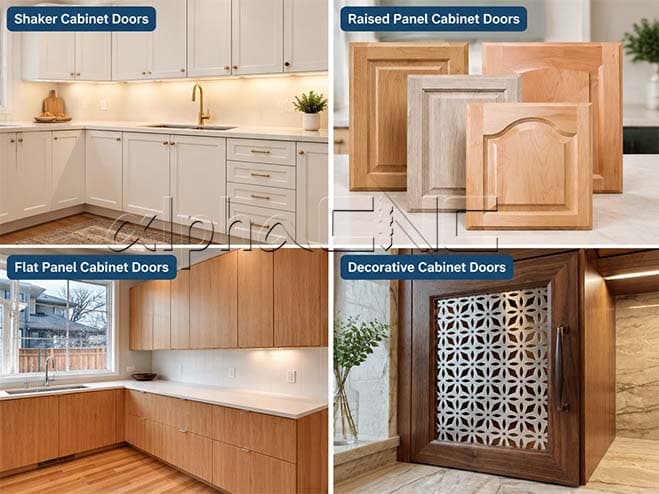
- CNC Shaker Cabinet Doors: Featuring a simple frame design, suitable for both modern and traditional cabinet styles. You can use a CNC machine to machine the relevant contours and slots, depending on the structure of the door panel.
- CNC Raised Panel Cabinet Doors: Featuring a raised center door panel and three-dimensional contours, suitable for traditional and classic styles. During processing, it is necessary to select suitable cutting tools and tool paths based on the contour.
- CNC Flat Panel / Slab Cabinet Doors: They have a flat surface and minimalist design and are common in modern cabinets. You can use a CNC router to carve out door panel dimensions, edge contours, and hole locations.
- CNC Decorative and 3D Carving Cabinet Doors: Including reliefs, grooves, or other custom decorative patterns, perfect for a more unique design. Complex figures usually require more attention in tool path planning and surface finishing.
2. Best Materials for CNC Cabinet Doors
The table below lists the common material choices among different types of CNC cabinet doors, which can also be adjusted according to specific design and processing requirements in actual production.
| Cabinet Door Type | Common/Suitable Materials | Main Considerations |
| Shaker Cabinet Doors | MDF, solid wood, plywood | Surface finish, natural wood grain, structural stability |
| Raised Panel Cabinet Doors | MDF, solid wood | Profile machining, painting effect, wood characteristics |
| Flat Panel Cabinet Doors | MDF, plywood, solid wood | Size, strength, surface finish |
| Decorative and 3D Carved Cabinet Doors | MDF, solid wood | Carving effect, material uniformity, natural wood grain |
CNC MDF Cabinet Doors
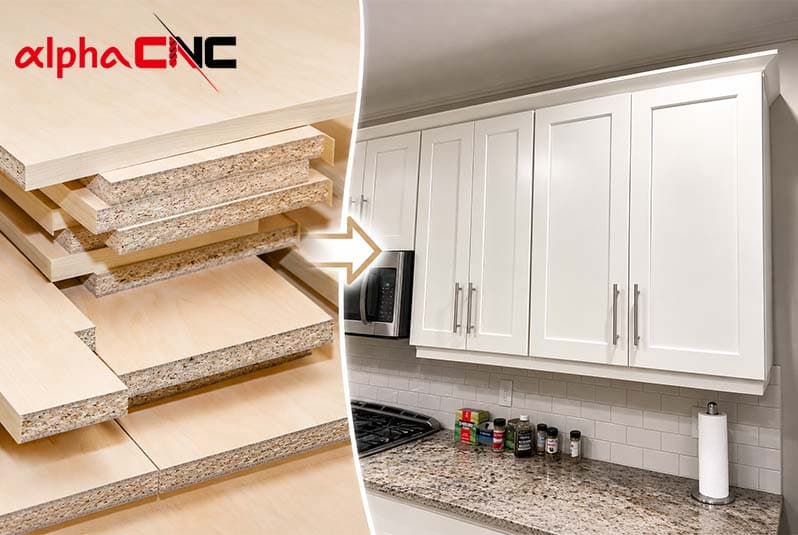
MDF features a uniform structure with no natural wood grain. It is suitable for processing CNC shaker cabinet doors, raised panel doors, and CNC decorative doors.
If the cabinet doors require painting afterward, MDF is also relatively easy to achieve a smooth and uniform surface finish. For manufacturers mainly engaged in mass production and custom door designs, MDF is usually a choice that makes machining consistency easier to control.
CNC Plywood Cabinet Doors
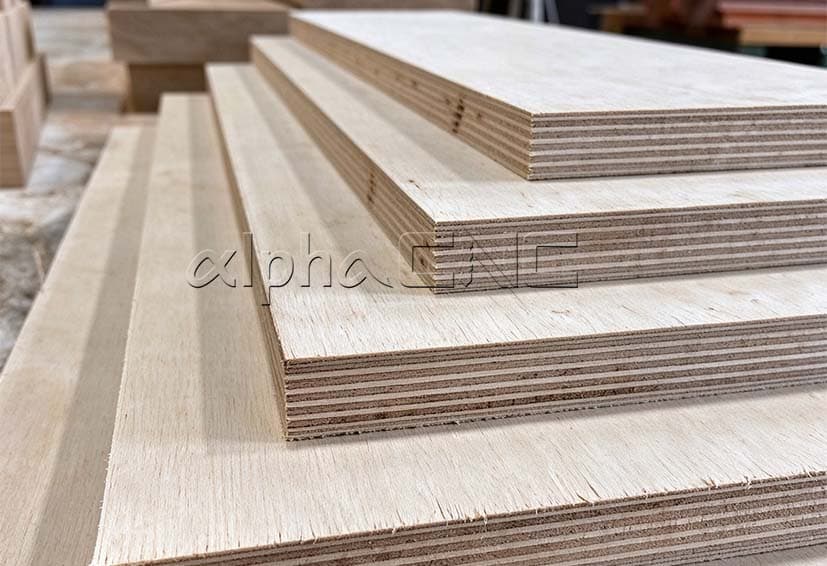
Plywood has good stability and is suitable for CNC plywood cabinet doors that require strength and durability. If you want to use plywood to make CNC cabinet doors, you need to pay attention to the fact that the layered structure of plywood may affect the CNC machining results.
CNC Solid Wood Cabinet Doors
Solid wood can be used to make high-end CNC cabinet doors or cabinet doors that emphasize the natural texture of wood, such as CNC raised panel doors and decorative doors. Compared with MDF and plywood, when machining CNC solid wood cabinet doors, you need to pay attention to the effects of changes in wood density and moisture content on CNC machining and subsequent use.
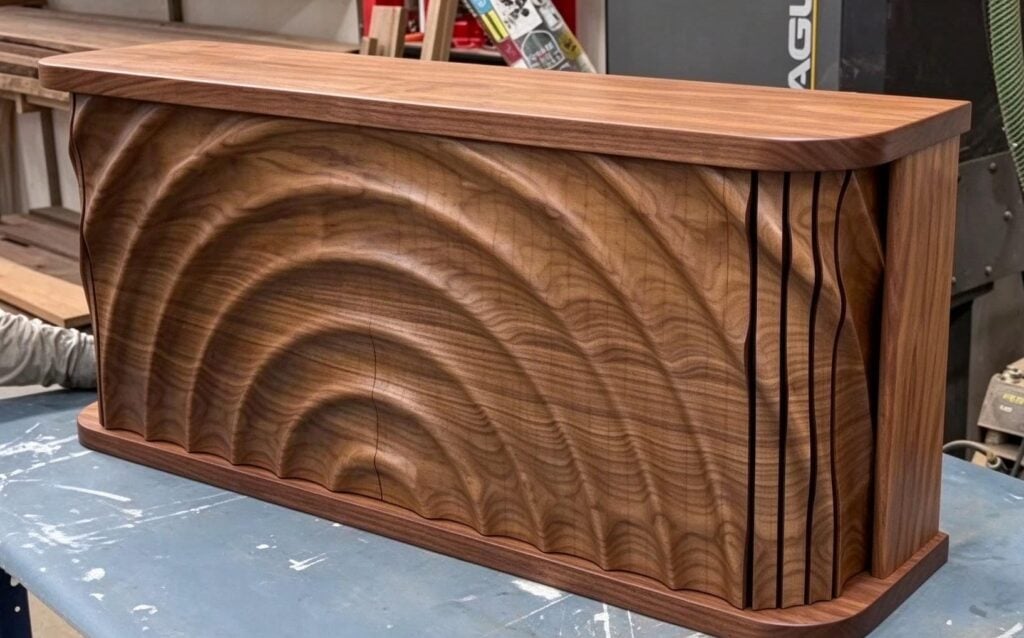
In addition, if the tool feed direction and machining parameters are not selected properly, problems such as tearing and edge chipping are more likely to occur. Therefore, CNC machining of solid wood cabinet doors requires not only consideration of the equipment but also adjustments to the machining process according to the specific wood.
3. What CNC Machine Do You Need for Cabinet Doors?
Different cabinet door production requirements have different requirements for CNC machine configurations.
| CNC Machine | Main Functions | Suitable Applications |
| CNC Router | Cutting, milling, grooving, and carving | Most types of cabinet doors |
| ATC CNC Router | Automatic tool changing | Batch production and complex door panel processing |
| Six-Sided Drilling Machine | Multi-side drilling | Cabinet panels and furniture component processing |
| Edge Banding Machine | Applying and trimming edge banding | Panels that require edge banding |
Note: Six-sided drilling machines and edge banders are not essential equipment for CNC cabinet door making.
CNC Router for Cabinet Door Cutting and Profiling
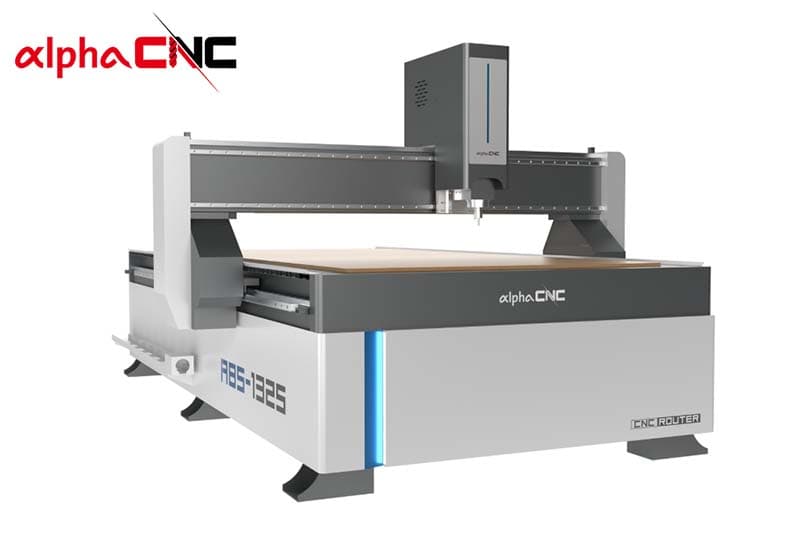
For most CNC cabinet door production, the role of a CNC router is to process panels into the final required door panel shapes and complete the milling and carving of the door styles themselves.
Taking a CNC shaker cabinet door as an example, the CNC does not just cut MDF or solid wood panels to the door panel dimensions; it also needs to machine the profiles between the center panel area and the surrounding frame. If the CNC cabinet machine processes a CNC raised panel door, it needs to further machine the three-dimensional profile of the center panel; if it is a CNC decorative and 3D carved door, the machine also needs to process reliefs, grooves, or other decorative patterns on the door panel.
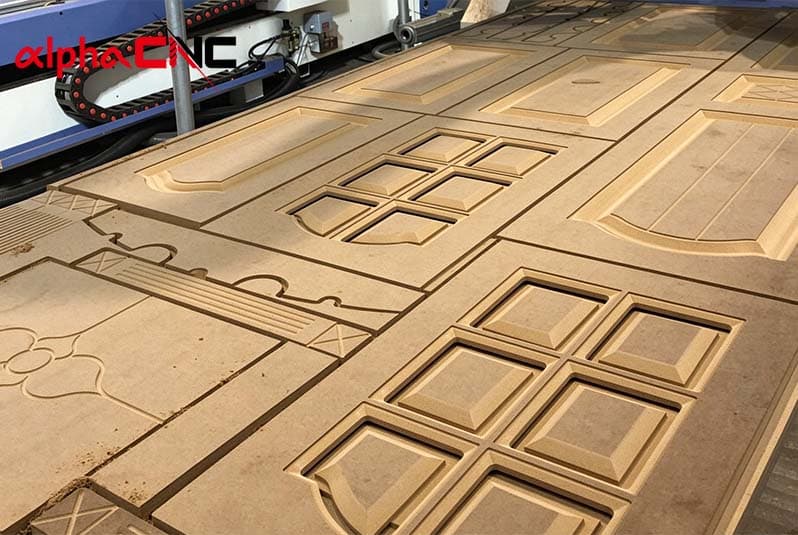
For flat panel cabinet doors, a standard 3-axis cabinet CNC router is suitable for cutting, grooving, drilling, and carving most flat panels. If the door panels contain complex profiles that require machining from different directions, you need to further consider a 4-axis CNC cabinet router. In addition, the machine’s working area also needs to match your door panel dimensions. If you produce standard 4×8ft door panels, you can choose a 1325 (4×8ft) CNC router; if you also produce large door panels or other furniture components, you can choose a larger machine size to avoid being limited by machining dimensions later.
ATC CNC Router for Multi-Tool Cabinet Door Production
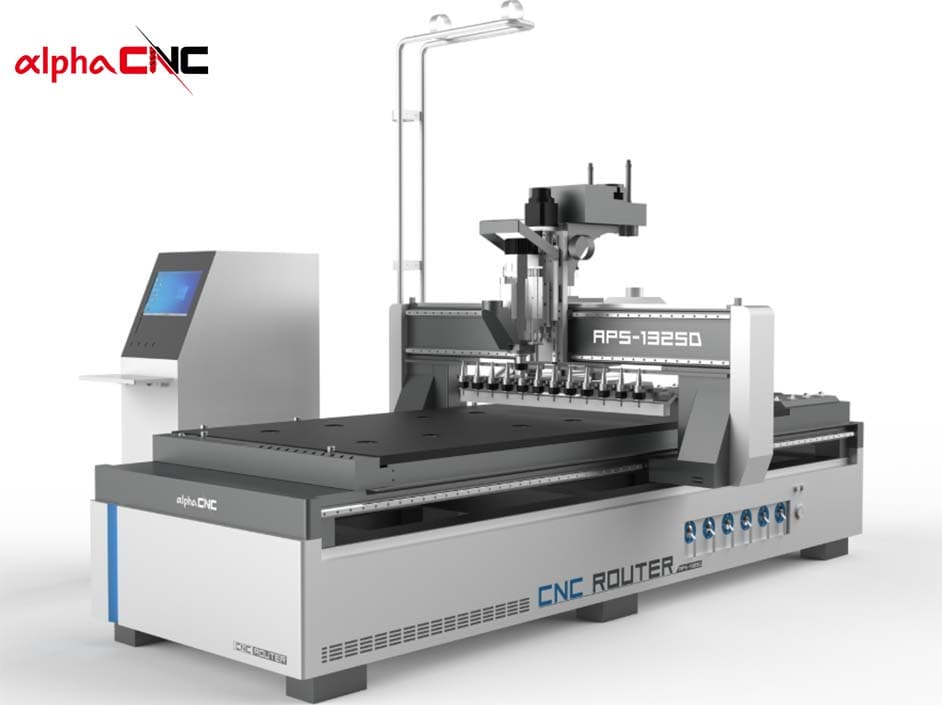
A standard CNC router requires manual machine stops and tool changes between these processes. For occasional production of a few custom door panels, this may not necessarily be a problem; but if you need to continuously process dozens or even more door panels every day, manual tool changes will constantly interrupt the machining process.
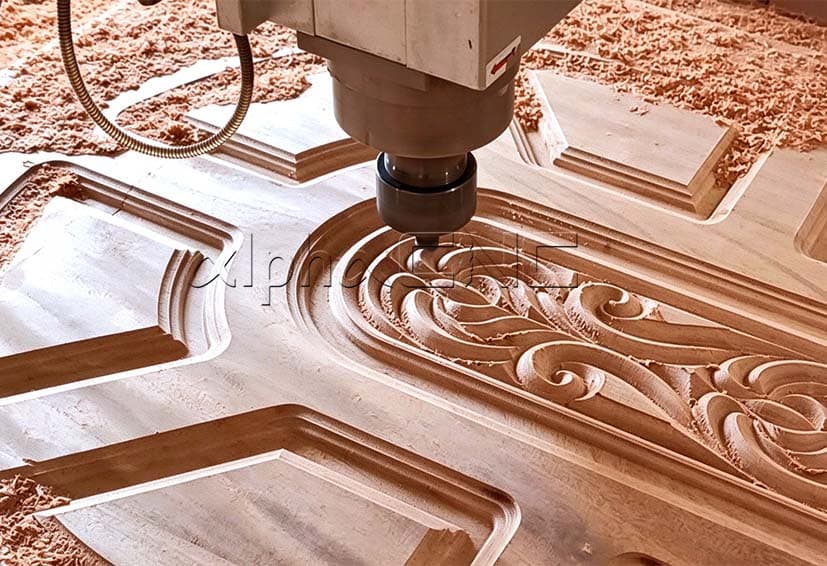
Unlike a standard CNC router, an ATC CNC router mainly addresses the need to continuously complete the machining processes for cabinet door panels. For example, when making CNC raised panel doors, you may need to use tools with different diameters and shapes to complete cutting, rough machining, profile machining, and finishing. When making door panels with decorative patterns, you may also need to use a larger tool first to remove most of the material, then change to a smaller tool to process the details.
6-Sided Drilling Machine for Cabinet Component Processing
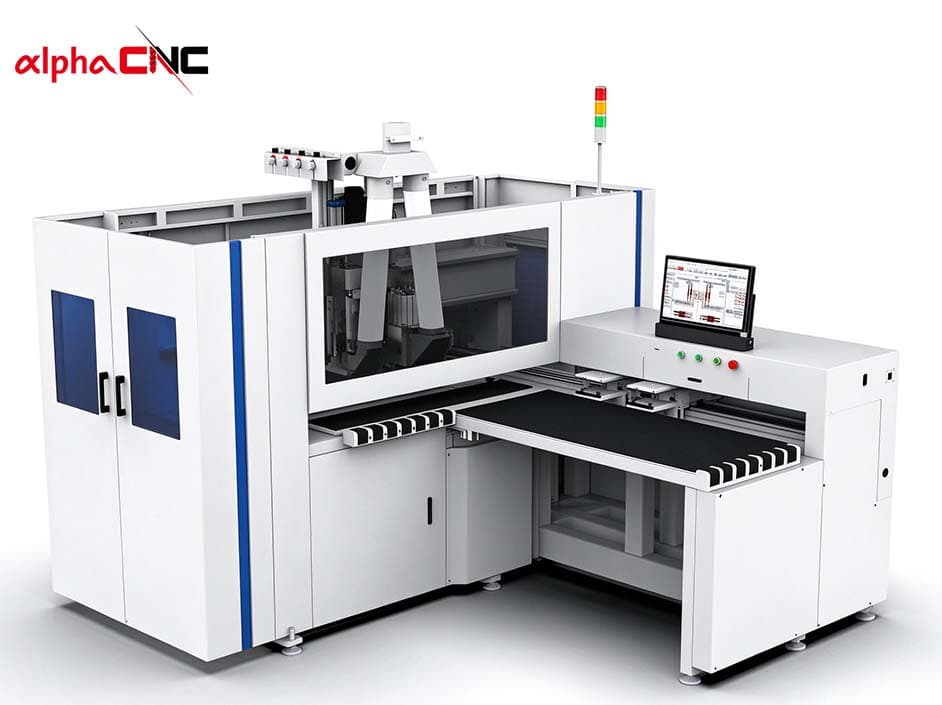
The six-sided drilling machine is mainly used for multi-sided drilling and slotting of cabinet and panel furniture components, especially suitable for production tasks that require batch processing of standardized hole positions. For example, cabinet side panels, shelves, and other cabinet components may require machining holes on the top and bottom surfaces, as well as connection holes or slots on the front, back, left, and right sides. If equipment that requires manual flipping and repositioning is used to complete these processes, there will be more operating steps, and the results are more likely to be affected by repeated positioning errors.
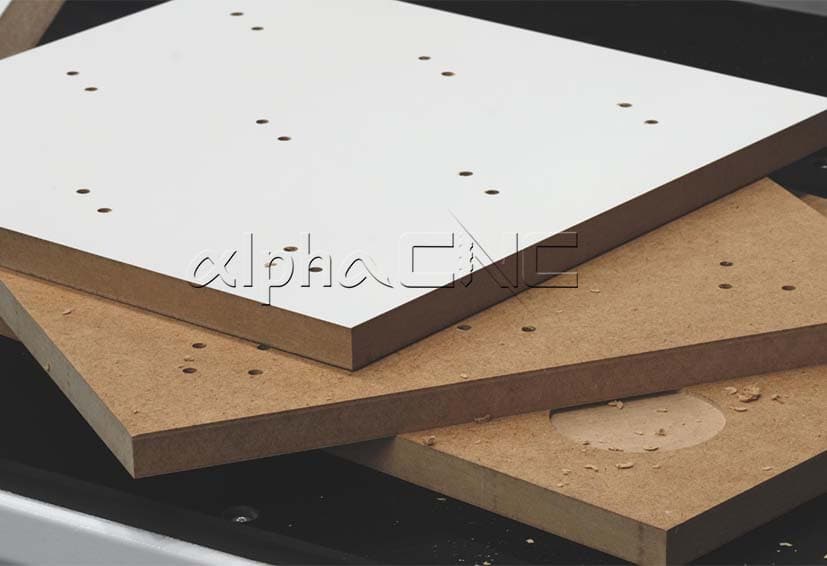
Alpha CNC’s six-sided drilling machine is equipped with two independent drilling units and an ATC spindle. If the types of orders you undertake are mostly cabinet door panel cutting, contour milling, and surface carving, a CNC cabinet router will better meet your processing needs. Only when you need to batch process connection holes, side holes, and other standardized hole positions on cabinet or wardrobe body panels can you consider investing in a six-sided drill to improve drilling efficiency.
Edge Banding Machine for Cabinet Door
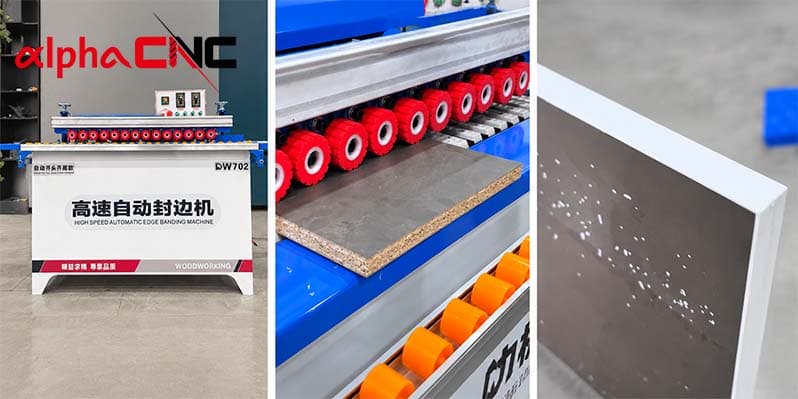
An edge banding machine is mainly used for edge banding treatment of panel furniture. The use of such equipment is related to the structure, materials, and surface treatment process of the cabinet door. An edge banding machine can perform edge banding material bonding according to the equipment configuration and further perform trimming, scraping, polishing, and other processes, which is conducive to improving the edge banding effect and production efficiency.
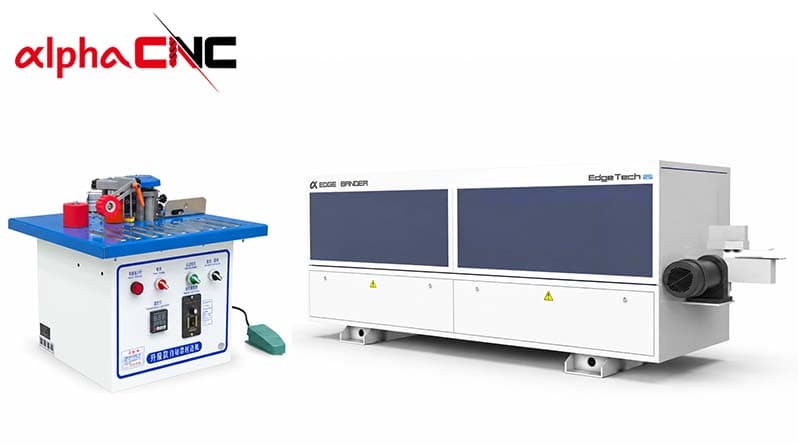
You can choose between a manual edge banding machine and an automatic edge banding machine based on budget and production scale. Alpha CNC offers a variety of edge banding equipment configurations, and some models also support post-processing such as trimming and polishing. For production scenarios with limited budget, small batch customization, or infrequent edge banding requirements, a manual edge banding machine is usually a more economical choice. If your budget is high enough and you want to do batch edge banding on CNC cabinet boards to further increase your productivity, you might want to purchase an automatic edge banding machine.
4. How to Make CNC Cabinet Doors Step by Step
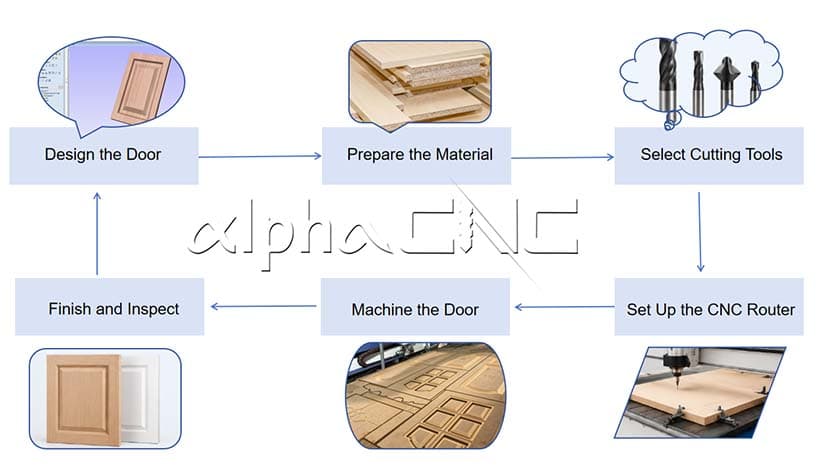
Step 1: Design the Door in CAD/CAM Software
CAD drawings are created from the final dimensions and structure of CNC cabinet doors, and then CAM software is used to create the tool paths.
Step 2: Choose the Material and Prepare the Workpiece
If you are not processing the already cut door panels piece by piece, but directly nesting the entire MDF/Plywood on the CNC, then before processing, you not only need to check the board itself, but also consider how to arrange multiple doors reasonably on one board, while leaving enough space for the tool path.
Step 3: Select CNC Router Cutting Tools
Larger tools can be used to remove material quickly, while smaller tools are suitable for detail and narrow groove machining.
Step 4: Set Up the CNC Router and Workholding
For panels with higher air permeability or smaller door panels, auxiliary fixtures can be used according to the actual situation to prevent the workpiece from moving during cutting. In addition, if the machining requires roughing and finishing, suitable cutting parameters should also be set according to the material, tools, and machine performance. Before formal machining, it is recommended to simulate the toolpaths first, check the machining range and toolpaths, and reduce the risk of machining errors.
Step 5: Cut Profiles, Panels, and Decorative Details
For complex door types, it is usually necessary to separate rough machining and precision machining. First, use larger tools to remove the main allowance, and then use tools more suitable for detailed machining to complete the final contour, which can reduce tool load and improve the machining surface.
Step 6: Sand, Finish, and Inspect the Door
The cabinet door panels should be subjected to further processing, including polishing, edging, painting, and coating, based on the type of door and the end look. Finally, the size, shape, edge quality, and surface effect of the door panel are inspected.
5. Common CNC Cabinet Door Problems
Chipped Edges
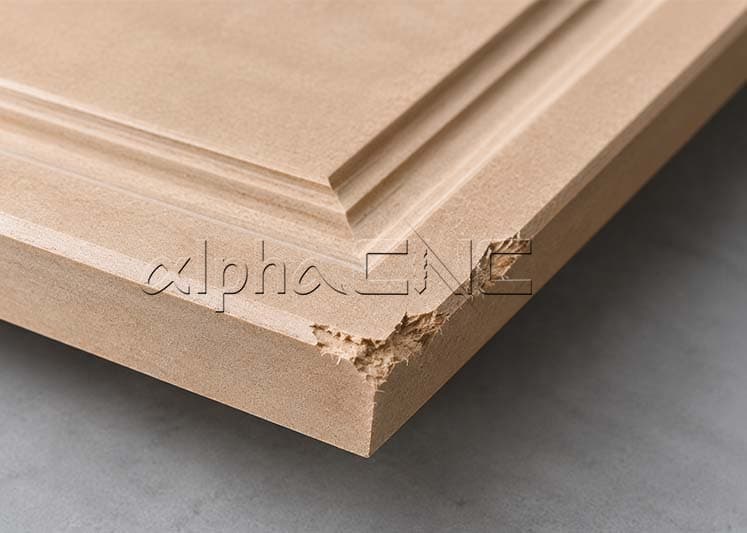
If the cabinet door has a broken edge, don’t just think it’s a material problem. First check if the tool is worn, then check if the tool is suitable for the current material, as well as if the feed rate and cutting depth are appropriate. Reduce the amount of single cutting if necessary.
Workpiece Movement
You should first check the suction of the vacuum table, the sealing condition, and whether the panel is flat. For small workpieces or specially shaped workpieces with poor vacuum suction, auxiliary fixtures should also be added for additional fixing.
Dimensional Errors
If the finished dimensions of CNC cabinet doors do not match the design, you need to check whether the dimensions in the CAD/CAM files are correct, then check the tool diameter and compensation settings, and finally confirm the workpiece origin and machine calibration status. During mass production, you should also regularly check tool wear to avoid deviations in machining dimensions.
Poor Surface Finish
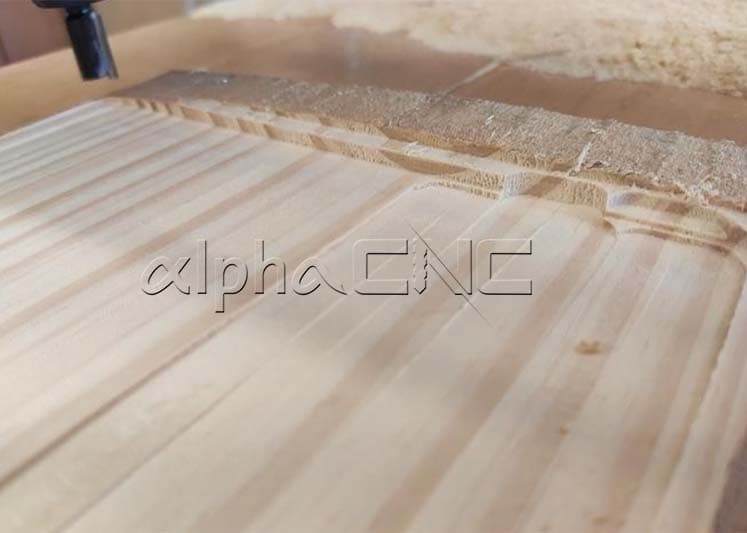
If there are obvious knife marks or rough machining patterns on the surface of the door panel, check whether the cutting tools are worn and whether the precision machining parameters are appropriate. For CNC raised panel doors and 3D carved doors, rough machining can be performed first, followed by precision machining.
6. Advantages of Alpha CNC Machines
Suitable for Different Door Style Machining Requirements
Alpha CNC provides CNC machine solutions suitable for different cabinet door designs. According to the door style structure and machining requirements, you can choose a suitable machine configuration to complete processes such as cutting, profile milling, grooving, and carving.
Meet the Production Needs of Different Scales
Whether for small-batch custom cabinet doors or mass production, you can choose a CNC cabinet machine according to your actual needs.
Supports Customized Machine Configurations
Different panel materials, door panel dimensions, and machining processes have different requirements for machine configurations. Alpha CNC can provide various customization options based on actual needs, including working area (1300 × 2500 mm, 1500 × 3000 mm, etc.), spindle power, T-slot or vacuum table, and ATC automatic tool changer system.
Alpha CNC Solutions For Cabinet Doors

The production of every CNC cabinet door starts with suitable CNC equipment. From simple and clean CNC shaker doors to classic raised panel doors, and then to 3D carved doors with a sense of depth, different designs require suitable machining methods and CNC cabinet machine support.
Good cabinet door designs deserve more suitable machining solutions. Contact Alpha CNC today to get customized cabinet door production equipment, a recommended tooling list, and a direct factory quotation for your workshop.
FAQs
Is CNC Cabinet Door Manufacturing Profitable?
Yes, CNC cabinet door manufacturing can be profitable. Profitability depends on order volume, production efficiency, material utilization, and equipment costs. Mass-producing standard MDF cabinet doors can reduce per-door costs, while customized designs can increase product value. Before investing in equipment, calculate the expected revenue and total production costs, including materials, labor, and surface finishing.
Which CNC Router Bits Are Best for Cabinet Doors?
Compression Bits: They are the right bits to use when cutting MDF or Plywood sheets, and can help to minimize edge chipping on the top and bottom surfaces.
Straight Bits: They are perfect for straight cutting, slotting, and pocketing.
Ball Nose Bits: They are used for 3D carved doors with round ledges and three-dimensional carving ornaments.
In addition, the diameter of the tool, the depth of cut, and the material characteristics also must be taken into account when selecting a cutting tool.
What Is the Best Material for CNC Cabinet Doors?
MDF is also a popular option for cabinet doors that need to be painted. If you place more emphasis on the structural strength of the panels, you can consider plywood; if you want the cabinet doors to retain natural wood grain and the texture of solid wood, solid wood is more suitable.
What Software Is Used to Design CNC Cabinet Doors?
CNC cabinet doors are usually designed and programmed for machining using CAD/CAM software. Aspire, ArtCAM, and Alphacam can all be used to create door panel designs and generate toolpaths. For CNC shaker doors and raised panel doors, corresponding profile and surface toolpaths need to be generated according to the door style design; for CNC 3D carved doors, the software needs to support 3D carving toolpath functions.
What CNC Machines Are Needed to Make CNC Cabinet Doors?
A 3-axis or 4-axis CNC router can complete door panel cutting, contour, groove and carving; If frequent use of multiple cutting tools is required, an ATC CNC router can be chosen. If production also includes a large amount of multi-sided drilling and grooving of cabinet and wardrobe panels, a six-sided drilling machine can be added; if the production process includes edge banding of panel edges, an edge banding machine is also required.


