
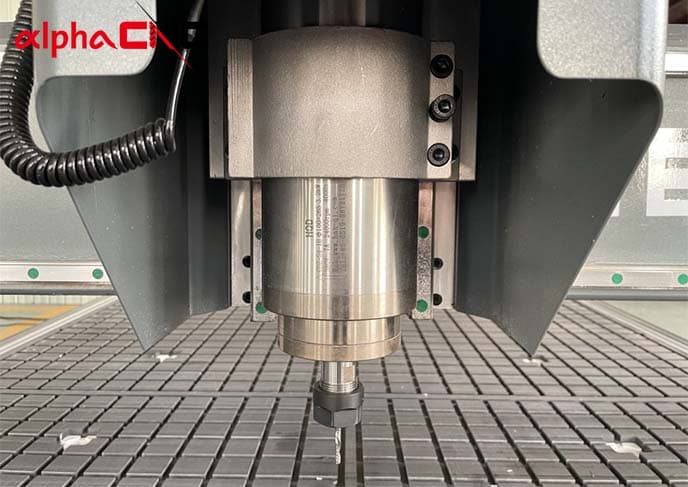
The CNC router spindle is directly related to machining accuracy, cutting efficiency, and production stability. Although when choosing your CNC router you might think all you need to worry about is the spindle power, there is more to consider, such as the spindle type and production needs. This article introduces various CNC spindle types, considerations, and selection methods to help you to start thinking about the right configuration for the spindle and meet your real machining needs.
1. Understand the Main Types of CNC Router Spindles
According to the cooling method, CNC spindles can be divided into air-cooled spindles and water-cooled spindles. According to the tool change method, they can be divided into manual tool change spindles and ATC spindles.
Air-Cooled vs. Water-Cooled CNC Spindles
The main difference between air-cooled and water-cooled spindles is the cooling method.

- Air–Cooled Spindle: It uses a fan to dissipate heat. The structure is relatively simple, easy to install and maintain. It is widely used in woodworking, panel furniture production, and plastics processing. But the fan will produce some noise when running. The heat dissipation effect is also easily affected by the environment.
- Water-Cooled Spindle: It takes away heat through the water cycle. The heat dissipation performance is relatively stable, and the operating noise is low. Suitable for metal processing or long-term continuous production operations. But additional water tanks and pumps are required. Low-temperature environments require consideration of antifreeze and higher requirements for water quality.
Manual Tool Change vs. ATC Spindles
The difference between these two router spindles lies in the level of automation.
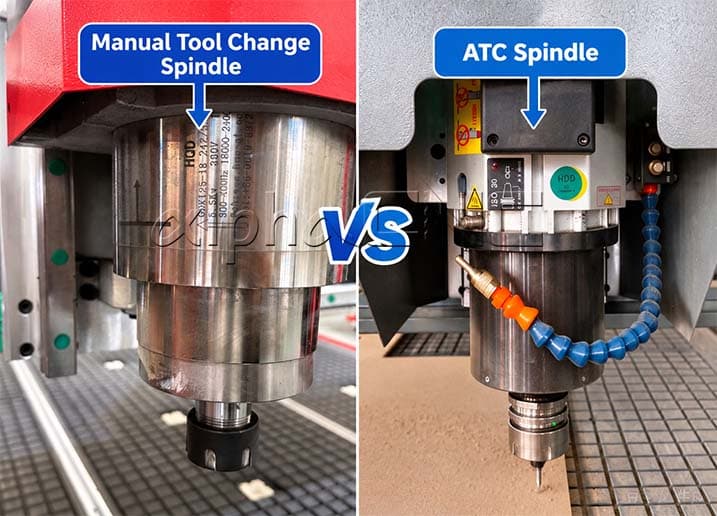
- Manual Tool Change Spindle: You need to manually change the tool. The configuration is relatively simple and suitable for production tasks with fewer processing steps and lower tool-changing frequency.
- ATC Spindle: Used in conjunction with an automatic tool-changing system and tool magazine, the ATC CNC router can automatically change tools according to the machining program. But the overall configuration cost of the spindle and its tool magazine is higher, and there are also matching requirements for the entire machine control system.
2. Consider the Key Selection Factors
CNC Router Spindle Power
Power determines the maximum cutting load that the CNC spindle can handle. The common power range of CNC router spindles is:
| Spindle Power | Typical Applications |
| 1.5 kW | Small wood products, engraving, plastic sheets |
| 2.2 kW | MDF and plywood cutting, grooving, contouring |
| 3.0–3.5 kW | Furniture panels, solid wood, thin aluminum sheets |
| 4.5–5.5 kW | Large workpieces, aluminum profiles |
| 6.0–7.5 kW | Large furniture parts, complex wood milling |
| 9–12 kW+ | Industrial panel production, large wood products, aluminum milling |
Note: We do not recommend judging whether a machine can process a certain material or achieve a certain cutting depth based only on spindle power. Especially for CNC aluminum machining, you also need to consider spindle speed, cutting tools, machine rigidity, and cooling and lubrication conditions.
Spindle Speed
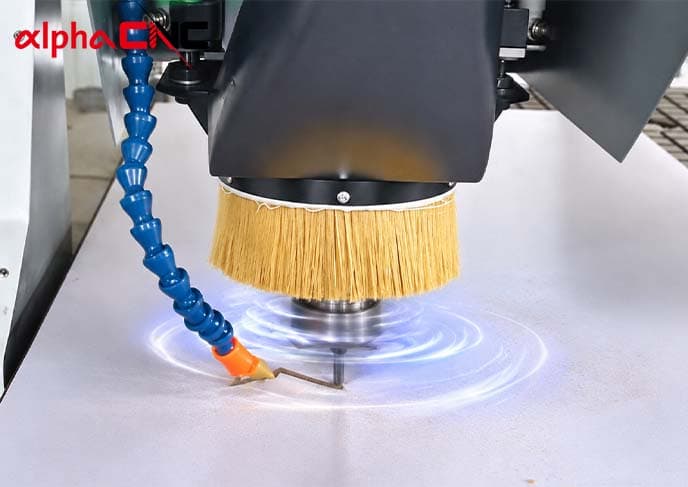
Spindle speed refers to the number of rotations of the CNC spindle per minute. It affects the cutting condition of the tool, surface quality, and machining efficiency. Small-diameter tools usually require higher spindle speeds to achieve an appropriate cutting speed. However, if large-diameter tools run at excessively high speeds, they may generate more cutting heat and tool vibration, affecting machining stability.
Spindle Bearing Quality
Spindle bearings can affect the rotational accuracy, operational stability, and service life of the spindle. Based on the production cases we have encountered from customers, some low-priced spindles may experience bearing wear after prolonged high-speed operation, leading to increased radial runout of the spindle. During processing, the surface of the board is also more prone to vibration patterns or uneven processing marks. If you have a need for long-term continuous processing, we recommend choosing a spindle with a reliable bearing configuration and stable rotational accuracy.
Spindle Torque
Torque is directly related to the way the CNC spindles accept cutting loads. When you have large-diameter cutting tools to work on thick boards or solid wood, a factor to remember is whether the CNC spindle can provide sufficient torque to maintain stable cutting at the operating speed.
Collet and Tool Holder Compatibility
The collet and tool holder are components that connect the CNC router spindle to the cutting tool. You need to confirm the corresponding specifications according to the machine’s tool-changing method.

- Manual Tool Change Spindle: Standard manual tool change spindles usually use ER series collets, such as ER20, ER25, and ER32. You need to select the appropriate collet size according to the shank diameter of your commonly used tools to ensure that the tools are clamped firmly and to reduce loosening during machining.
- ATC Spindle: It commonly uses ISO30, BT30, or HSK tool holder interfaces. ER series collets can also be used inside the tool holders to clamp the cutting tools. During automatic tool changing, the machine changes the entire tool holder assembly rather than changing the collet separately.
3. Match the Router Spindle to Your Production Requirements
When choosing the right spindle for your CNC router, you need to understand which spindle configuration is suitable. Based on the actual machine selection experience of the equipment manufacturer, Alpha CNC recommends that you focus on the following three aspects.
Processing Materials
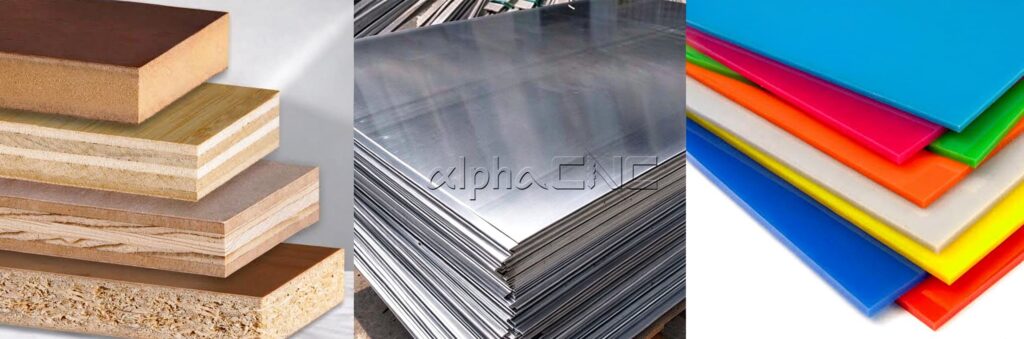
CNC spindle selection should not be based on power alone. Power mainly determines how deep and how fast you can cut; the speed range mainly matches the material and tool diameter; while low-speed torque and machine rigidity determine whether the machine can handle heavy cutting and metal processing.
| Processing Material | Recommended Power | Reference Speed |
| Wood, MDF and Plywood | 2.2–9 kW | 12,000–24,000 RPM |
| Aluminum | 3.5–4.5 kW+ | 8,000–12,000 RPM |
| Acrylic and Plastics | 2.2–3.5 kW | 12,000–18,000 RPM |
- Wood, MDF, and Plywood: The suitable spindle power range for these materials is relatively wide. You need to consider higher cutting loads and spindle performance. Water-cooled spindles produce less noise during operation, while air-cooled spindles do not require an additional water circulation system. You can choose according to your workshop environment and maintenance conditions.
- Aluminum: You should pay more attention to the torque at the actual operating speed, rotational accuracy, and machine rigidity. When using larger-diameter milling cutters to process aluminum plates, insufficient low-speed torque may lead to excessive cutting loads, machining vibration, and other problems.
- Acrylic and Plastics: These materials are relatively sensitive to cutting temperatures. You should pay attention to the spindle speed range, tool clamping accuracy, and operating stability. At the same time, you should also set the feed rate reasonably to avoid material melting or tool sticking.
Production Scale
- Small Workshops and Custom Processing: Your products are mainly wooden signs, decorations, or small quantities of custom furniture, and each product requires only a few tools. A manual tool-change spindle can usually meet your needs while reducing the initial investment.
- Medium-Sized Furniture Factories: Your products often require multiple processes, such as cutting, drilling, and engraving. You can consider an automatic tool-change spindle according to the actual tool-changing frequency to reduce manual intervention.
- Large-Scale Mass Production Factories: Industrial CNC routers need to operate continuously and have high production volumes. ATC spindles can improve the automation level of the equipment.
CNC Machine Compatibility
Even if the CNC spindle performance is shown to be sufficient for processing, it doesn’t automatically mean it can be directly installed on an existing CNC router. We have encountered situations where customers needed to replace their original 2.2 kW manual spindle with a more powerful ATC spindle. However, the upgrade of this type is not limited to the CNC router spindle alone, but often involves the replacement of the spindle bracket, VFD, and configuration work such as the air lines, tool magazine, etc.
4. Case Study: Spindle Configuration for a Custom Furniture Factory
Below, taking the 1530 CNC router configured by Alpha CNC for a custom furniture factory as an example, we will introduce how we determine the spindle configuration based on your processing materials, product types, and production requirements, and match it with the corresponding complete machine solution.

Background & Requirements
This customer is a purchasing manager at a woodworking factory in the United States. His factory needs to produce large quantities of American-style cabinets, wardrobes, and other custom furniture every day. He put forward the following requirements:
- Working Area: Able to meet the machining needs of common furniture panels and larger-sized workpieces.
- Machining Capability: Equipped with sufficient power to complete operations such as panel cutting, slotting, and drilling.
- Automation Level: Supports automatic tool changing for multiple tools to reduce manual tool changes and machine downtime.
- Equipment Stability: Meets the factory’s daily production requirements for machining accuracy and equipment reliability.
Spindle Configuration
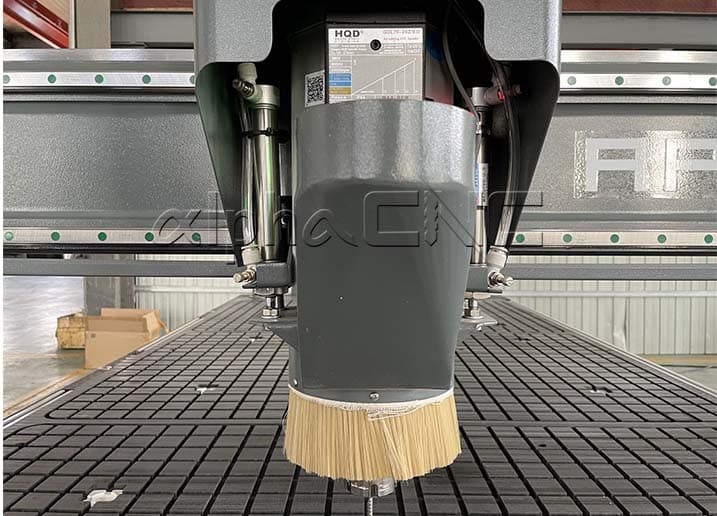
Based on the customer’s requirements, our sales team recommended the Alpha APS-1530 CNC router. This machine is equipped with a 9 kW HQD air-cooled ATC spindle and a 12-position tool magazine. The following is the detailed CNC spindle configuration parameter table:
| Configuration | Specification |
| Machine Model | 1530 CNC Router |
| Working Size | 1500 × 3000 × 270 mm |
| Spindle Brand | HQD |
| Spindle Power | 9 kW |
| Cooling Method | Air-Cooled |
| Tool Changing Method | Automatic Tool Change |
| Tool Magazine Capacity | 12 Tools |
| Tool Holder | ISO30 |
| Collet Type | ER32 |
| Inverter | 11 kW Fuling |
Supporting Configurations of the CNC Router
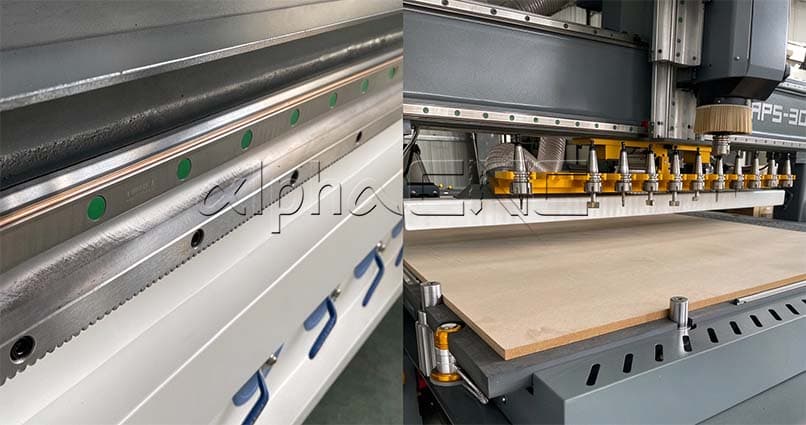
When choosing a CNC router spindle, you should not only focus on the spindle’s power, brand, and cooling method, but also consider whether the complete machine configuration can support the spindle in achieving its expected machining performance. For equipment equipped with a 9 kW ATC spindle, the spindle weight, cutting load, and machining method will all place corresponding requirements on the machine’s transmission, drive, and workpiece clamping systems.
Alpha CNC also matched the other machine configurations according to the machining requirements of panel furniture:
| Machine Configuration | Selected Specification | Function |
| Z-Axis Transmission | TBI Ball Screw | Provides stable lifting and lowering for the heavy spindle assembly |
| Servo Motor | Leadshine 1500W Servo Motor | Drives the machine axes |
| X/Y-Axis Transmission | German Helical Rack and Pinion | Supports gantry movement for large-format machining |
| Guide Rails | Taiwan Hiwin Square Rails | Provides stable support for each axis |
| Worktable | Vacuum Table / Vacuum + T-Slot Table | Secures large workpieces |
| Vacuum Pump | 7.5 kW Air Turbine Vacuum Pump | Provides suction for the vacuum table |
| Positioning System | Pneumatic Pop-up Positioning Pins | Assists with panel positioning |
Final Outcomes
After deploying the Alpha APS-1530 with an ATC spindle, tool change time was reduced from 2 minutes to 8 seconds, boosting daily cabinet panel output by 35%.
Our intention is not only to get the CNC spindle running but also to make the spindle, transmission system, control system, and workpiece clamping system a coordinated whole, which allows the equipment to adapt better to the real needs of the customer’s furniture processing.
5. CNC Spindle Maintenance Checklist
Regularly inspecting the CNC machine spindle and its related components can help you identify problems and extend the spindle’s service life. The following table summarizes the maintenance items.
| Maintenance Items | Daily | Weekly | Monthly |
| Collet and Tool Holder | ✓ | ||
| Spindle Operating Noise | ✓ | ||
| Cooling System | ✓ | ✓ | |
| Coolant Level (Water-Cooled) | ✓ | ||
| Cooling Fan and Air Ducts (Air-Cooled) | ✓ | ||
| Cables and Connectors | ✓ | ||
| Spindle Runout | ✓ | ||
| ATC Mechanism | ✓ | ✓ | ✓ |
| Pneumatic System and Air Supply | ✓ | ✓ | |
| Check VFD Alarm Logs | ✓ | ✓ | |
| Spindle Bearing Condition | ✓ |
Additional Notes:
- Air-Cooled Spindle: Cleaning the fan and cooling channels. Woodworking generates a lot of dust, and this can get in the way of the areas where cooling takes place, easily clogging airflow and affecting cooling performance.
- Water-Cooled Spindle: Coolant should match the specifications of the spindle manufacturer and needs to be changed periodically to avoid spindle overheating due to poor circulation or lack of cooling.
6. FAQ
What Does a Spindle Do in a CNC Router?
The CNC spindle is primarily responsible for holding and turning the cutting tool used in machining operations like cutting, engraving, drilling, slotting, and milling. The power required for the cutting process is generated by the spindle by controlling the tool’s rotational speed and output torque. Workpiece surface finishing, machining dimensional accuracy, and tool life, among other factors, have an impact on a spindle’s operational stability and rotational precision.
Why Does a CNC Router Spindle Overheat?
It is generally caused by insufficient cooling, or a prolonged overload operation or a wrong electrical parameter setting. In other words, if the fan or cooling channel of an air-cooled spindle is clogged with dust, or if the cooling flow of a water-cooled spindle is inadequate, it may cause a problem, making it unable to dissipate heat in time. Moreover, cutting loads beyond spindle bearing limits will lead to overheating.
Is a Higher Power CNC Spindle Always Better?
No, spindle power must be properly matched to the actual machining load and the machine in its entirety. A higher-power spindle is capable of supporting larger-diameter tools and heavier machining loads, but may be costlier to purchase, consume more power, or require higher cooling demands. With a higher-power spindle also installed in a machine structure lacking sufficient rigidity, its performance will not fully play out.
What Is the Difference Between CNC Spindle Brands?
Some brands of router spindles concentrate on cost-effectiveness and general use, suitable for the normal work of carving and working with sheet metal. For example, China HQD offers many air-cooled, water-cooled, and ATC spindles for all budgets and woodworking applications; Italy HSD is for production environments demanding high processing precision and operational stability.
What Is the Best CNC Router Spindle for Woodworking?
No single spindle can claim to be the best for all CNC-routing applications in woodworking. If you work mainly in MDF, plywood, and solid wood panels, you can go with a water-cooled or an air-cooled spindle with the relevant power rating for the cutting depth and tool geometry. But if you want to produce items that, on average, require 5 tool changes, complex milling, slotting, and drilling work, you are most likely to do best with an ATC spindle and avoid the time-consuming task of manually changing tools, which increases throughput.
Get a CNC Router with the Right Spindle Configuration

With Alpha CNC, you won’t just buy high-quality equipment-you will also get access to professional spindle selection and machine configuration solutions tailored to your materials, production needs, and budget. From spindle brands and power to cooling methods and automatic tool-changing systems, we can give you customized recommendations. Contact us now whenever your production needs arise! We will give you tailored machine specifications and a quotation within 24 hours.


