

Cutting the required shapes is only the first step in making acrylic products. The quality of the end product depends on whether the cutting edges are smooth, the dimensions are accurate, and the products are consistent across batches. CNC acrylic cutting machines have emerged as a solution that increases accuracy, gives higher flexibility and precision. Here we will deal with the application of CNC routers for acrylic cutting, how to choose the right equipment, and solutions to cutting problems.
1. Why Use a CNC Router for Acrylic Processing?

A CNC router can not only cut acrylic sheets but also help you process products in different shapes, maintain processing consistency, and adapt to diverse production needs.
- Complex Shape Processing: Supports curve cutting, internal hole cutting, hollow patterns, and text processing. It can be used to make acrylic signs, display stands, decorative panels, and custom parts.
- Stable Processing Consistency: Repeats the production of the same parts through preset processing programs, reducing dimensional deviations caused by manual operations and ensuring the consistency of batch products.
- Processing of Multiple Materials: According to the spindle configuration, tools, and processing parameters, the same CNC router can also process materials such as wood, MDF, and PVC, improving machine utilization.
2. CNC Acrylic Cutting Applications
Acrylic is widely used in advertising signs, lighting equipment, and commercial display products. Using a CNC acrylic cutting machine, you can process acrylic parts in different shapes and structures according to product designs to meet the production needs of the advertising and commercial display industries.
Acrylic Letters & Signs

Acrylic is commonly used to make illuminated letters, brand logos, and store signs. A CNC router can process acrylic letters in different fonts, sizes, and contours according to design files. It can also perform internal slot and screw-hole operations. This reduces manual labor dependency and helps sign makers meet tight client deadlines, allowing you to adapt to changing needs and boost automation for easy repeat sign production later.
Light Box & Lighting Panels

Acrylic is commonly used for lightbox panels, LED signage panels, and light-transmitting decorative components. You can use a CNC router to process the panel outline, mounting holes, and specific slots, preparing for the subsequent installation of lighting and assembly structures. For mass-produced lightbox products, consistent cutting dimensions also help improve assembly efficiency.
Acrylic Display Stands

Acrylic display stands are commonly used for showcasing cosmetics, electronic products, and other retail goods. CNC routers can process the base plate, side panels, support components, and connecting slots of the display stand, providing the necessary parts for subsequent assembly. For mass-produced display stands, you can also utilize layout software to arrange multiple parts on the same sheet of material, improving material utilization.
3. Key CNC Router Features for Acrylic Cutting
When selecting equipment for CNC acrylic cutting, you need to focus on the worktable size, workpiece clamping method, spindle configuration, and chip removal capability. These factors affect the machining stability, cutting edge quality, and production efficiency of acrylic sheets.
Working Area
You need to choose a worktable based on the size of commonly used acrylic sheets, maximum workpiece specifications, and layout requirements. If multiple parts need to be processed at once, it should be ensured that there is sufficient effective processing range to arrange the layout. Before purchasing, it is also necessary to confirm the effective travel of the X and Y axes, rather than just checking the workbench dimensions marked on the equipment.
Workholding
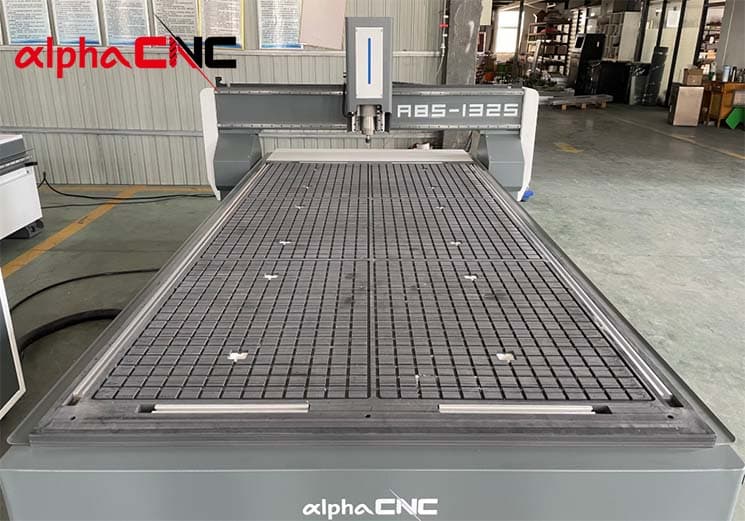
Acrylic sheets must remain stable during the cutting process; otherwise, there may be dimensional deviations, edge damage, or tool collisions. A Vacuum table is suitable for processing large-sized acrylic sheets and multi-part layouts. But when there are many small parts or the coverage of the board is low, the adsorption effect may be affected. For such workpieces, mechanical fixtures can be used to fix them and ensure that the fixtures do not interfere with the tool path.
Spindle Configuration
When choosing a spindle, you should consider the speed range, operating stability, collet accuracy, and power together, rather than looking only at the rated power. The spindle needs to match the tools and processing parameters used to maintain stable processing results when cutting acrylic sheets of different thicknesses. If you also need to process materials such as plywood, you should confirm whether the spindle configuration can meet the processing requirements of these materials.
Chip Evacuation and Heat Control
During acrylic cutting, if chips cannot be removed in time, or if the tool does not match the processing parameters, the material may melt, stick to the tool, and experience a decline in edge quality. The machine can be equipped with compressed air to assist chip removal and adopt an appropriate cooling method according to processing requirements.
4. 3-Axis CNC Router vs. ATC CNC Router vs. CO2 Laser Cutter for Acrylic
These types of acrylic cutting machines, including 3-axis CNC routers, ATC CNC routers, and laser cutting machines, can all be used for acrylic processing. The three have different processing methods and application scenarios, so you can choose according to your needs.
| Comparison | 3-Axis CNC Router | ATC CNC Router | CO2 Laser Cutter |
| Processing Method | Mechanical cutting | Mechanical cutting with automatic tool changes | Thermal cutting |
| Main Applications | Cutting, drilling, slotting, engraving | Multi-tool cutting, drilling, slotting, engraving | Contour cutting, fine lettering, intricate patterns |
| Thick Acrylic Sheets | Suitable with proper machine and tooling | Suitable with proper machine and tooling | Depends on laser power and machine capacity |
| Tool Changes | Manual | Automatic | Not applicable |
| Edge Finish | May require post-processing | May require post-processing | Usually produces smooth, transparent edges |
| Material compatibility | Acrylic, MDF, plywood, etc. | Acrylic, MDF, plywood, PVC, non-ferrous metals, etc. | Acrylic, wood, leather, etc. |
| Investment Cost | $2,000–$10,000+ | $9,500–$20,000+ | $5,000–$25,000+ |
Note: The above prices are for reference only. The actual purchase cost will vary depending on the machine model and specific configuration. The price of a CNC router is mainly affected by the working area, table type, and automation configuration. The price of a CO2 laser cutting machine mainly depends on factors such as laser power, effective cutting area, cooling system, and exhaust system.
Standard 3-Axis CNC router for Basic Acrylic Cutting
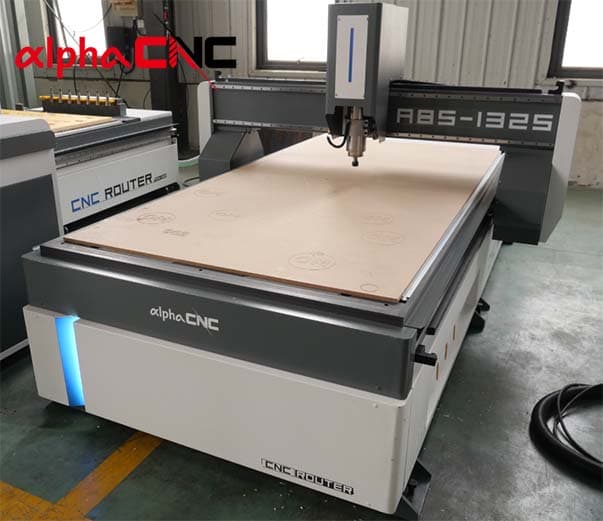
A 3-Axis CNC router is suitable for processing acrylic products mainly made from flat sheets. It can complete sheet contour cutting, mounting hole processing, connecting slot processing, and surface pattern engraving. If your orders mainly involve conventional acrylic sheet processing and do not require complex multi-axis processing or frequent automatic tool changes, this type of machine can usually meet your production needs.
In addition to acrylic, this type of machine can also process materials such as MDF, plywood, and solid wood, for making products such as cabinet door panels and furniture side panels. For businesses that handle both advertising production and furniture panel processing orders, you can use the same machine to handle different types of processing tasks by changing tools and adjusting processing programs, improving machine utilization.

In terms of purchase cost, an Alpha 3-Axis CNC router usually requires a lower investment than models equipped with an automatic tool changing system. If your production orders mainly involve conventional sheet processing with a single tool or a low tool change frequency, there is no need to increase your purchase budget for an automatic tool changing function that you do not currently need. However, if different tools are frequently required to complete cutting, slotting, and engraving processes during production, you need to consider the impact of manual tool changes on production efficiency before deciding whether to choose a CNC router with an automatic tool changer.
ATC CNC router for Efficient Acrylic Production

This type of acrylic CNC cutting machine is equipped with an automatic tool changer, so workers do not need to manually stop the machine to change tools between each process. For example, an acrylic display stand manufacturer may produce products consisting of a base plate, side panels, and support plates, which require separate slotting, drilling, and contour cutting operations. If different sizes of display stands need to be produced repeatedly every day, automatic tool changing can reduce the time spent on manual tool changes and restarting the machining process.
At Alpha CNC, our acrylic-specialized CNC routers are built with high-precision spindles (up to 24,000 RPM) and optimized vacuum zoning to eliminate vibration and edge chatter.
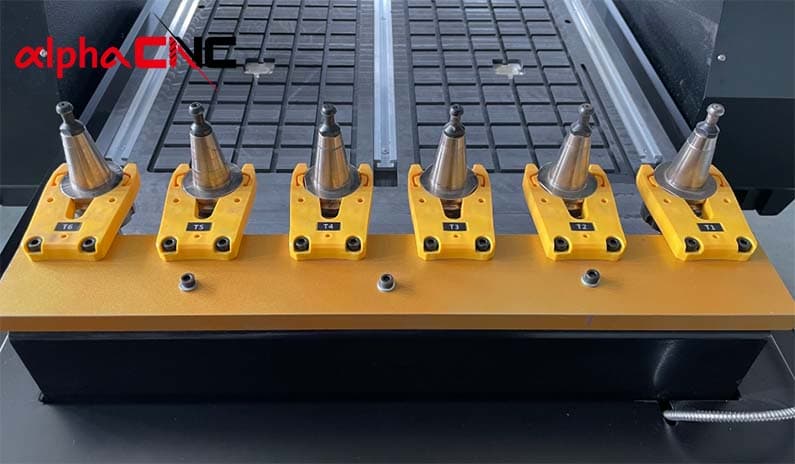
In addition, your business may involve not only acrylic processing but also cabinet, custom furniture, or other sheet processing orders. In this case, the application value of an ATC CNC router will be broader. This type of automation can reduce the waiting time caused by manual tool changes and improve the processing efficiency of the production line.
Laser Cutting Machine for Fine Acrylic Cutting

A laser cutting machine uses the heat generated by a laser beam to cut materials. This type of machine is divided into CO2 and fiber laser cutting machines. Among them, the CO2 laser cutting machine is suitable for cutting acrylic. Acrylic can effectively absorb CO2 laser energy, and after cutting, it can usually obtain bright, transparent edges, reducing subsequent polishing processes. In addition, a CO2 Laser Cutting Machine can also be used to process products such as wooden decorative letters, hollow wooden panels, leather decorative parts, custom packaging, and fabric decorations, helping you expand your product range.
5. CNC Acrylic Cutting Troubleshooting
When operating a CNC router to cut acrylic, if all variables are not in sync with the tool and processing parameters, some issues such as edges that melt, burrs, chipped edges, or dimensional variations may occur. Here are some common scenarios and their solutions.
| Common Problems | Possible Causes | Solutions |
| Melting Edges | Feed rate is too slow, chip evacuation is poor, or the tool is not sharp enough. | Adjust the feed rate and spindle speed, improve chip evacuation, and change the tool. |
| Rough Cutting Edges | The tool is not suitable for acrylic. | Replace it with a sharp single-flute or O-Flute bit. |
| Chipping | The tool cutting load is too high, or the material is not securely fixed. | Reduce the cutting load and ensure the workpiece is securely fixed. |
| Workpiece Movement | Insufficient vacuum suction, the vacuum contact area is too small, or the clamps are not secure. | Check the vacuum system, adjust the material layout, and use auxiliary clamps when necessary. |
| Inaccurate Dimensions | Mechanical backlash, incorrect tool diameter compensation, or inaccurate workpiece positioning. | Check the machine transmission and positioning, and confirm the tool diameter and CAM tool compensation settings. |
When using a CNC router to process acrylic, the spindle speed, feed rate, and chip load need to be properly matched. The following cutting parameters are based on Alpha CNC’s experience with acrylic machining and can be used as a reference:
| Machining Method | Tool Diameter | Spindle Speed (RPM) | Feed per Tooth (mm/tooth) | Feed Rate (mm/min) |
| Finishing | 3 mm Single-Flute | 18,000 | 0.10–0.12 | 1,800–2,160 |
| Finishing | 4 mm Single-Flute | 18,000 | 0.10–0.12 | 1,800–2,160 |
| Finishing | 6 mm Single-Flute | 16,000 | 0.10–0.14 | 1,600–2,240 |
| Roughing | 3 mm Single-Flute | 18,000 | 0.12–0.15 | 2,160–2,700 |
| Roughing | 4 mm Single-Flute | 18,000 | 0.12–0.16 | 2,160–2,880 |
| Roughing | 6 mm Single-Flute | 16,000 | 0.14–0.20 | 2,240–3,200 |
6. FAQ
What Is the Best CNC Bit for Cutting Acrylic?
In the majority of acrylic sheet cutting, we recommend the use of a single-flute spiral bit with larger chip removal, resulting in lower heat buildup from friction between the chips, machine tool, and material, thus reducing or eliminating acrylic melting and material adhesion to the tool.
What Thickness of Acrylic Can a CNC Router Cut?
A CNC router can cut acrylic sheets ranging from a few millimeters to several dozen millimeters thick, but the actual machinable thickness depends on the spindle power, machine rigidity, tool specifications, and cutting method. For acrylic sheets with a thickness of 3–6 mm, a single-flute spiral milling cutter can usually be used for cutting. During processing, appropriate spindle speed and feed rate need to be set according to the tool diameter and material properties to ensure that chips are removed in time and avoid melting or tool sticking during cutting. If you need to cut thicker acrylic sheets, such as 10 mm, 20 mm, or even thicker sheets, it is generally recommended to use multiple passes, gradually increasing the cutting depth.
Can a CNC Router Cut Both Cast and Extruded Acrylic?
A CNC router can process both cast acrylic and extruded acrylic. Cast acrylic has relatively higher hardness, making it easier to form good cutting edges during cutting. It is suitable for making advertising signs, display stands, 3D letters, and acrylic products that require fine edges. Extruded acrylic is more likely to develop melted edges and tool sticking due to excessive cutting heat. During processing, you should prioritize using sharp single-flute acrylic-specific tools, maintain a sufficient feed rate and good chip removal conditions, and avoid letting the tool stay in one position for too long.
Is a CNC Router Better Than a Laser Cutter for Acrylic?
Both have their own advantages. A CNC router is better for slot milling, drilling, 3D, and many other processes with more robust acrylic stock thicknesses. It is more suitable to use a laser cutter to cut acrylic sheets of thin to medium thickness. In addition, the cut edges are of good quality, with good transparency and slickness, making it ideal for acrylic products with high appearance requirements.
How Do You Get Smooth Edges When CNC Cutting Acrylic?
You can use a combination of rough and precision machining. Rough cut to contour first, keep some machining allowance, and then use a smaller cutting amount to finish. You must also check that the cutting tool is in good condition. It is also important to confirm that the cutting tool is sharp, is installed properly, and verify that there is no significant spindle radial runout.
Final Thought

A suitable CNC router will fit your present requirements and also accommodate the production of other customer orders in the future. Pick the machine based on the products to be made; avoid making a decision too quickly based on the machine model and price.
Alpha CNC can assist you in designing a suitable machine according to the dimensions of your sheet, validation sequence, and production volume. Provide us with the details of your processing needs to receive a CNC machine solution tailored for your manufacturing process, plus a detailed quotation.


