
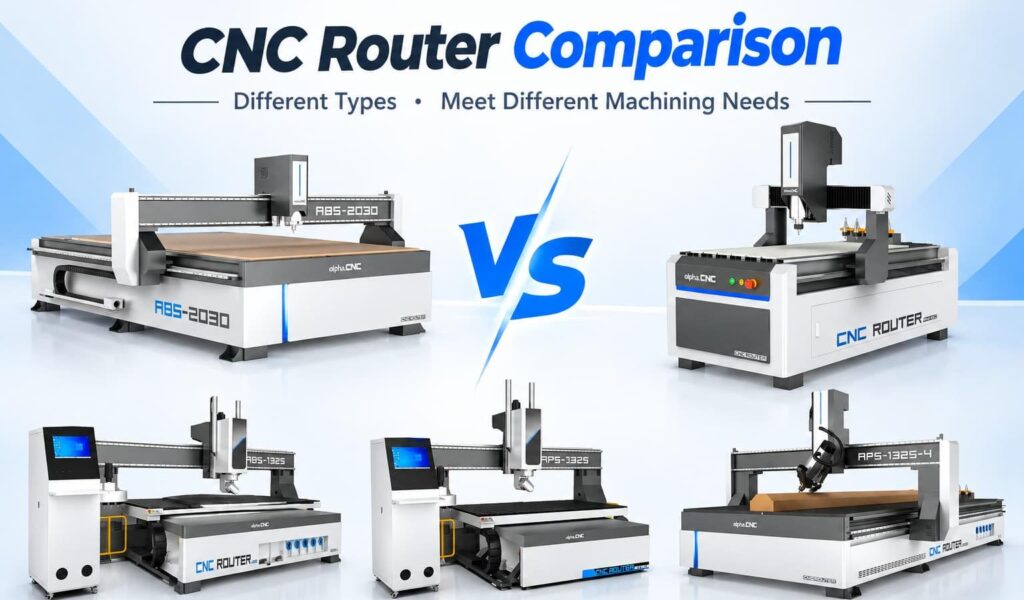
The purpose of comparing CNC routers is not merely to find the machine with the lowest or highest price, but also to understand the configuration differences among different machines and how these differences affect machining and production. This article compares common CNC routers and helps you choose a suitable CNC router.
1. CNC Router Types Comparison by Machine Configuration
3-Axis vs. 4-Axis vs. 5-Axis CNC Router
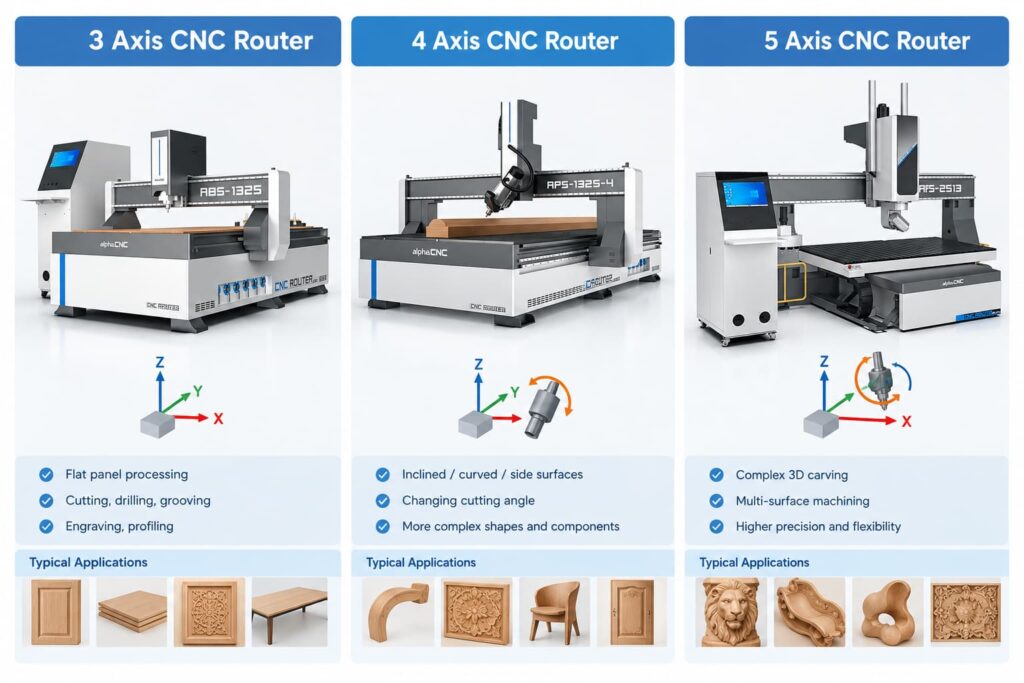
The number of axes of a CNC router determines the directions in which the tool can move and directly affects the types of processing that the equipment can complete.
| CNC Router Type | Main Difference | Typical Applications |
| 3-axis CNC Router | X, Y, Z movement | Flat panels, wood, MDF, plywood, acrylic |
| 4-axis CNC Router | Adds rotary or multi-angle machining | Cylindrical and multi-angle workpieces |
| 5-axis CNC Router | Multi-axis movement and tool angle adjustment | Complex curved surfaces and 3D parts |
3-Axis CNC Router
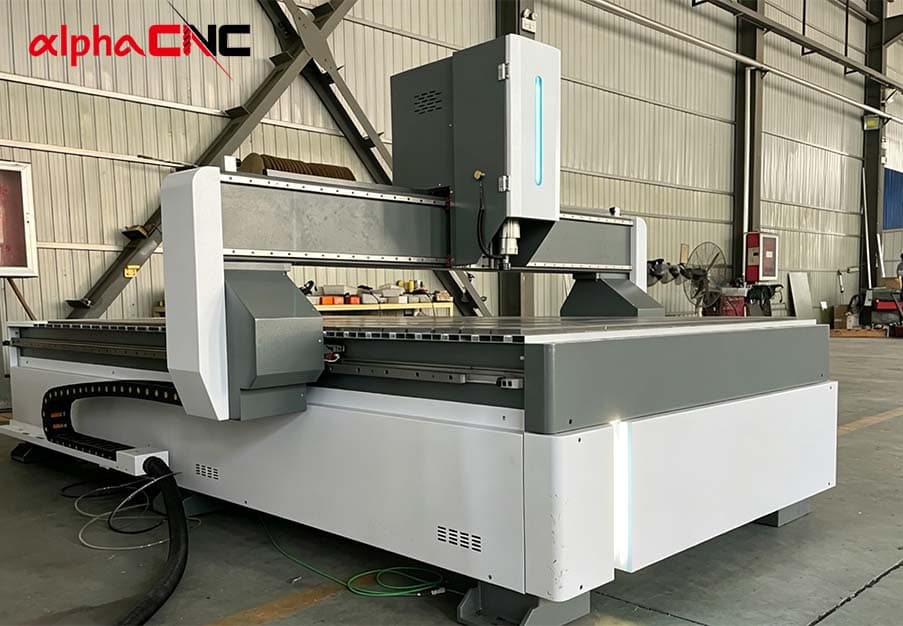
A 3-axis CNC router is one of the most widely used basic CNC machines. It controls the tool movement through the X, Y, and Z axes and is suitable for completing most flat processing tasks, such as sheet cutting, 2D engraving, grooving, drilling, and shallow relief carving. The advantages of 3-axis equipment are its simple structure, easy operation, lower maintenance cost, and good stability.
However, 3-axis CNC routers have limitations for complex three-dimensional structures, multi-side processing, and parts that require changing processing angles.
4-Axis CNC Router
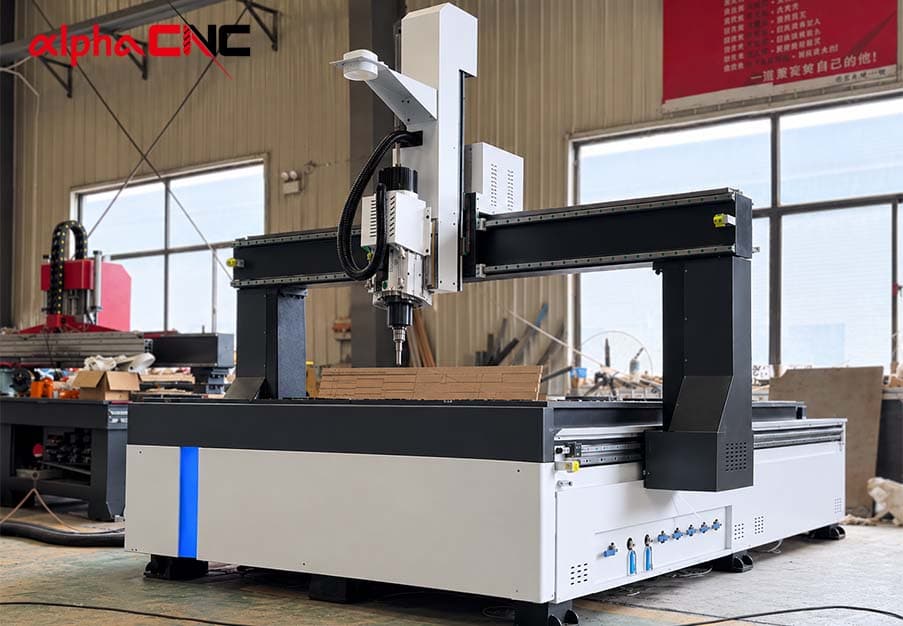
A 4-axis CNC router adds an additional rotary axis or swing head based on the three-axis structure. The specific structure depends on the machine design, such as a rotary axis or swing head. In addition to flat processing, it can also process cylindrical, curved, and some workpieces that require multi-directional processing. Compared with a 3-axis CNC router, the 4-axis CNC router can reduce the number of workpiece flipping times, improve continuous processing capability, and is suitable for products such as table legs, stair handrails, Roman columns, and decorative parts.
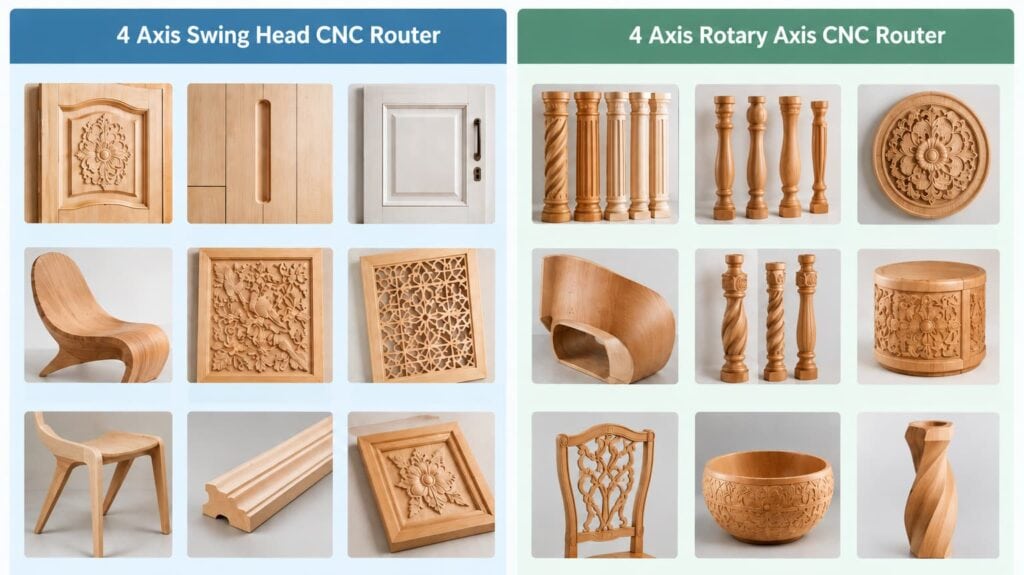
However, the processing capability of a 4-axis CNC router is still mainly focused on rotary workpieces. For complex surfaces, multiple angled sides, and complex 3D structure machining, a more flexible 5-axis CNC router is usually required.
5-Axis CNC Router
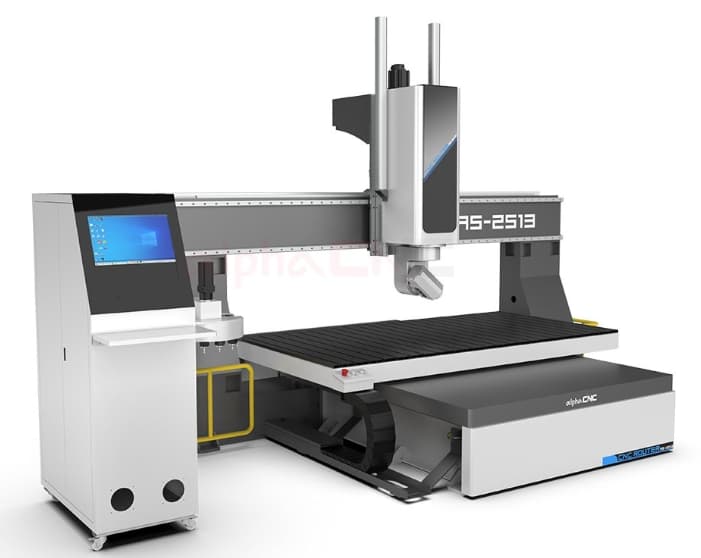
Compared with 3-axis and 4-axis CNC machines, the biggest advantage of a 5-axis CNC router is that it can complete more directional processing in one clamping, reduce repeated positioning, and improve the processing efficiency and surface quality of complex parts. It is suitable for processing complex curved surfaces, irregular furniture components, sculptures, molds, and other products with multi-angle processing requirements.
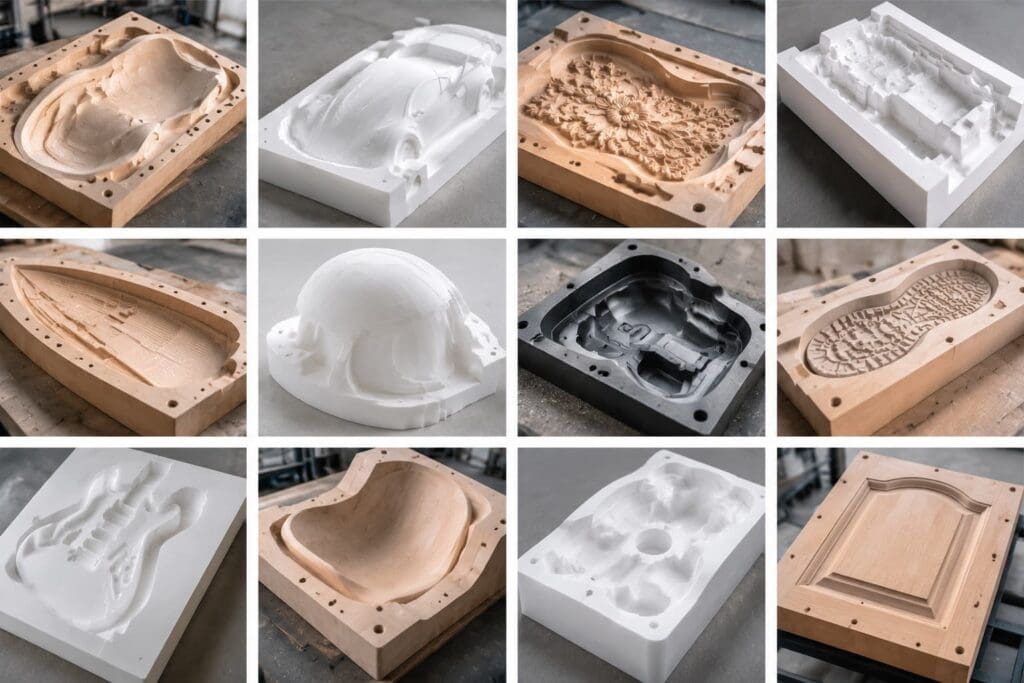
5-axis CNC router usually has a higher cost. At the same time, it also has higher requirements for software compatibility, operation, and maintenance.
Manual Tool Change vs. ATC CNC Router
Manual Tool Change CNC Router

When the processing tasks involve fewer types of tools, or frequent tool changes are not required between different processes, manual tool change CNC routers can usually meet production needs. However, when a workpiece requires multiple operations such as cutting, grooving, drilling, and carving, frequent machine stops for tool changes can increase manual handling time and affect overall machining efficiency.
ATC CNC Router
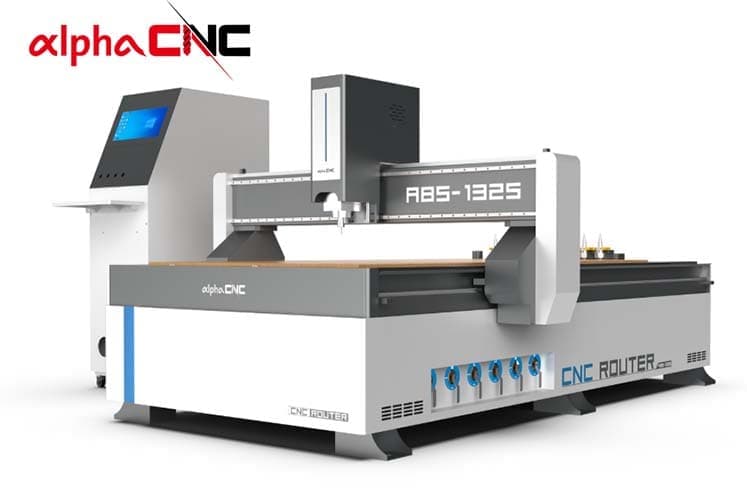
An ATC CNC router is equipped with a tool magazine, and the machine can automatically perform tool changes according to the preset machining program. For instance, if an end mill, drill bit, and V-bit are required for a machining task, the machine can automatically switch between the tools as programmed, eliminating the need for operators to manually change them between each step.
Hobby vs. Industrial CNC Router
Hobby CNC Router
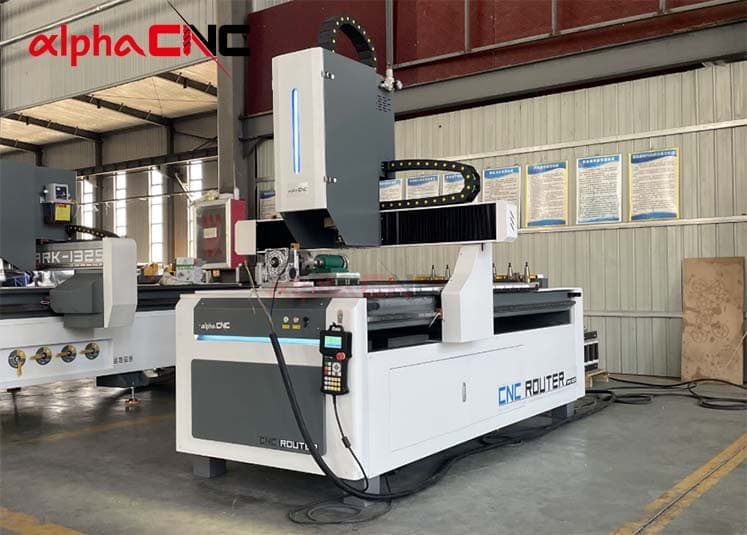
A hobby CNC router is mainly for individual users and small workshops that have a small amount of machining work. Based on our production experience, this type of equipment may use a small frame structure and a screw drive, depending on the design. Simple structure, low cost, easy maintenance, good positioning accuracy, suitable for DIY projects, small woodworking tasks, craft production, and sample making.
Industrial CNC Router
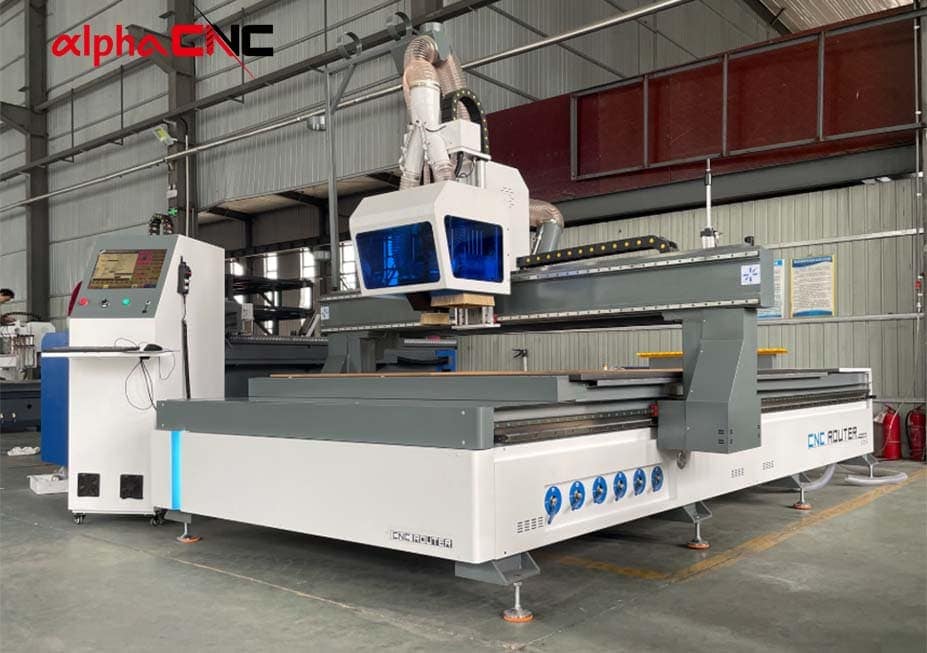
An industrial CNC router is mainly used in furniture manufacturing, cabinet production, advertising processing, and batch woodworking production. An Industrial CNC router generally uses a heavy-duty structure, which is suitable for large working areas and continuous operation. Transmission systems such as rack-and-pinion drives can be applied to support stable and continuous production.
Industrial CNC routers tend to have bigger processing size, higher machining strength, and more automation capability when compared with the hobby CNC router.
Single-spindle vs. Multi-spindle CNC Router
Single-spindle CNC Router
The advantage of a single-spindle CNC router is its high flexibility, which can meet diversified production needs. It can select suitable tools and processing parameters according to different products and materials. For companies that need to frequently change products and process different types of workpieces, a single-spindle CNC router may be the preferred choice.
Multi-spindle CNC Router
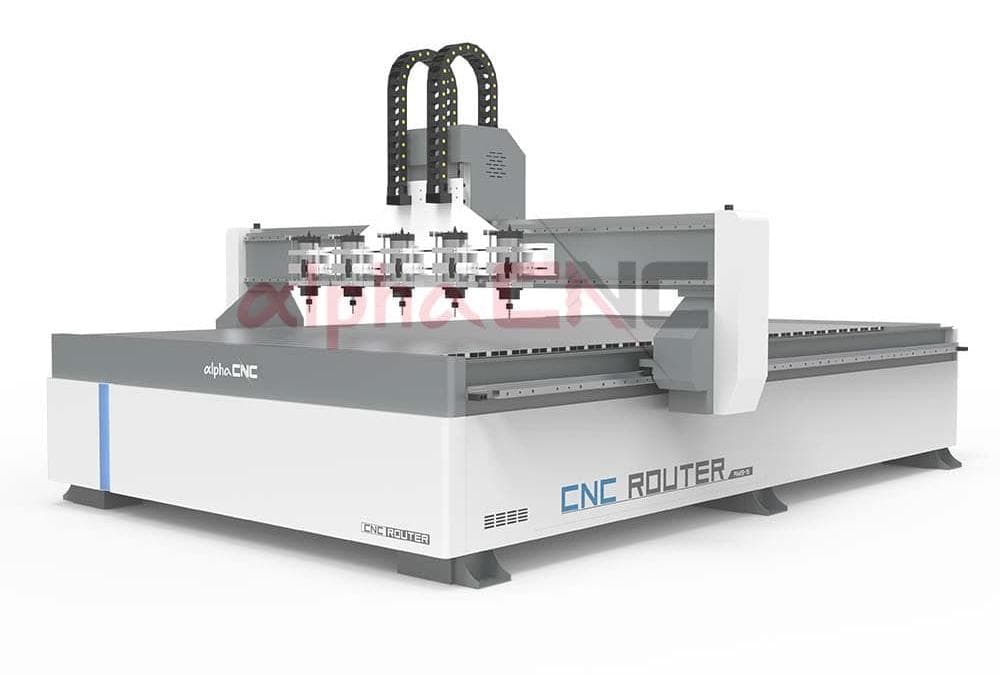
Compared with a single-spindle CNC router, the advantages of multi-spindle equipment are production efficiency and processing consistency. A multi-spindle CNC router can well meet the needs of batch and repetitive production. By setting up several spindles, multiple workpieces can be processed in parallel within one machining cycle.
This type of machine is more appropriate for batch production, where there is high product repetition, and the processing programs are relatively stable. According to different configurations, it is usually used for processing furniture components, partitions, decorative panels, and hollow carved screens.
2. CNC Router Comparison by Application
CNC Router for Furniture and Cabinet Production
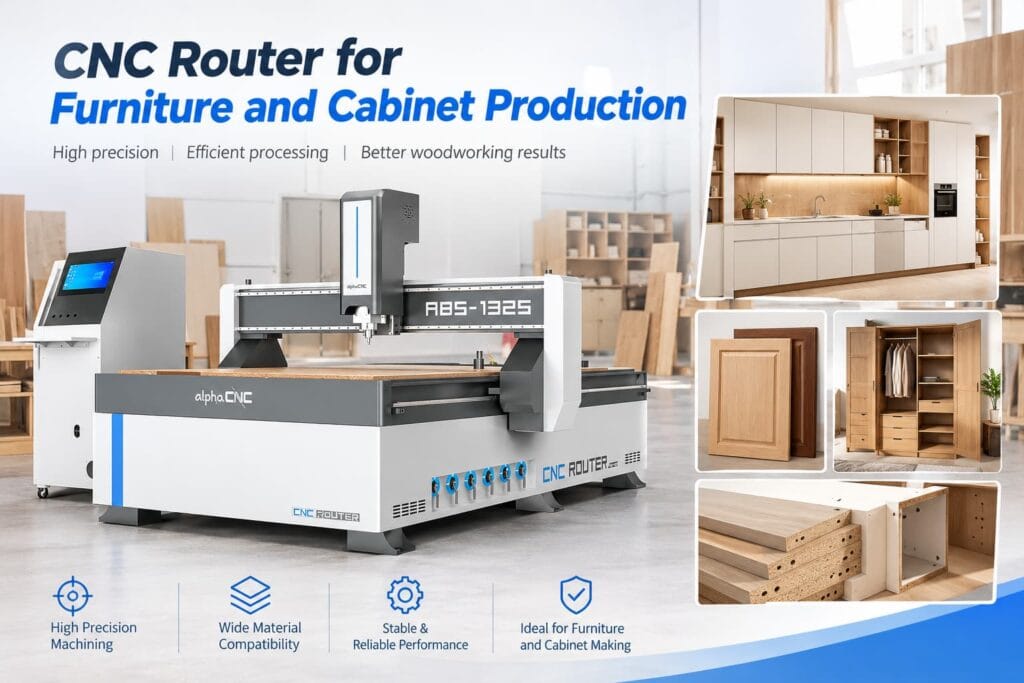
Furniture and cabinet production is mainly based on sheet material processing. For a CNC router comparison, you will want to compare the working size of the machine, the required machining processes, and the machine’s production efficiency.
| Processing Requirements | Common Configuration | Main Advantage |
| MDF, plywood and other boards | 1325 CNC Router | Suitable for standard 4×8 ft sheets |
| Multiple tools for one job | ATC CNC Router | Automatic tool changing |
| Cabinet production with frequent drilling | ATC CNC Router with Drilling Unit | Combines drilling and cutting |
| Large sheets or high-volume production | 1530 ATC Nesting CNC Router | Larger work area and continuous processing |
For furniture and cabinet manufacturers that mainly process sheet materials such as MDF, plywood, and particle board, a 1325 CNC router is a relatively common choice. This type of CNC wood router has a working area of about 1300 × 2500 mm, which can satisfy the processing demand of most of the 4×8 ft sheets. It is suitable for processing products such as cabinet doors, furniture panels, and decorative panels.
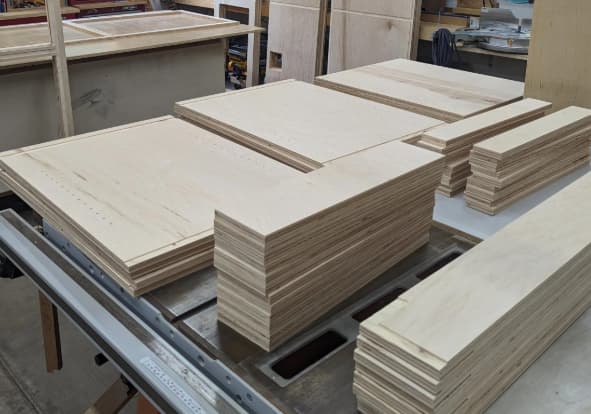
If a processing task requires the continuous use of multiple tools, such as grooving or engraving after cutting, then an ATC CNC router will be more suitable. Compared with manual tool change equipment, the automatic tool change system can automatically switch tools according to the machining program, reduce downtime, and is more suitable for furniture production with more order types or requiring continuous processing.
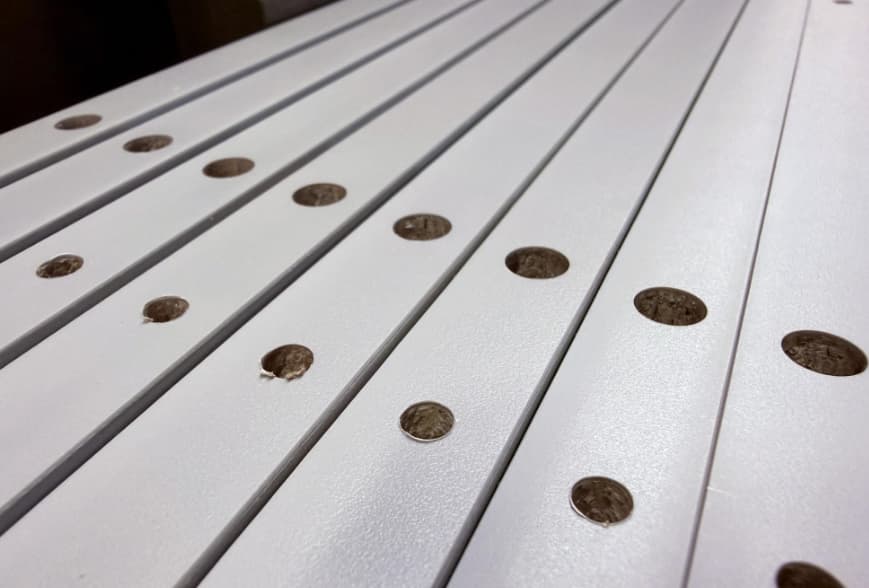
For panel furniture and cabinet manufacturing, drilling capability is also an important factor that needs to be considered when selecting a CNC router. If production includes a large number of connection holes, hinge holes, or positioning holes, a CNC router with a drilling unit can be selected.
For making furniture with larger-size boards or full sheet nesting, a 1530 ATC nesting CNC router with larger working space may be your choice. Nesting software can optimize the layout of parts on a full sheet and improve material utilization.
CNC Router for Sign Making and Advertising
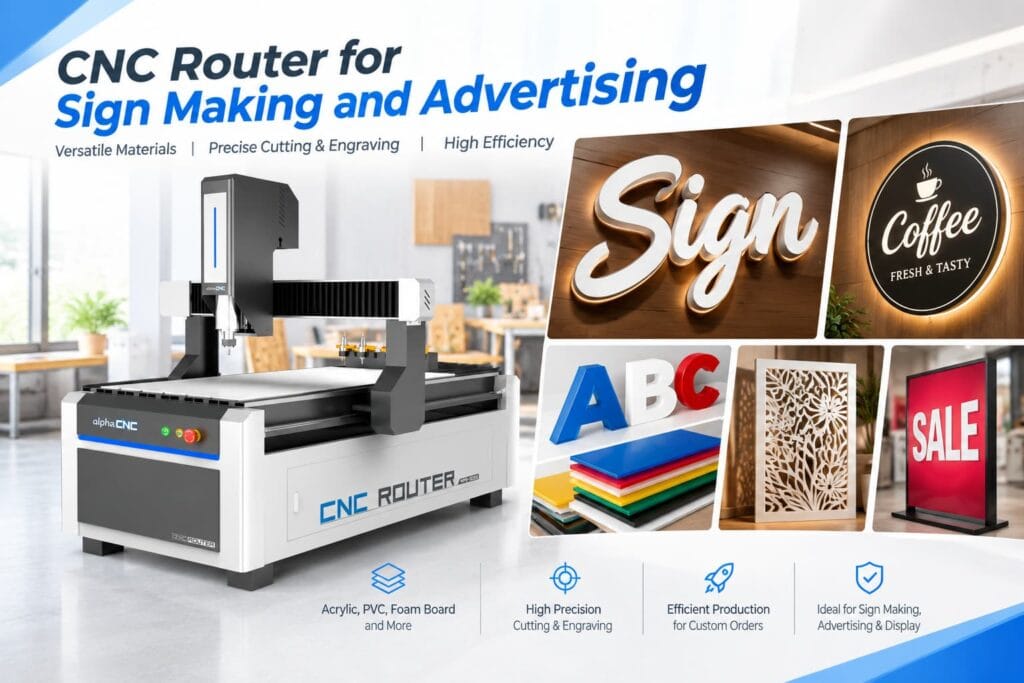
Advertising sign processing usually involves various materials, significant variations in product sizes, and many customized orders. When comparing CNC routers used in the advertising sign industry, in addition to the working size, it is also necessary to consider whether the machine has capabilities suitable for advertising processing.
| Advertising Sign Processing Requirements | Recommended Machine | Applicable Features |
| Small-size signs, lettering, acrylic letters | 6090 CNC Router | Suitable for small-scale custom processing |
| Common 4×8 ft sheets and medium-size advertising signs | 1325 CNC Router | 1300×2500mm working area, can process common advertising materials |
A 6090 CNC router has a smaller footprint, making it more suitable for advertising studios, small processing factories, and customized orders with large variations in product sizes. It can complete cutting and engraving of common advertising materials such as acrylic, PVC, MDF, and wood.
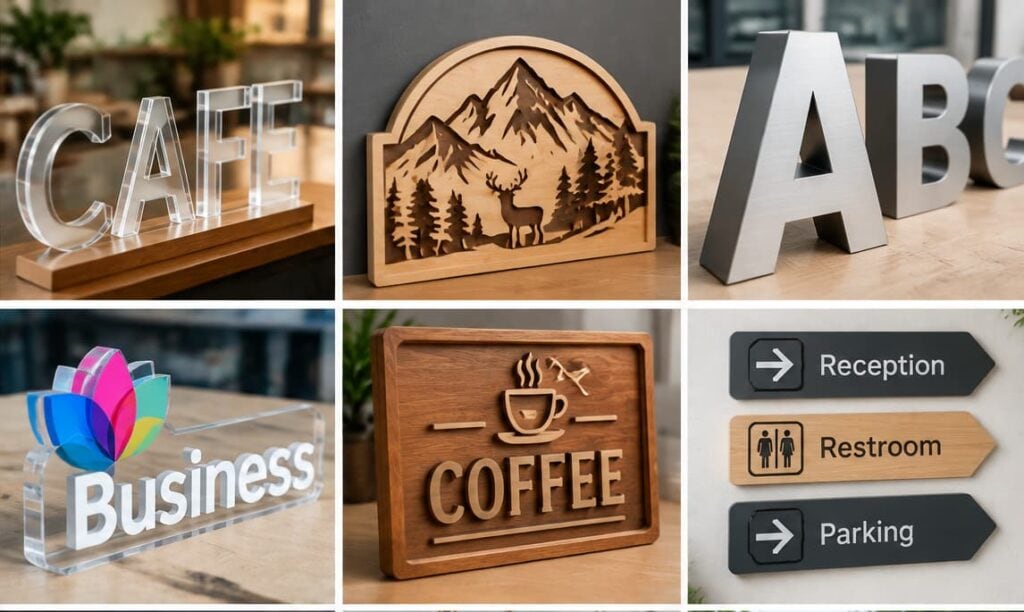
For advertising products that need to process standard sheet sizes, the 1325 CNC router is a more common choice in the advertising industry. Compared with the 6090 CNC router, the advantage of the 1325 CNC router is its larger working area. Unlike furniture and cabinet production, when using a 1325 CNC router in the advertising industry, the focus is usually not mass production but having one machine to adapt to different materials and different-size orders.
CNC Router for 3D Wood Carving
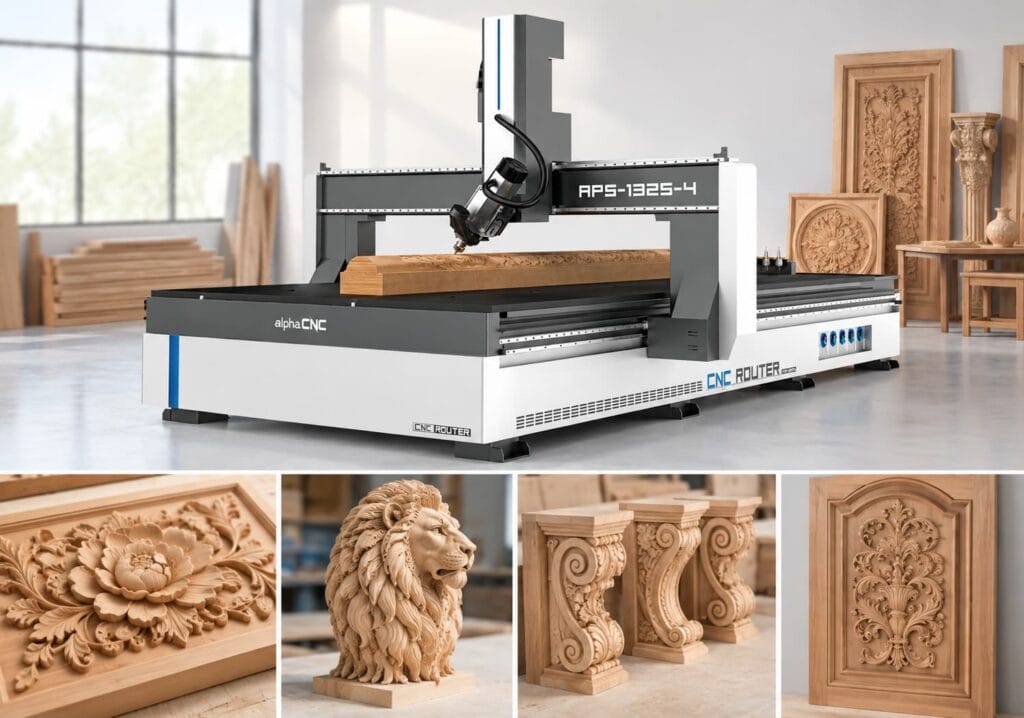
3D wood carving processing is different from ordinary CNC cutting and usually involves complex curved surfaces, three-dimensional structures, and multi-directional processing. When comparing CNC routers for 3D wood carving, it is necessary to focus on determining how many axes are required for processing based on the complexity of the workpiece.
A 4-axis CNC router is a more flexible choice than a standard 3-axis CNC router. The swing head of a 4-axis ATC CNC router can adjust the processing angle, thereby handling some side surfaces, inclined surfaces, and multi-directional processing requirements.
When wood carving products have complex spatial curved surfaces, deep contours, or require continuous processing from multiple directions, 5-axis CNC routers can provide greater processing freedom. 5-axis CNC routers achieve tool orientation relative to the workpiece through five-axis linkage, which can reduce the repeated clamping of the workpiece and is suitable for processing workpieces such as sculptures, complex curved surfaces, and extremely complex 3D wood products.
CNC Router for High-Volume Production
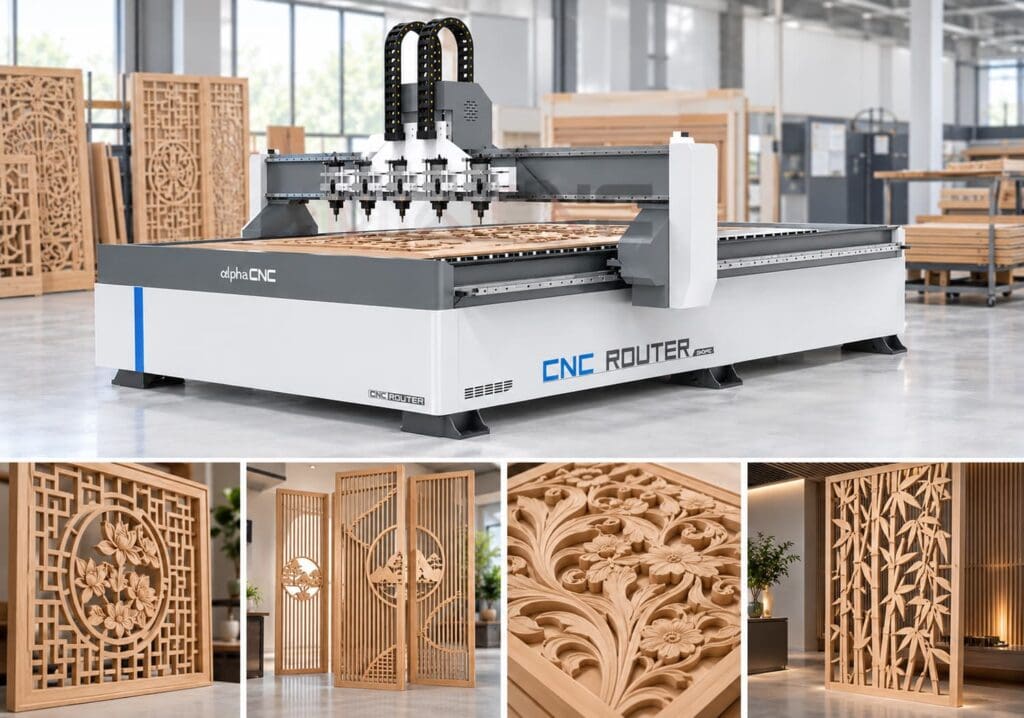
If it is necessary to repeatedly process a large number of identical or similar workpieces in production, a multi-spindle CNC router can be considered. Multiple spindles can simultaneously process multiple workpieces, reducing the time required to process individual workpieces one by one and making it more suitable for mass production.
This type of equipment is more suitable for production tasks with high product repetition rates and relatively fixed processing procedures. The number of spindles can be selected according to your needs.
3. CNC Router Price Comparison
| CNC Router Type | Approx. Price Range |
| Hobby CNC Router | $2,000–$6,000 |
| 3-axis CNC Router | $3,000–$20,000 |
| 4-axis CNC Router | $25,000–$35,000 |
| ATC CNC Router | $10,000–$25,000+ |
| Multi-spindle CNC Router | $8,000–$20,000+ |
| Industrial CNC Router | $10,000–$30,000+ |
The prices above are general market reference prices. The actual price will vary according to the size of the machine, the configuration of the machine, the brand of the machine, the shipping methods, and customization requirements.
Equipment Cost vs. Total Investment
When comparing CNC router prices, in addition to the price of the machine itself, it is also necessary to consider the costs of transportation, installation, training, tools, auxiliary equipment, and subsequent maintenance. When comparing prices from different suppliers, it is necessary to confirm the specific contents included in the quotation.
From CNC Router Comparison to Machine Selection
When you are considering purchasing or upgrading your CNC router, compare machine type, application, and price; you can further choose the machine according to your actual situation.
- Production requirement definition: Processing materials, maximum workpiece size, main processing procedures, expected production volume, and anticipated daily working hours.
- Compare suitable machine configurations: Choose the workspace, number of axes, spindle configuration, tool-change method, tool magazine, and other necessary functions according to your needs.
- Consider technical support and after-sales service: Confirm the technical support and after-sales service provided by CNC router suppliers.
- Ask for a detailed CNC router quote: Based on your needs and the configuration of the machine, request a detailed quotation from the supplier.
FAQs
What Is the Most Important Factor When Comparing CNC Routers?
There is no single element that can be used to judge whether a CNC router is suitable. The key is whether the performance of the machine can meet your actual processing needs, such as whether the workpiece size is appropriate, whether the material can be processed, required machining processes, and how much processing volume per day.
Which CNC Routers Are Suitable for Woodworking?
For individual users or small workshops, a small CNC router can usually meet basic needs for making signs, wooden crafts, and small relief carvings. For small and medium-sized woodworking workshops that mainly process panel furniture, cabinets, and door panels, a 1325 CNC router can be considered. If a processing task requires multiple processes such as cutting, grooving, drilling, and engraving, the ATC configuration can be considered. For complex curved surfaces or multi-angle three-dimensional workpieces, a 4-axis or 5-axis CNC router can be further considered.
Can One CNC Router Handle Different Materials?
Most CNC routers can work with various sheet materials such as plywood, MDF, and solid wood, in addition to acrylic, PVC, foam, and other materials. However, tools, spindle speed, and cutting parameters need to vary for different materials. When processing a variety of materials, the processing ability of the machine should be confirmed upon purchase, and appropriate spindle and tool configurations should be made for the primary materials.
Is a Larger CNC Router Always Better Than a Smaller One?
Not always. Large CNC routers can process larger sheets, but the equipment typically requires more space, investment, and operating costs; Small CNC routers are more suitable for the processing of smaller workpieces and limited production spaces. For most users, a machine size that can meet their actual processing needs is the appropriate choice.
How Do I Compare CNC Router Suppliers?
You should focus on comparing machine configuration, manufacturing experience, processing capabilities, after-sales service, and technical support. Meanwhile, you should also check whether the supplier has similar customers or application cases, and you can ask for details like warranty, spare parts support, installation training, delivery options, etc.
Still Comparing CNC Routers?
The goal of comparing various CNC routers is to select the right one. When you are choosing a CNC router for your project, you can inform us of the materials to be processed, the types and sizes of products, processing methods, and expected production volume.
Alpha CNC can ensure that what you finally obtain is not just a machine model or a price, but a machine configuration and quotation that matches your processing requirements, including suitable processing size, processing methods, and corresponding functional configurations.


