
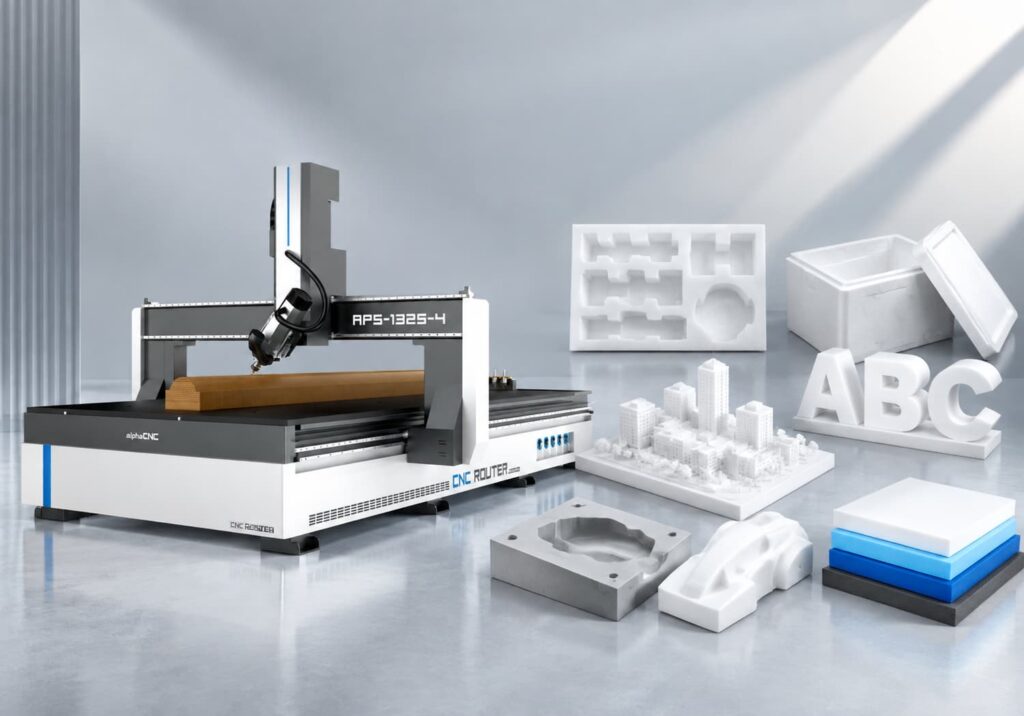
CNC foam cutting machines can accurately cut, engrave, and shape foam according to the processing program. This article introduces the types of foam suitable for CNC machining, main applications, factors affecting processing quality, and CNC machines suitable for foam cutting.
1. What Is Foam and What Types Can Be CNC Machined?
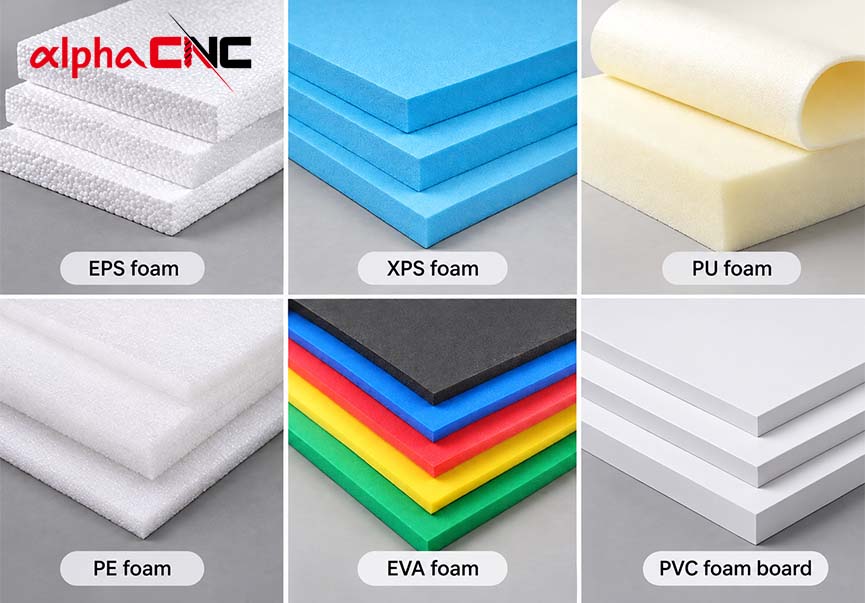
In CNC foam cutting, foam usually has the characteristics of being lightweight, easy to form, and having high processing efficiency. Different types of foam have differences in cutting resistance, surface quality, and tool selection. EPS foam, XPS foam, PU foam, PE foam, EVA foam, and PVC foam board are the most popular foam varieties that can be CNC machined.
2. CNC Foam Cutting Applications
Foam is a light material and easy to handle and fabricate, and it can be cut into workpieces of various shapes and sizes rapidly by CNC machines. CNC foam cutting is widely used in packaging, advertising signs, architectural models, mold prototypes, and sculpture shaping.
Foam Packaging and Custom Protective Liners
CNC foam cutting is widely used in the production of packaging products, car interiors, and protection panels. For example, foam liners used to protect electronic equipment and mechanical parts can be processed with corresponding grooves according to the shape of the products.
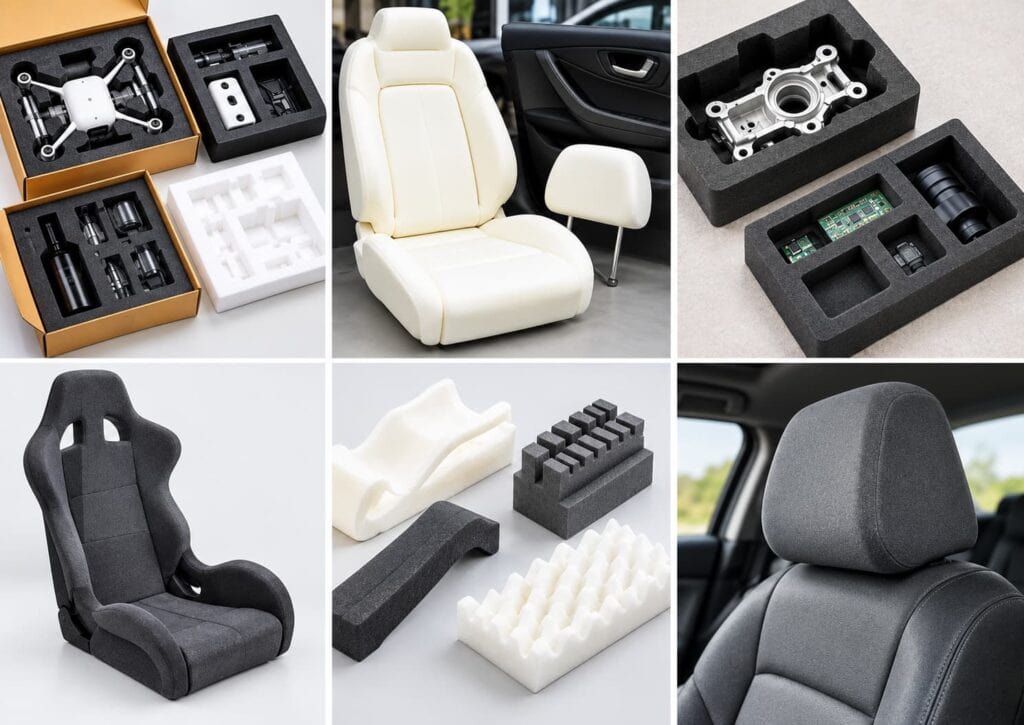
In addition, CNC foam machining can also be used to make models or processing parts of car seats, headrests, and some interior components. After using CNC machines, foam processing companies that need different packaging structures for different products can quickly process foam packaging inserts and custom tool trays with different specifications by modifying CAD files, without the need to make manual templates again for each product.
Sign Making and 3D Foam Letters

Foam is also widely used in the advertising industry. Through CNC foam cutting machines, foam 3D letters, brand signs, and display decorative parts can be made. Compared with traditional machine cutting, CNC foam routers can not only achieve precise edge cutting, but also perform surface engraving and three-dimensional machining on foam materials, making the visual presentation effect of products better.
For advertising production companies, the advantage of CNC machines is that they can quickly process products with the same design and flexibly adjust the shapes according to customer requirements.
Architectural Models and Topography
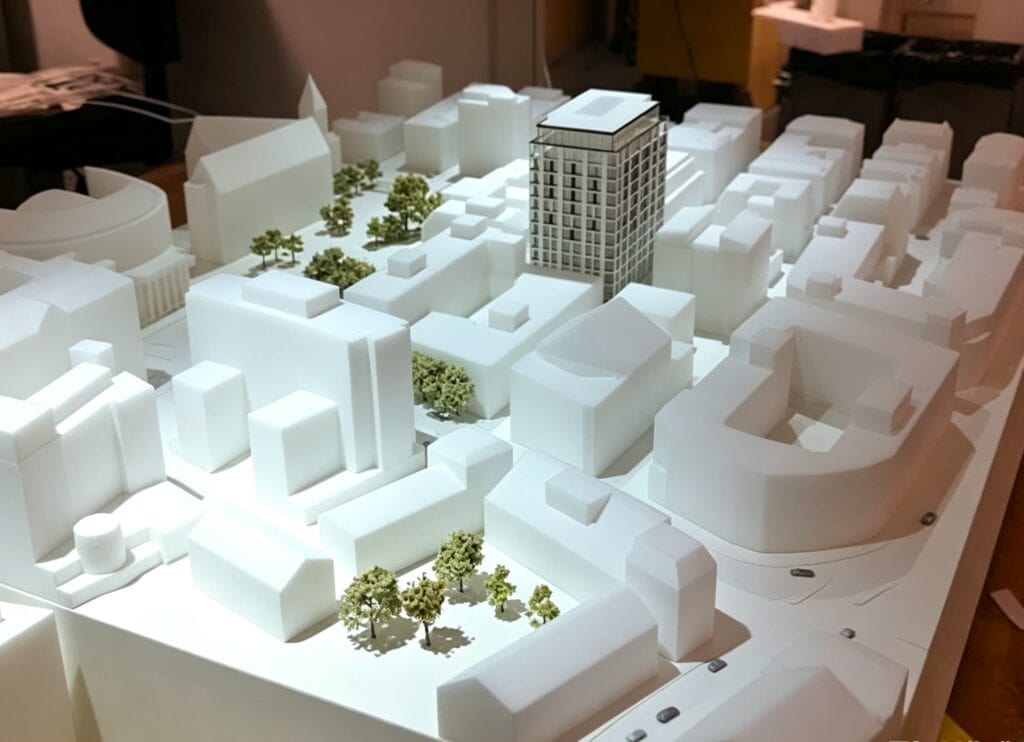
Foam is widely used in the construction field to make architectural models, urban planning models, and landscape models. CNC foam cutting allows you to swiftly machine building contours, curves, and unique design elements from CAD files. For topographic models, different elevations and slopes can be created through a 3D machining process.
CNC machines can improve the accuracy of architectural model making while reducing manual errors during the production process of complex structures.
Mold Patterns and Industrial Prototypes
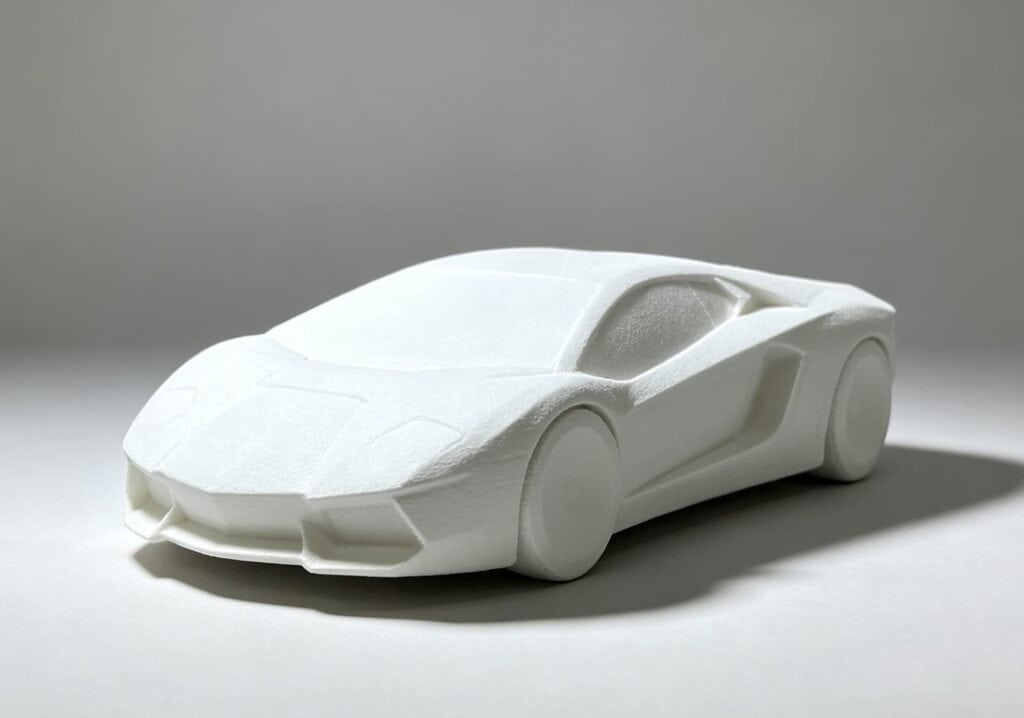
Foam is a commonly used material in model and prototype making. For example, car, hull, aircraft models, and industrial product prototypes can all be processed using CNC foam cutting machines. Through CNC machines, you can make car-shaped models, product concept models, and mold testing models on foam blocks. Compared with directly processing the final materials, foam models have the advantages of lower cost and easier modification, which can help you complete product optimization faster.
3D Sculptures and Themed Art Projects
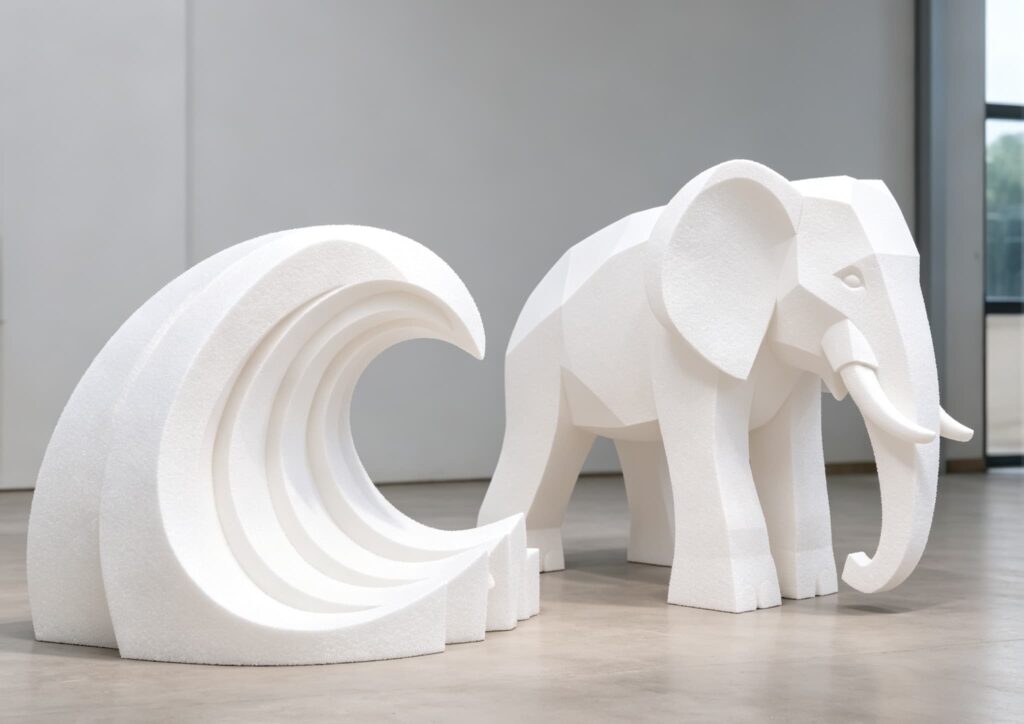
CNC foam cutting can also be used for artistic creation. For example, foam can also be used to make sculptures, art installations, stage props, theme park displays, movie props, and more. Traditional large sculptures are usually completed by manual carving, which takes a long time, while CNC routers can enable your design ideas to be quickly transformed into actual works.
For art projects containing complex curved surfaces, multi-angle structures, and fine details, multi-axis CNC machines can provide more flexible machining paths and achieve more complex 3D foam carving effects.
3. Factors That Affect CNC Foam Cutting Quality
In foam CNC cutting, the final processing effect depends not only on the CNC machine itself, but also on material properties, tooling, and machining parameters.
Density and Rigidity: Low-density foam materials have lower cutting resistance and are easier to process quickly, but they are more likely to have deformation and irregular edge problems; high-density foam materials have a more stable structure and clearer processing edges.
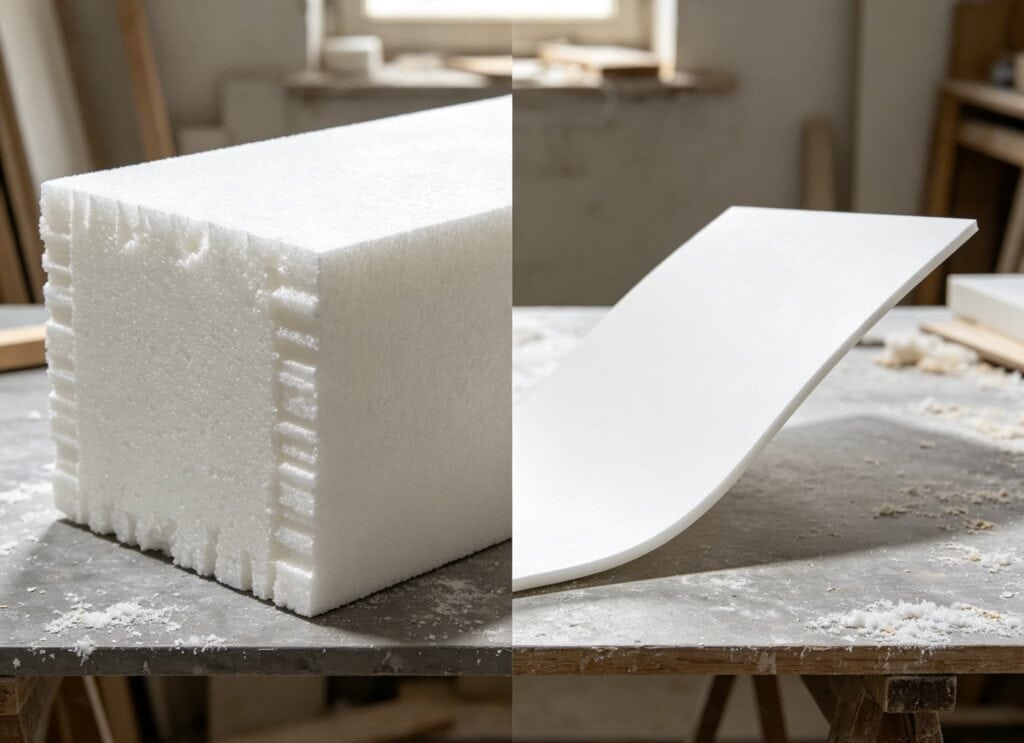
Thickness: Thicker foam usually needs to consider cutting depth and processing paths during machining. For foam blocks with larger thicknesses, attention also needs to be paid to workpiece fixing to avoid movement during the machining process.
Heat Sensitivity: Friction heat is produced while foam is cut by the tools of CNC routers and this can lead to edge melting and deformation. In actual machining, the spindle speed and feed rate need to be adjusted in time according to different foam types.
4. Key CNC Machine Specifications for Foam Cutting
From our experience manufacturing CNC machines, you should pay attention to the following aspects when selecting a CNC foam cutting machine.
Spindle Power and Speed
Unlike wood and other hard materials, foam has a much lower resistance to cutting, so a high-powered spindle is usually not required for CNC cutting of foam. However, spindle stability, speed range, and adjustment capability are very important. During actual machining, soft foam should not be cut under high pressure, while high-density foam needs more stable cutting.
Axis Configuration
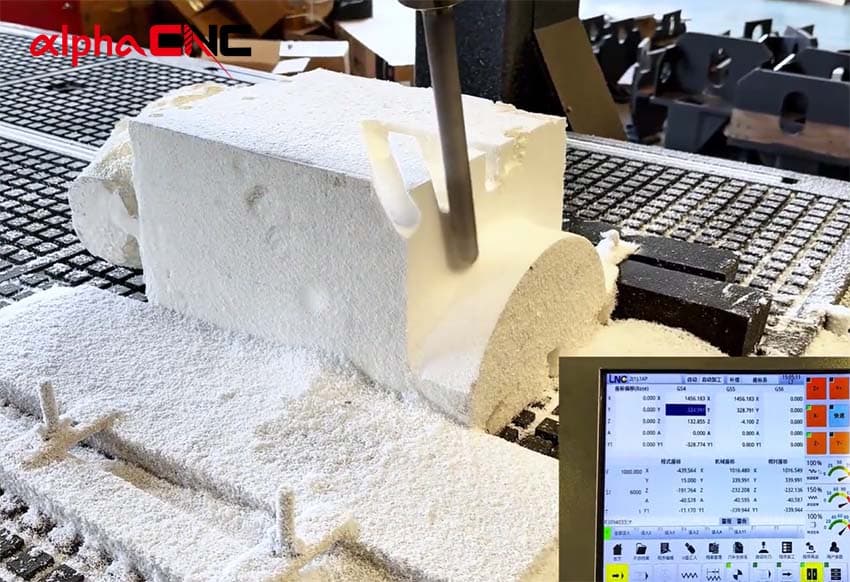
3-axis CNC foam machines can meet the needs of flat cutting, contour machining, and simple surface engraving. If you need to process more complex curved surfaces or require multi-angle machining, you can consider multi-axis machines, such as 4-axis CNC foam routers. Simple foam letters usually do not require multi-axis machines, while car models, 3D sculptures, and complex foam prototypes require your CNC machine to have multi-angle machining capabilities.
Tool Selection
Simple contour cutting, grooving, and 3D carving do not have exactly the same requirements for tools. In actual machining, tools usually need to be selected according to the hardness, thickness of the foam, and the required surface effect.
Vacuum Table and Clamps
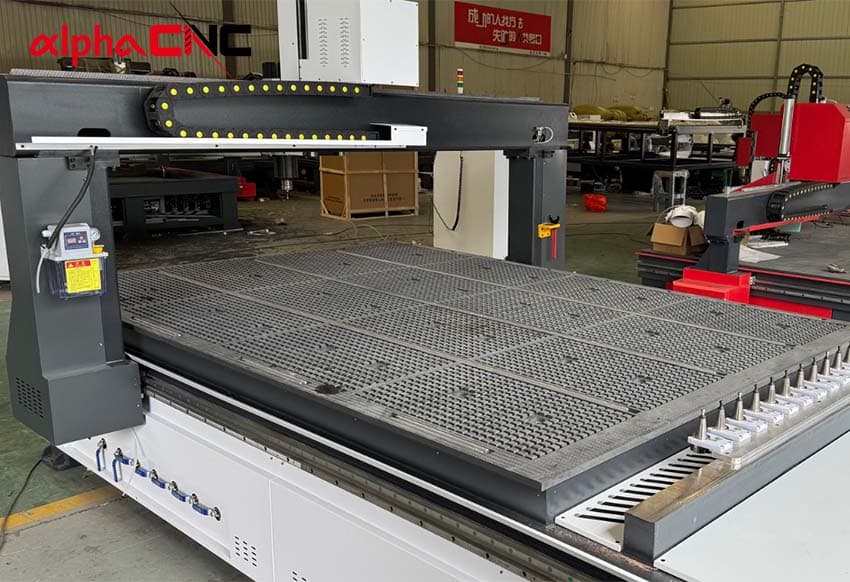
This can effectively reduce the problem of workpiece movement. For some workpieces with special shapes or thicker foam blocks, fixtures can also be used for fixing.
Working Area
If you mainly process small foam packaging liners, models, or sign letters, a small working table is enough; if you process large architectural models, insulation boards, or whole foam sheets, you need to consider a CNC foam router with a larger working table.
You also need to consider the product sizes that may increase in the future. Many customers ignore this point and eventually have to purchase another machine with a larger working size, increasing their investment budget.
Z-axis clearance
Foam sculptures and thick mold processing usually require a high Z-axis clearance of 400 mm-1000 mm. Alpha CNC supports customizing the column and travel height according to the height of the workpiece being processed.
Dust Collection System
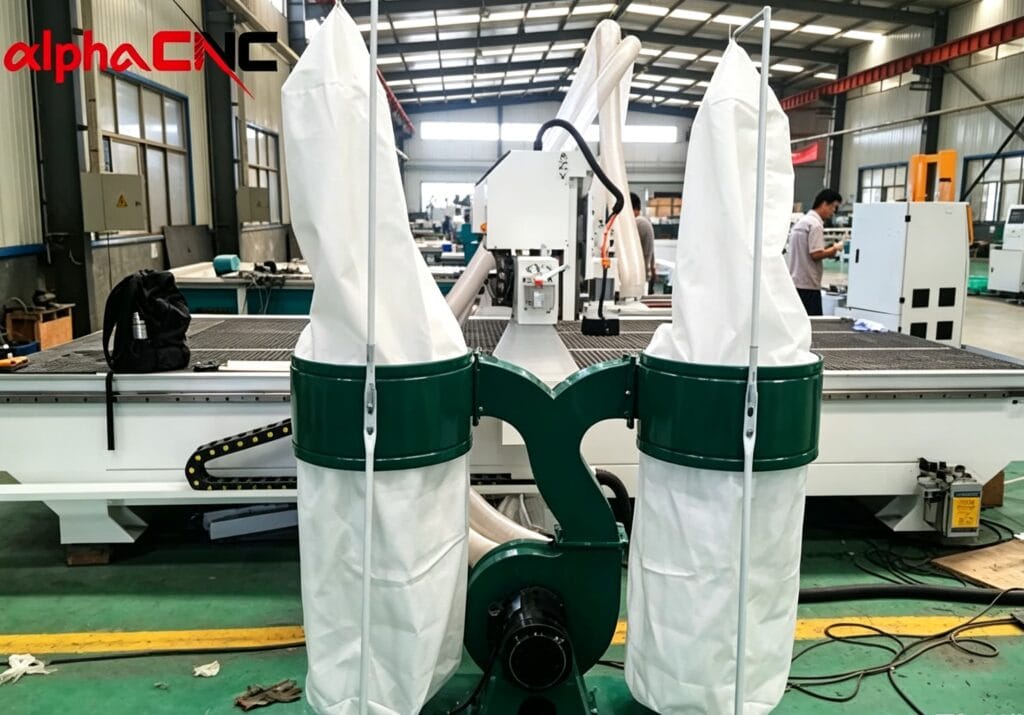
CNC routers produce chips and dust while cutting foam. For workshops handling high-volume foam fabrication, a dust collector is our standard suggestion. It can eliminate the chips around the worktable and also help you keep the processing room clean.
5. Alpha CNC Foam Cutting Machine Recommendation
As a manufacturer of CNC routers, we usually recommend different machine configurations in real projects to our customers according to their material type, product size, machining complexity, and production needs. Below are the Alpha CNC solutions for foam cutting.
| CNC Machine Type | Processing Materials | Features |
| 3-axis CNC Router | Foam packaging inserts, insulation boards, foam letters, display boards, etc. | Simple structure, wide range of applications; different processing surfaces can be selected according to workpiece size |
| 4-axis CNC Router (Swing Head) | 3D foam carving, complex curved surfaces, foam sculptures | Adjusts the main spindle processing angle through the swing head, without rotating the workpiece |
| 5-axis CNC Router | Large foam molds, complex foam models, architectural models, sculptures | Provides more processing directions, suitable for complex curved surfaces, deep cavities, and undercut structures |
| CNC Router + Oscillating Knife + CCD | Foam boards, foam letters, advertising display boards, and other lightweight materials | The oscillating knife is suitable for lightweight and soft materials, and CCD can assist in pattern recognition and positioning |
Alpha 3-axis CNC Machine For Foam Cutting
For most foam cutting projects, a 3-axis CNC router is a relatively common choice. For example, foam packaging liners, advertising letters and display boards can all be processed by a 3-axis EPS foam CNC machine.
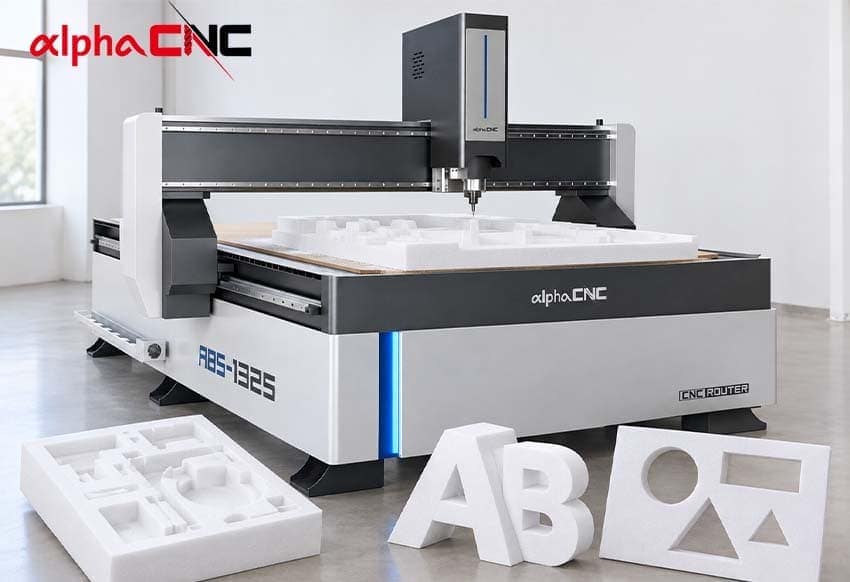
Alpha 3-axis CNC foam routers provide different configurations and machine sizes. You can choose a suitable CNC foam cutting machine according to the workpiece size. If you mainly process foam liners, insulation boards, or small and medium-sized foam letters, you can consider a smaller working area; if you need to process large advertising letters or whole foam boards, you can choose a larger working area.
Alpha 4-axis CNC Machine For 3D Foam Carving
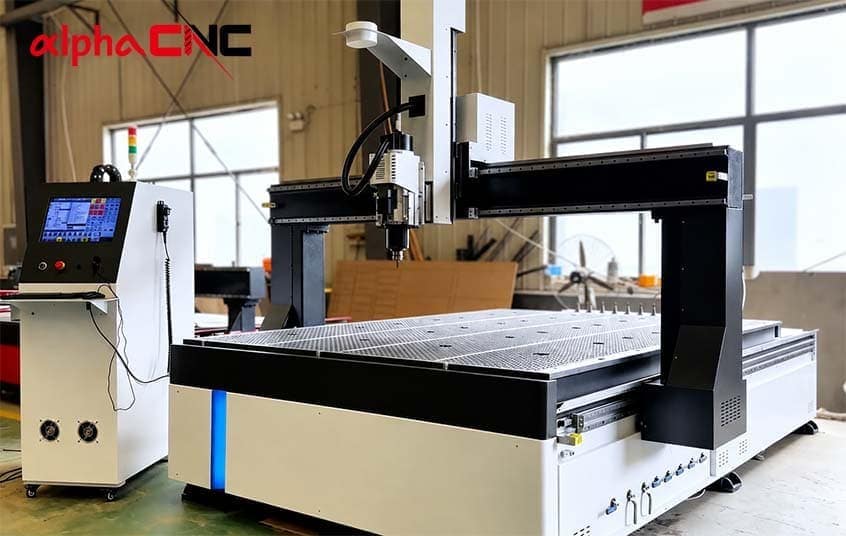
For customers who need 3D foam carving but do not want to invest a higher cost in purchasing a 5-axis CNC machine, we recommend considering a 4-axis CNC router. Unlike traditional rotary-axis 4-axis CNC routers, Alpha 4-axis foam CNC machines use a swing-head spindle. It achieves multi-directional machining through spindle swinging instead of relying on workpiece rotation for machining.
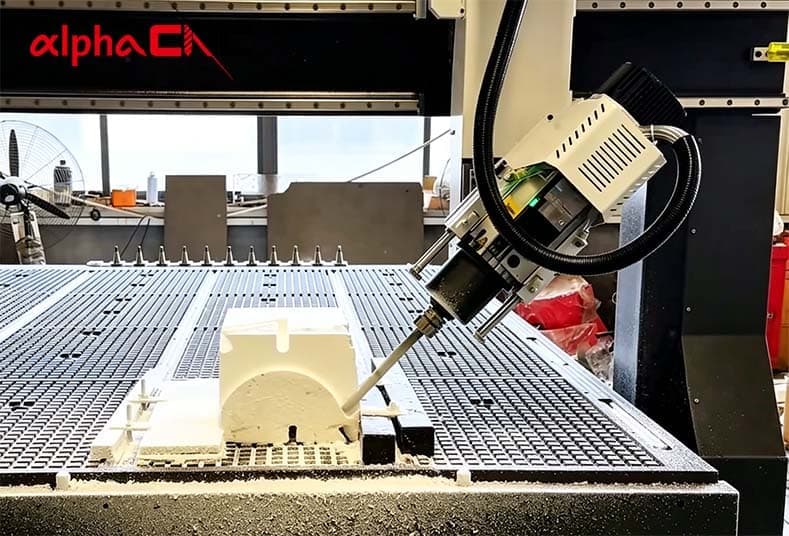
This design has the advantage that the workpiece is stationary during machining, and the spindle can adjust the angle according to the machining path, which reduces repeated clamping and improves the machining efficiency of complex structures.
Alpha 5-axis CNC Machine For Complex Foam Models
For large foam molds, artistic sculptures, and architectural models, these products may contain multi-directional curved surfaces, deep cavities, undercuts, or complex 3D structures. These types of workpieces usually have higher requirements for machine machining capabilities, and you can consider a 5-axis CNC machine. A 5-axis CNC foam machine can provide more flexible machining angles and approach the workpiece from more directions.
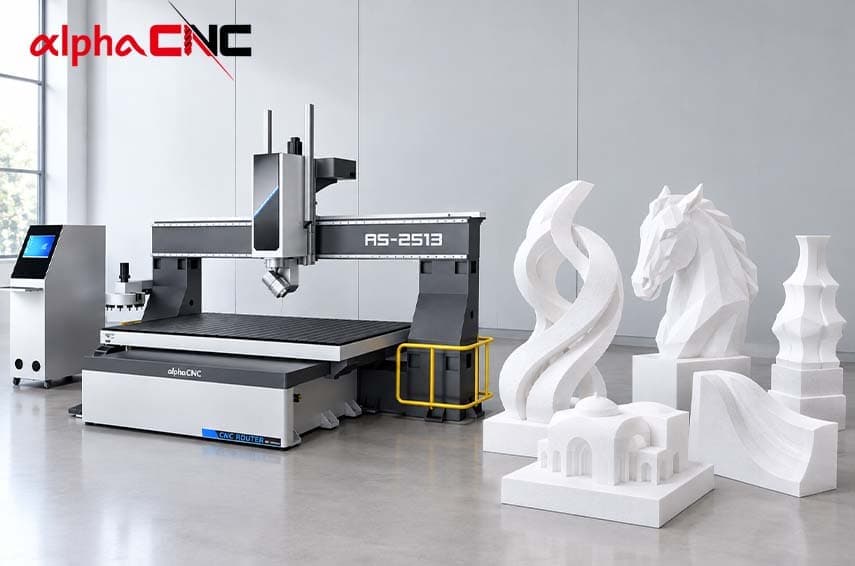
For real machine selection, not all 3D foam workpieces need a 5-axis CNC machine. 5-axis machines show their benefits only when the workpiece has more complicated curves, requires multi-directional machining, is a deep cavity or undercut. So, when talking to prospective customers, we often have to use the 3D model, workpiece dimensions, machining directions, and processes to advise you on the appropriate number of axes and machine configuration.
Alpha CNC Router with Oscillating Knife for Foam Board and Letters
For foam boards, foam letters, advertising display boards, and other lightweight materials, you can consider a CNC router with an oscillating knife. An oscillating knife cuts materials through high-frequency vertical vibration of the blade, rather than relying on high-speed rotation like traditional rotary tools. A CNC foam router with an oscillating knife can reduce material deformation caused by friction, heat, and compression. For soft and easily deformable materials such as low-density PE, EVA, and foam board, an oscillating knife can usually achieve cleaner cutting edges.
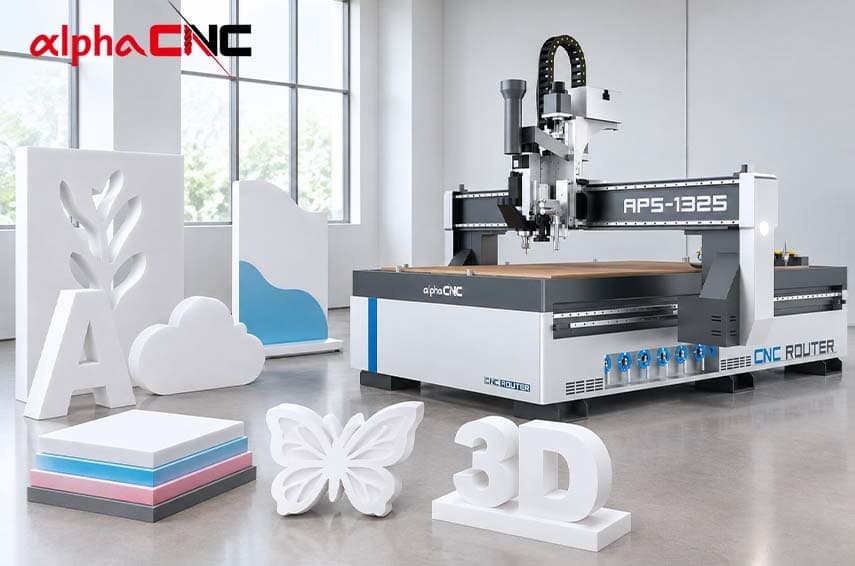
The spindle, oscillating knife, and CCD system are integrated in a CNC router. You can choose the corresponding processing method according to different materials and machining tasks. For advertising and custom processing companies that need to process a large number of different contours according to graphic files, this type of configuration can reduce manual cutting and positioning work.
Questions & Answers
What CNC router is best for foam cutting?
None of the CNC routers are dedicated to foam cutting for every material. The selection of a CNC foam cutting router mainly depends on the material type, workpiece size, and product shape. Foam packaging, foam letters, and basic shapes can be produced on a 3-axis CNC Router; by using a 4-axis or 5-axis CNC machine, you can also create complex 3D curved surfaces or multi-directional forms. For some 2D contour cutting with certain requirements for cutting quality, you can also choose a CNC router with an oscillating knife.
What router bit is used for CNC foam cutting?
For foams like EPS, EVA, PU, XPS standard single flute tools are usually better as they provide a larger chip removal space which helps reduce built up material and cutting heat, and that can result in smoother cut faces. When you 3D carve or do complex curved surface processing on a foam model, please select a ball nose bit for finishing.
Can a CNC machine for cutting foam cut other materials?
Absolutely. The majority of CNC routers are capable of cutting not only foam but also wood, MDF, plywood, acrylic, PVC, and so on. Still, the tools, the spindle parameters, and the types of machining are different, depending on the material. As a result, if a machine is to be used for both foam and other materials for processing, the machine should be configured according to the principal material and processing specification.
How accurate is CNC foam cutting?
The machining accuracy of CNC foam cutting mainly depends on material characteristics, machine structure, tool selection, and machining parameters. CNC machines can process according to CAD files, which can maintain more stable dimensions and consistency in repeated machining. For foams with better rigidity, such as XPS foam and PU foam, CNC routers can usually process more accurate contours and 3D shapes, and are suitable for machining workpieces such as prototypes and architectural models that require higher dimensions and accuracy.
What should be considered when using CNC foam cutting?
When foams are to be cut with CNC, at least several relevant properties have to be known (density, hardness, thickness, to some extent flexibility, heat sensitivity or heat resistance), and then tool type, spindle speed, and feed rate have to be selected accordingly. Additionally, you have to consider workpiece fixing, the machining range, and the choice of a dust collection system.
Ready to Upgrade Your Foam Machining Efficiency?
Types of foam materials, product sizes, processing shapes, and processes needed will all influence the choice of machine configurations. If you want a CNC foam cutting machine for your production, welcome to contact us.
Contact Alpha CNC today to get:
- Free foam sample test cutting & video demonstration;
- Customized CNC tooling and spindle configuration proposal;
- Transparent pricing and ROI estimation within 24 hours.


