
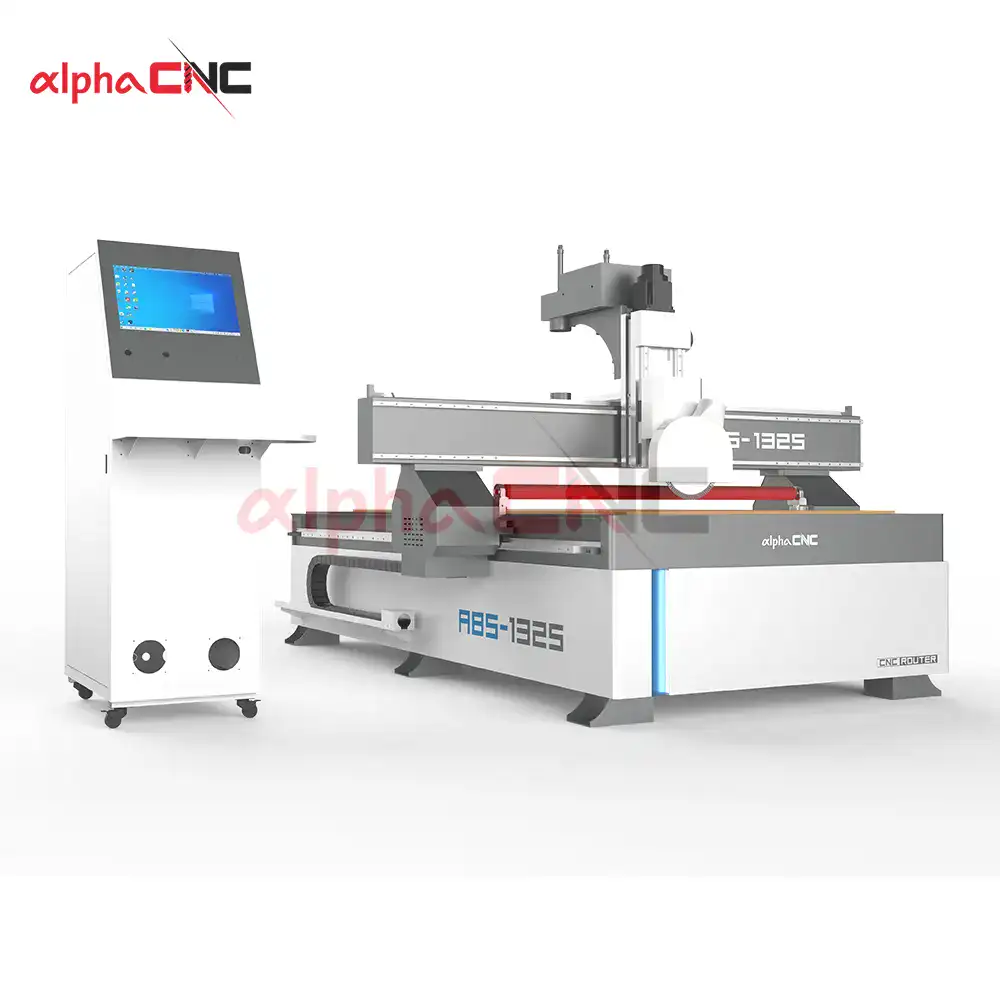
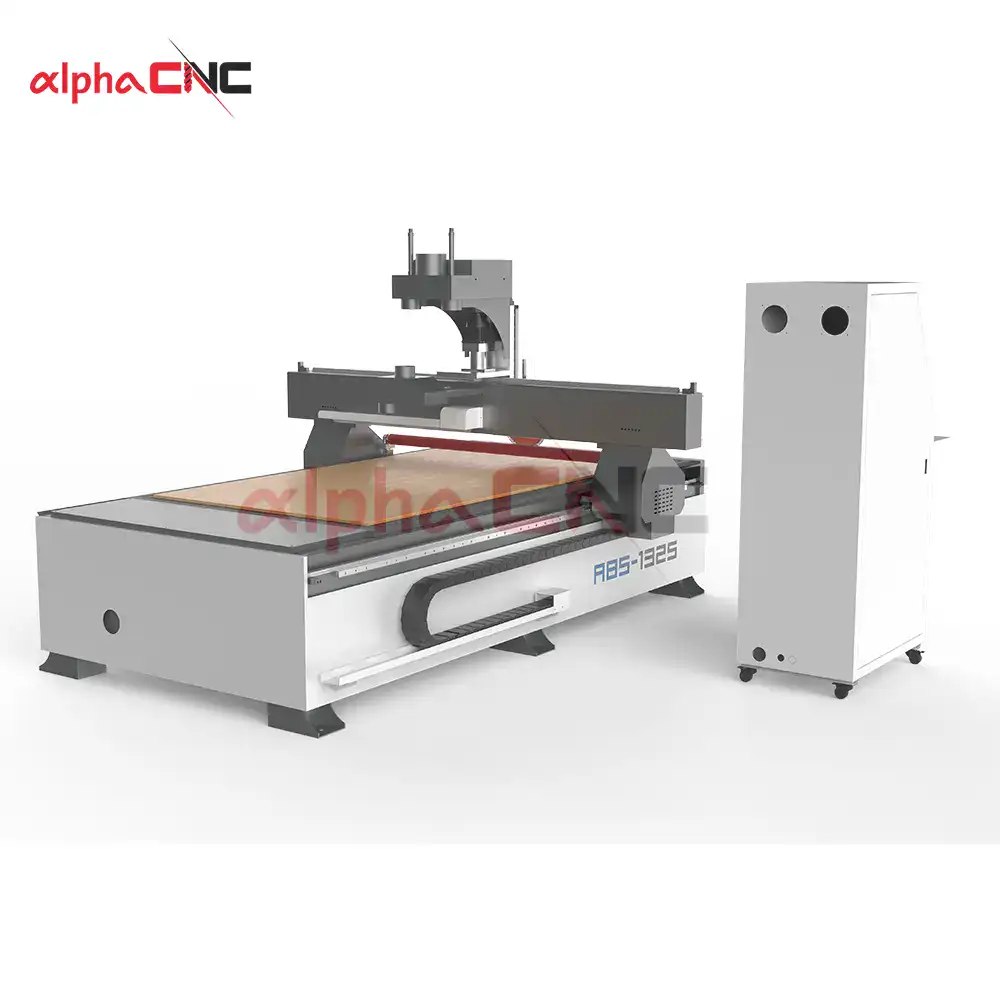
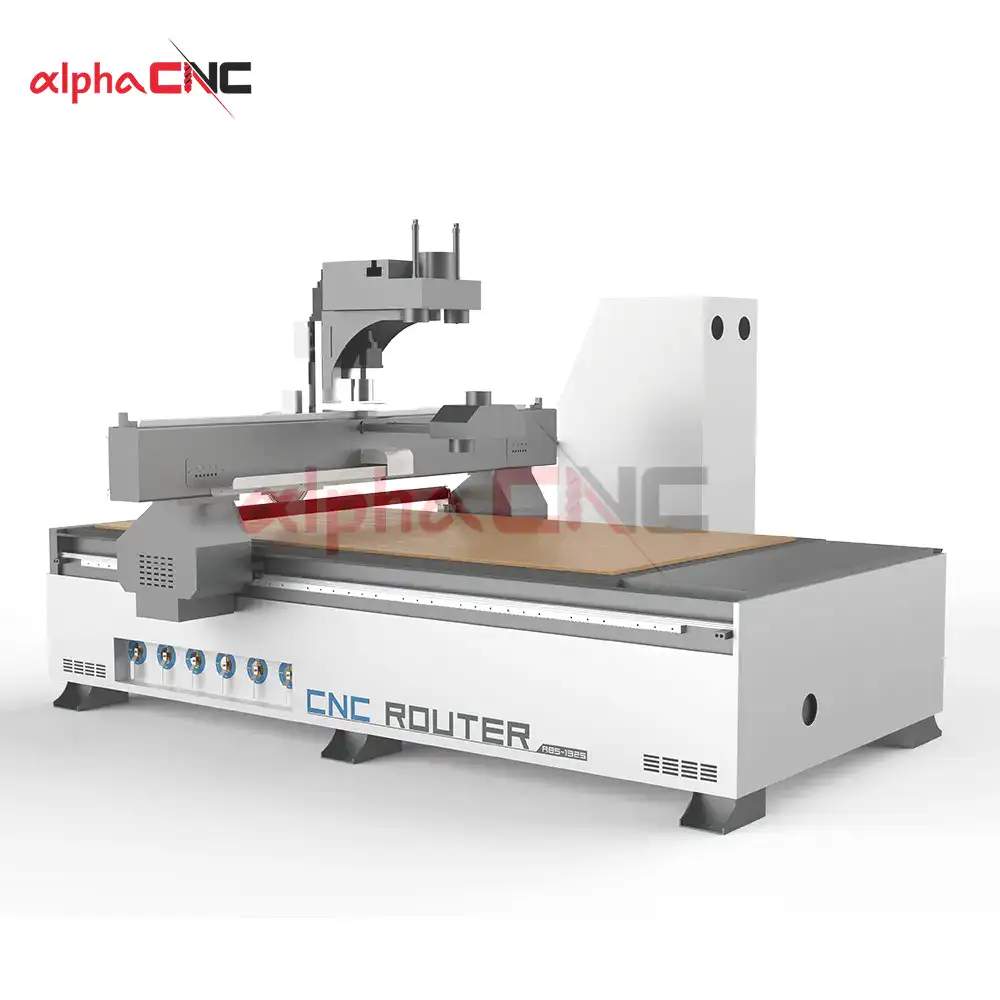
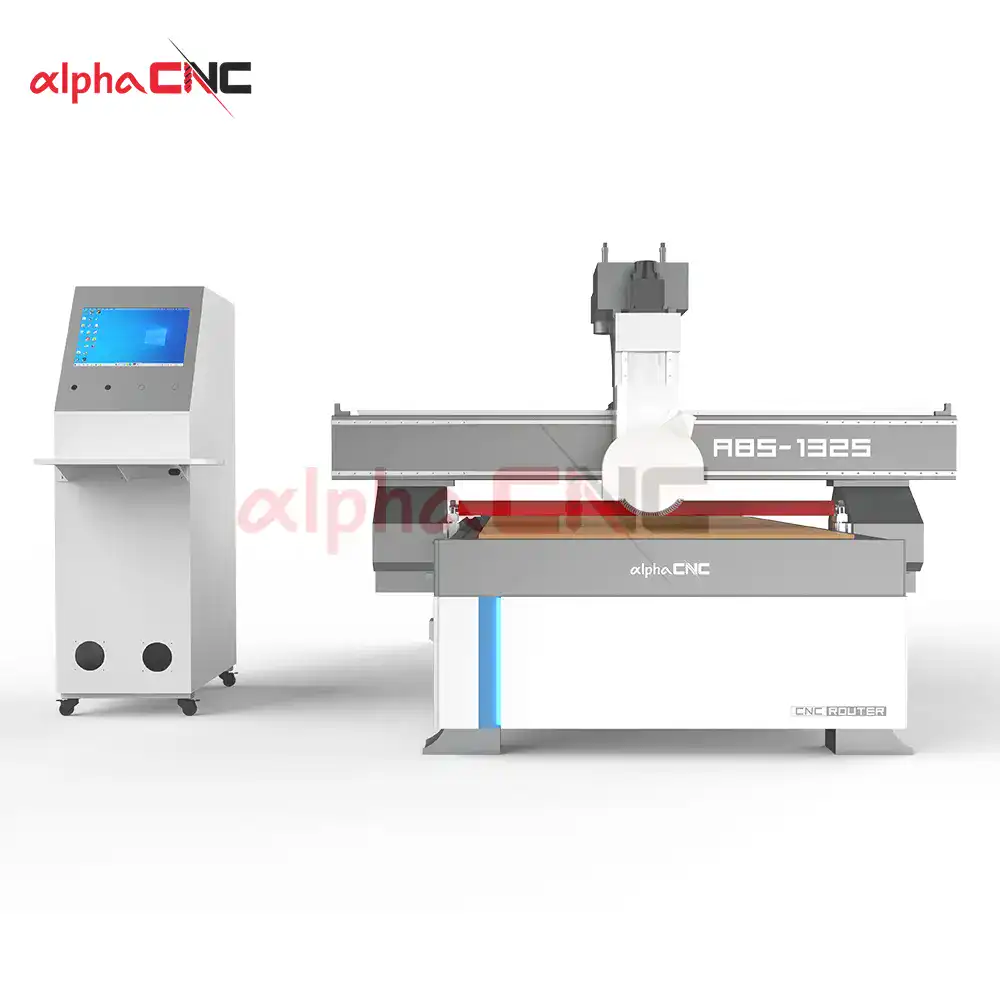
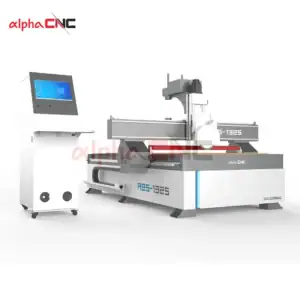
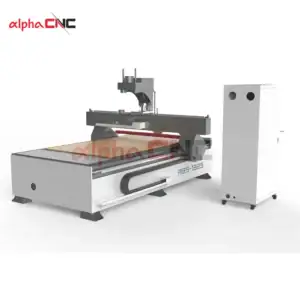
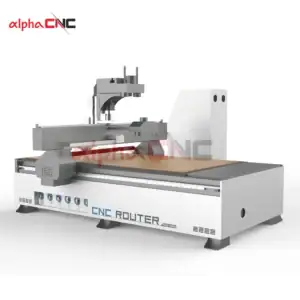

A-S-RL CNC Router Machine with Saw Blade & Press Roller – for Thin Sheet Materials
Description
The ABS-1325 is a dedicated sheet cutter with a saw blade as the main cutting tool, plus a pneumatic press roller that runs right above the material.
The problem with thin panels is that they lift, flutter, or shift during cutting. A standard router bit pushes the material down, but thin sheets bounce back. The ABS-1325 solves this with a spring-loaded or air-pressure press roller that runs just ahead of the saw blade. The roller pins the sheet flat – no gaps, no chatter, no broken cuts.
Features
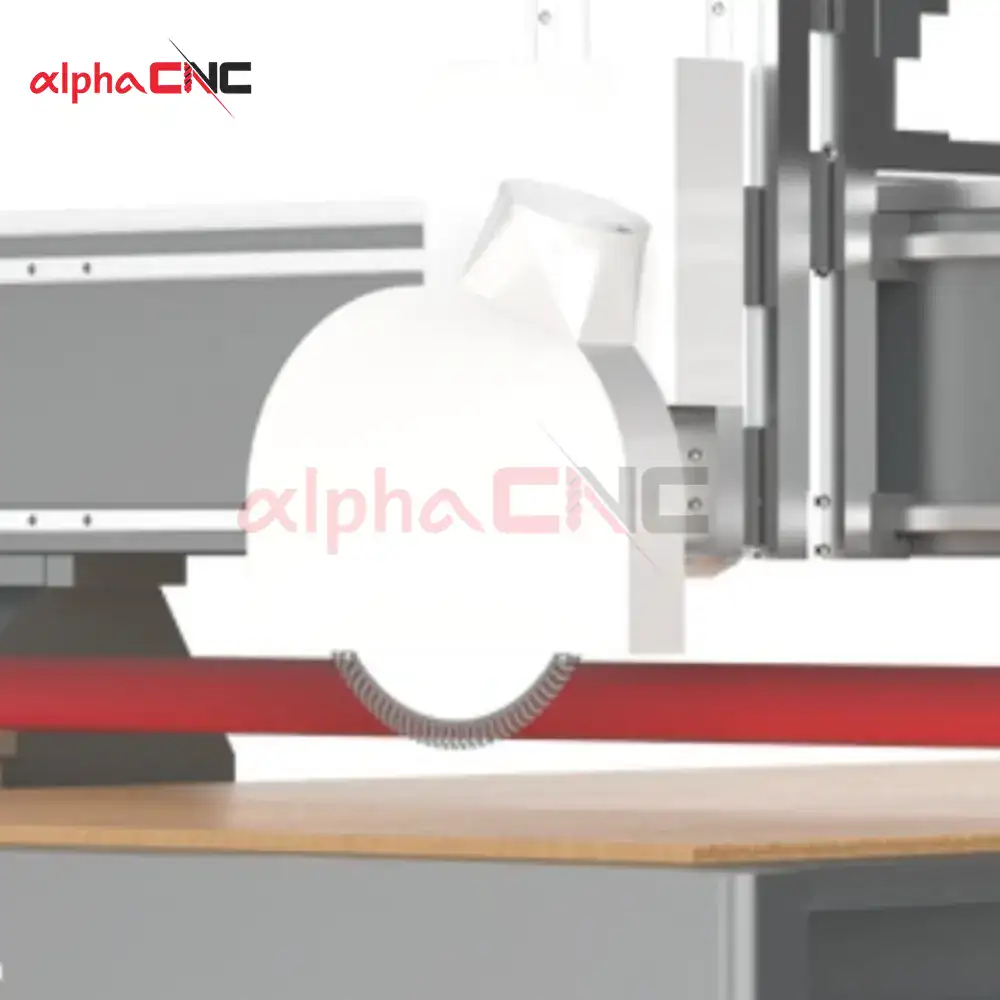
- Saw blade cutting unit – High-torque motor (2.2kW – 3.5kW) with adjustable speed. Uses standard saw blades. Cuts clean, no melting or chipping on coated materials.
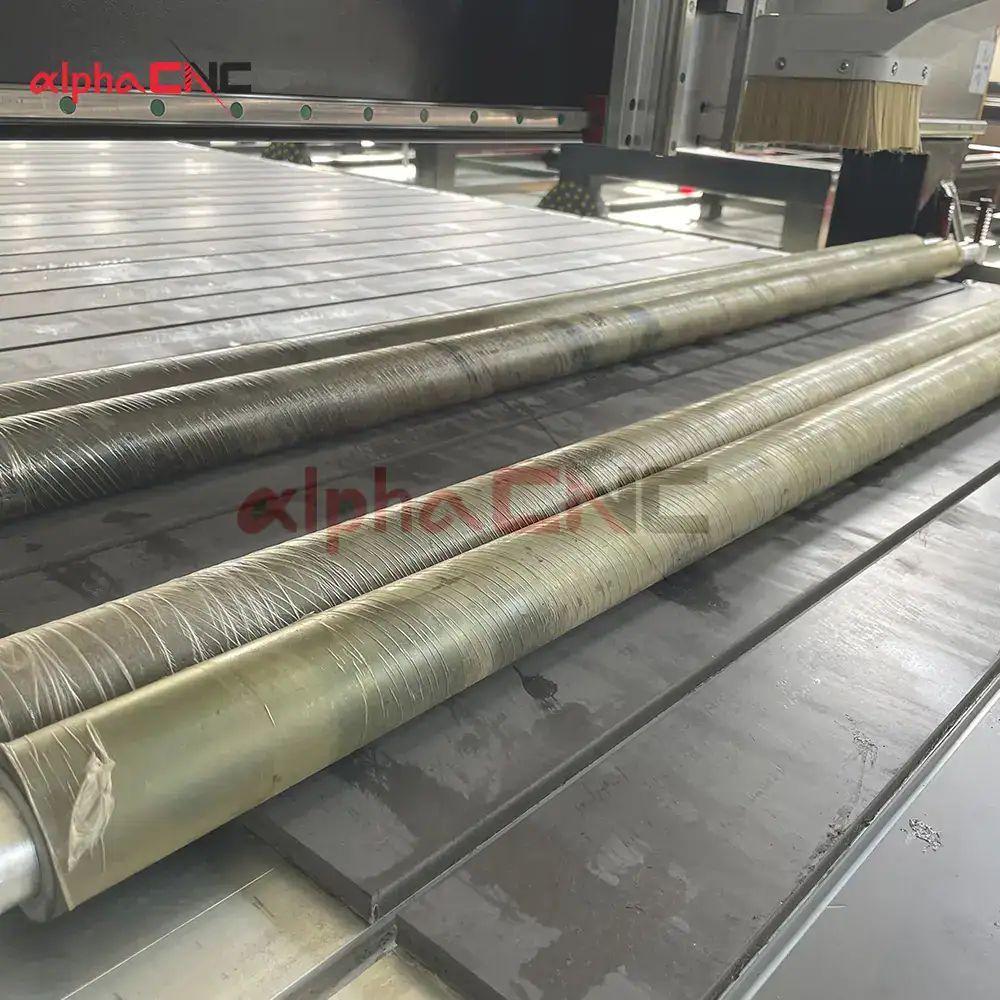
- High-quality press roller – Mounted in front of the saw blade. Applies adjustable downward pressure. Keeps thin sheets flat against the table. Eliminates lifting and reduces vibration marks.
- Heavy welded frame – Steel base plate, stress-relieved and machined. No flex when cutting at full speed on dense materials like 3mm aluminum composite.
- Rack-and-pinion transmission on X/Y axes – High repeatability (±0.05mm). Smooth acceleration, no backlash.
- Ball screw on Z axis – Precise height control for different material thickness. Saw depth adjustment.
- Control system – NC studio (optional). Supports HPGL, G-code, and common CAD/CAM outputs. Standalone operation – no PC needed after file loading.
- T-slot table + optional vacuum pod – Standard T-slot for clamps. Press roller works well with or without vacuum. For super thin films, add vacuum pods (optional).
Parameters
Model | A-S-RL |
Brand | Alpha CNC |
Function | Cutting of thin flat sheets using a circular saw blade; pneumatic press roller holds material flat to prevent lifting, vibration, and air gaps. |
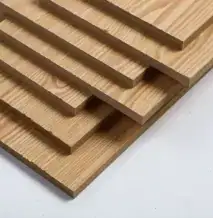
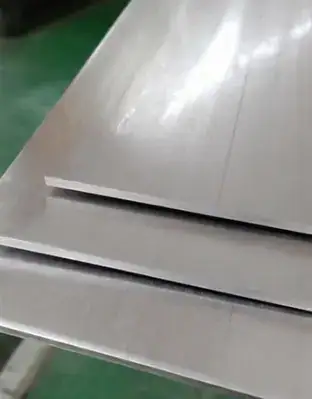
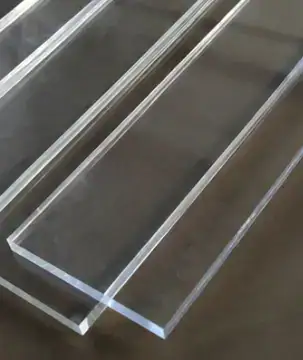
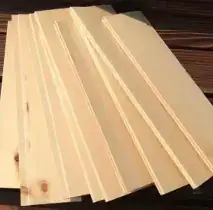
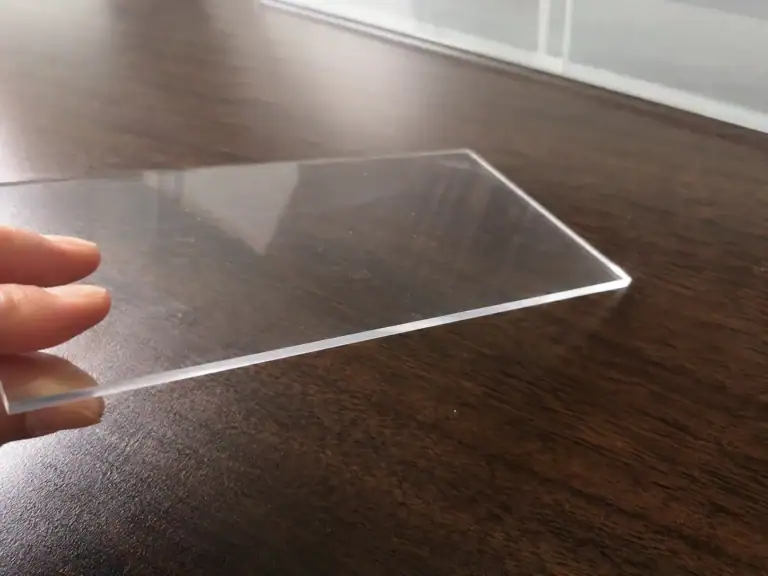
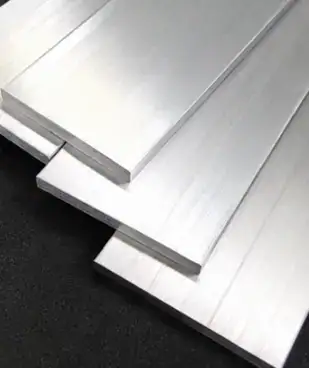
Processed Materials | ACP (aluminum composite), PVC foam, acrylic, polycarbonate, ABS plastic, plywood, MDF, corrugated plastic, rubber sheet, EVA foam, cork, aluminum sheet. |
Application Industries | Sign making, display fabrication, cabinet back panels, packaging, gasket cutting, light metal fabrication (aluminum), plastic sheet processing, composite panel cutting. |
Processing Thickness | 0.5mm – 8mm (most materials); up to 10mm for soft materials (foam, rubber, cardboard); hard materials (aluminum, acrylic, FRP) best under 5mm. |
Other | For detailed information, we recommend consulting our team. |
Optional items
- Different saw blades
TCT blade for wood, acrylic, PVC
Diamond-grit blade for aluminum composite, solid surface, fiberglass
Thin-kerf blade for corrugated plastic and foam (reduces waste)
- Automatic tool changer (ATC)
Upgrade to a linear tool changer. Allows switching between saw blade and a small router bit for edge trimming or drilling.
- Vacuum table with zone control
Replaces T-slot. Four zones, stable and reliable vacuum pump. Works together with the press roller for materials.
- Blade wear sensor
Detects dropped cutting efficiency and warns operator to change blade.
- Various Table Sizes
We can customize the machine dimensions to suit the specific space requirements of your factory. Common standard sizes typically include 1300mm × 2500mm and 1500mm × 3000mm.
Frequent asked questions
Q: Why use a press roller instead of just vacuum?
A: Vacuum holds the sheet down, but thin materials still bow upward between vacuum zones when the saw blade pushes forward. The press roller physically pushes down right at the cut line – it kills the “tenting” effect. For materials under 2mm, you really want both vacuum and roller.
Q: How flat does the work table need to be?
A: The press roller compensates for small warps. But the table itself is machined flat to ±0.3mm over the whole area. If your material is badly warped, pre-flatten or use clamps.
Q: Does the press roller mark soft materials like foam or rubber?
A: The standard roller is smooth PVC. For soft or glossy materials, we offer a silicone-coated roller (soft touch) or a dual-wheel roller that spreads pressure. Both are optional – mention when ordering.
Q: What’s the maximum material thickness the saw blade can cut?
A: With the standard blade, you get about 35mm clean cut depth. But practically, the ABS-1325 is built for thin materials. If you regularly cut over 12mm, the saw motor will work harder, and chips become an issue. For 12–35mm, use a lower feed rate. Over 35mm? Not recommended – buy a panel saw instead.These numbers come from actual customer cutting records – real feedback, not lab data. Use them as practical references.
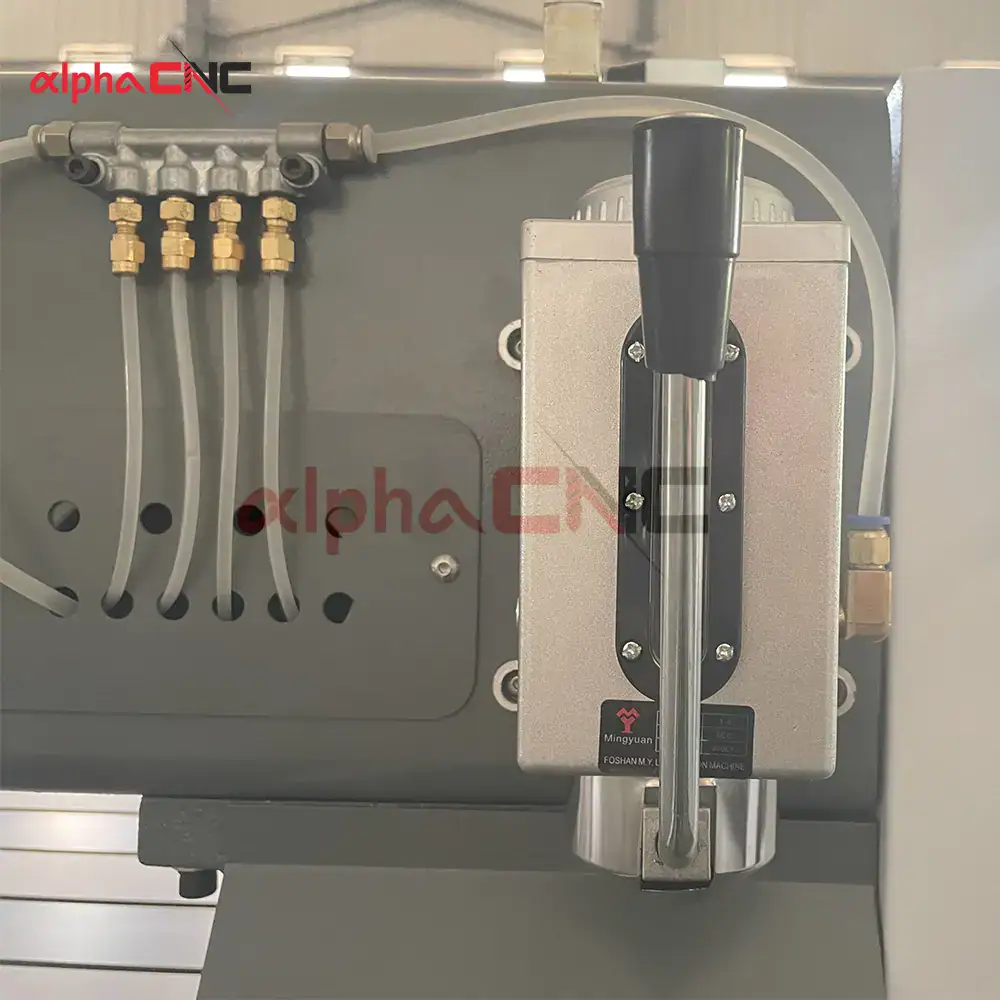
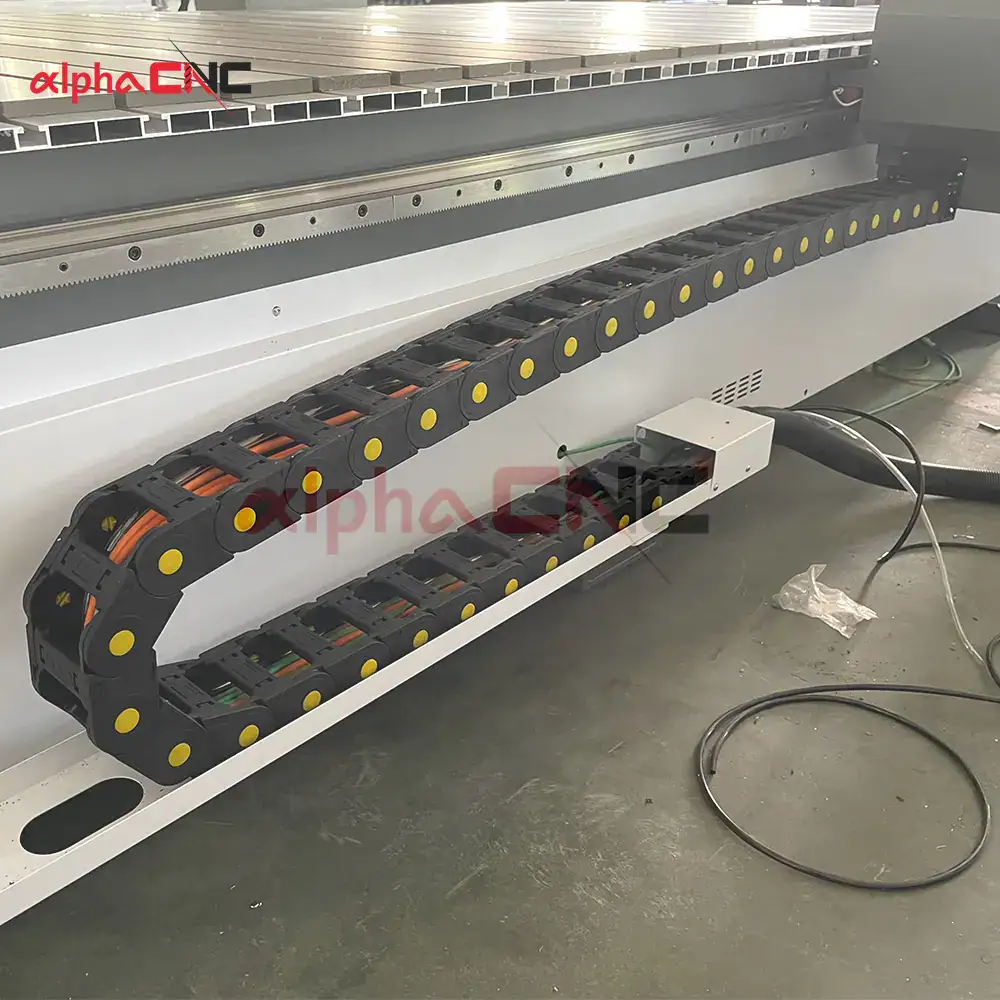
3 Axis CNC Router details
Application
Industry | Typical materials | Recommended thickness |
Sign & display | ACP, foam PVC, corrugated plastic | 0.5mm – 5mm |
Cabinet & furniture | Plywood, MDF, hardboard | 2mm – 6mm |
Packaging & gasket | Cardboard, rubber, EVA foam | 0.5mm – 8mm |
Light metal fabrication | Aluminum sheet (1100, 3003) | 0.5mm – 3mm |
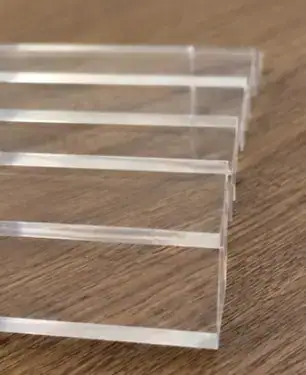
Plastic fabrication | Acrylic, PETG, HDPE | 1mm – 5mm |
- The specified thickness range is based on customer feedback and common application scenarios. Actual cutting performance depends on material density, blade type, and feed rate. We recommend that you provide us with details regarding your typical products and cutting thickness requirements prior to purchase, so that we may propose the solution best suited to your needs.
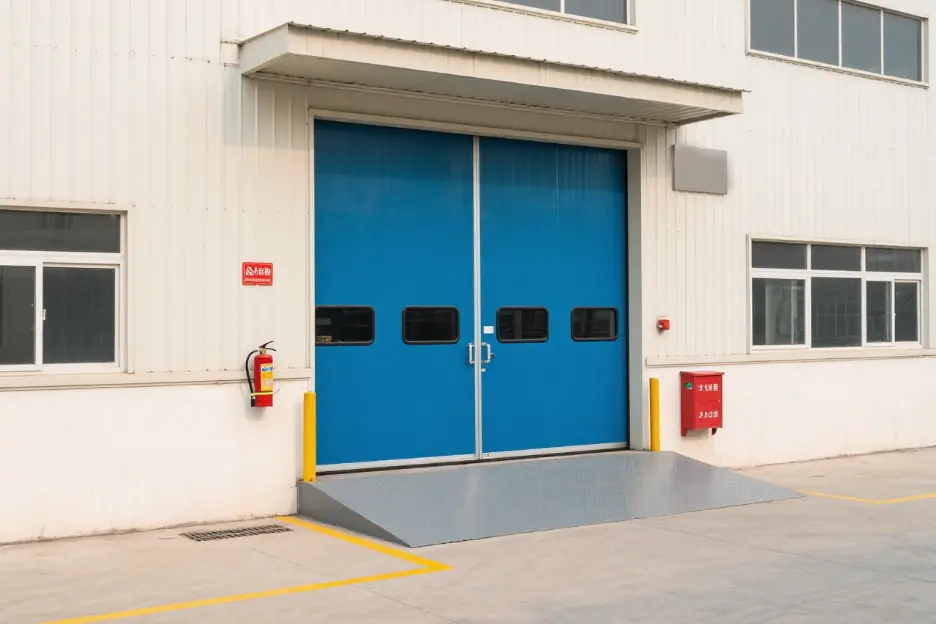
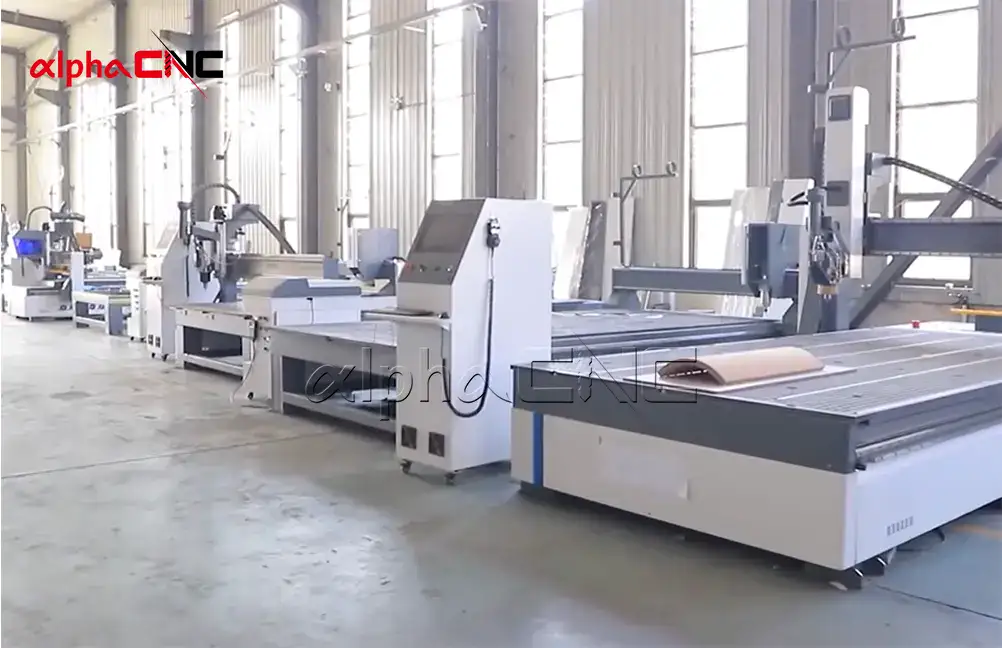
Production facility

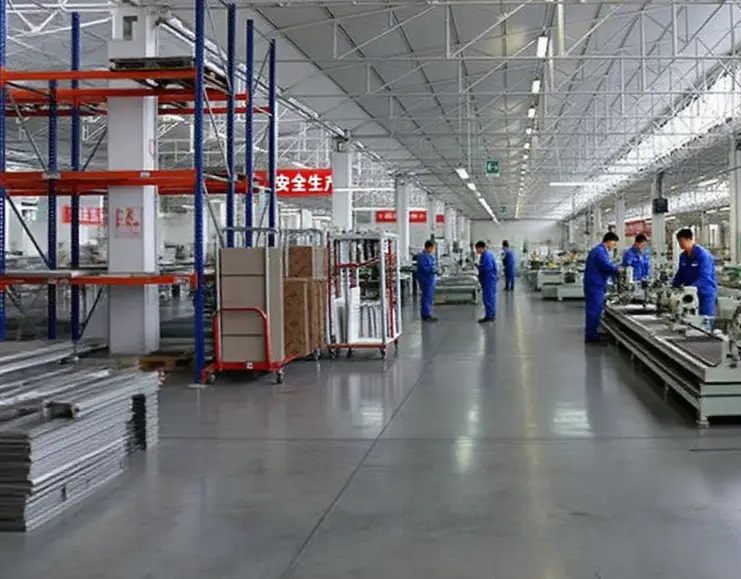
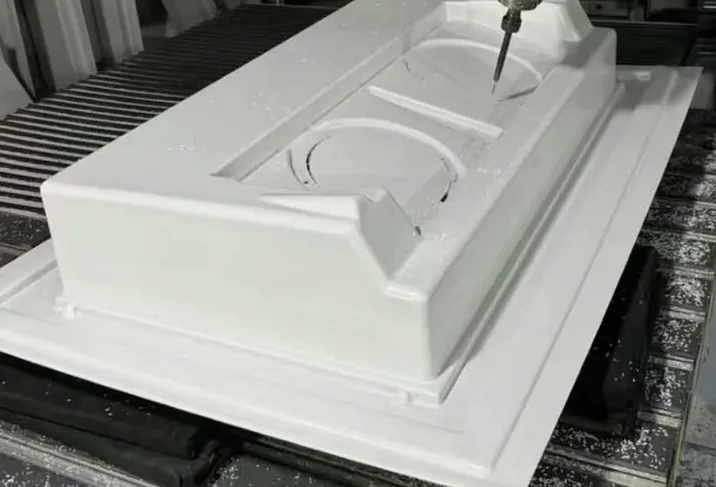
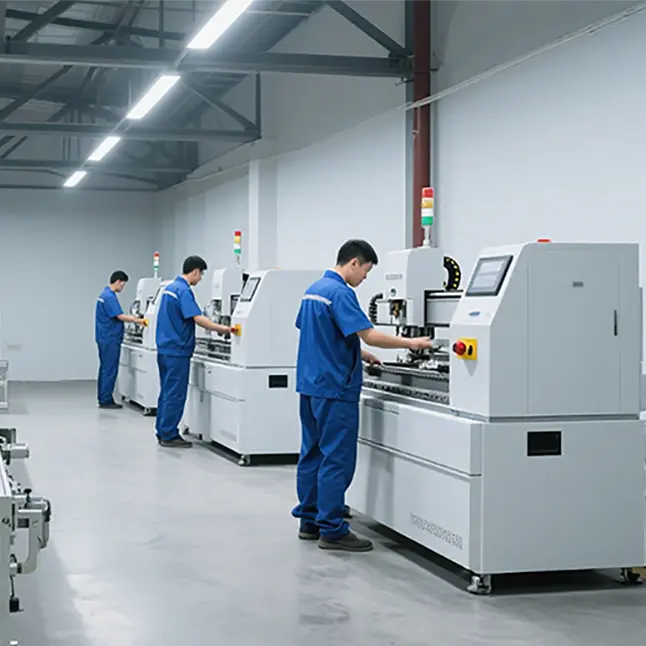
Quality control & testing



Related products
FAQ
Q: Why use a press roller instead of just vacuum?
A: Vacuum holds the sheet down, but thin materials still bow upward between vacuum zones when the saw blade pushes forward. The press roller physically pushes down right at the cut line – it kills the “tenting” effect. For materials under 2mm, you really want both vacuum and roller.
Q: How flat does the work table need to be?
A: The press roller compensates for small warps. But the table itself is machined flat to ±0.3mm over the whole area. If your material is badly warped, pre-flatten or use clamps.
Q: Does the press roller mark soft materials like foam or rubber?
A: The standard roller is smooth PVC. For soft or glossy materials, we offer a silicone-coated roller (soft touch) or a dual-wheel roller that spreads pressure. Both are optional – mention when ordering.
Q: What’s the maximum material thickness the saw blade can cut?
A: With the standard blade, you get about 35mm clean cut depth. But practically, the ABS-1325 is built for thin materials. If you regularly cut over 12mm, the saw motor will work harder, and chips become an issue. For 12–35mm, use a lower feed rate. Over 35mm? Not recommended – buy a panel saw instead.These numbers come from actual customer cutting records – real feedback, not lab data. Use them as practical references.
Review
Furniture Shop
October 18, 2025
Using it for cabinet back panels (3mm plywood) and thin MDF. The roller stops the material from lifting. Much faster than our old panel saw.


