
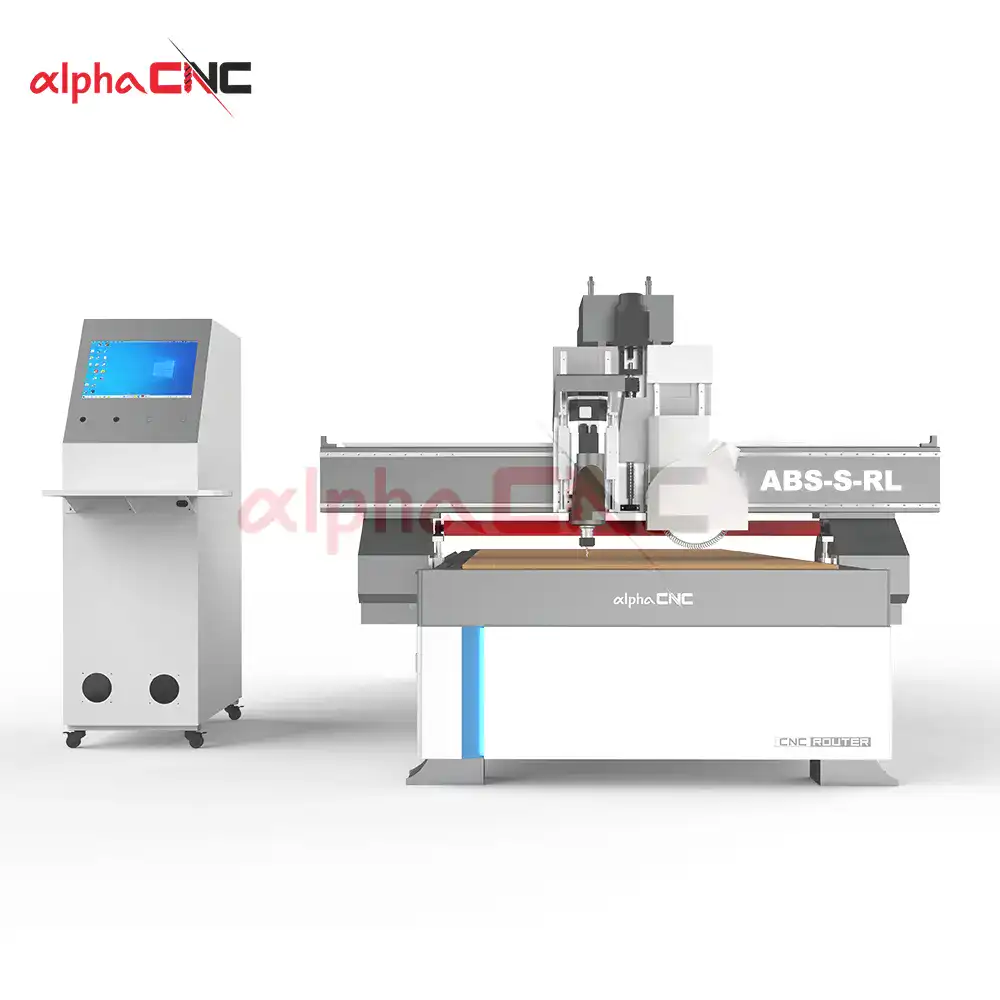
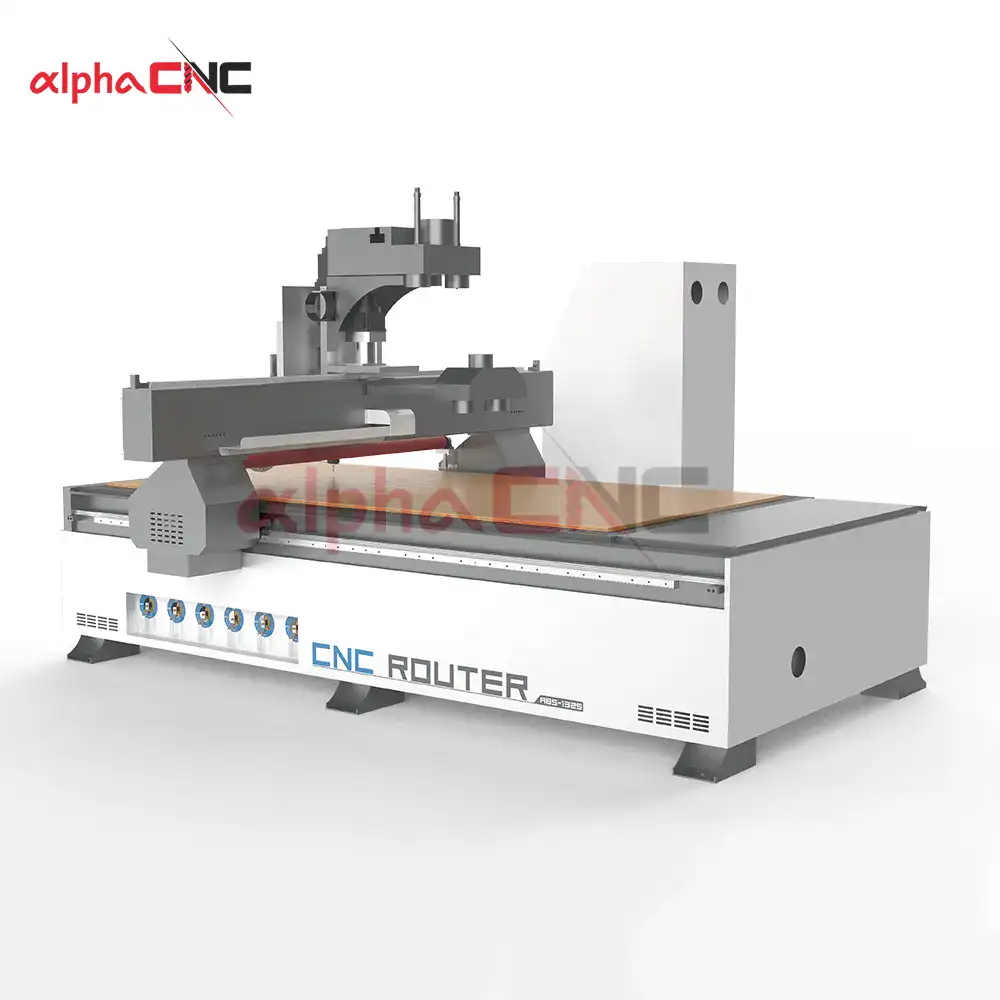
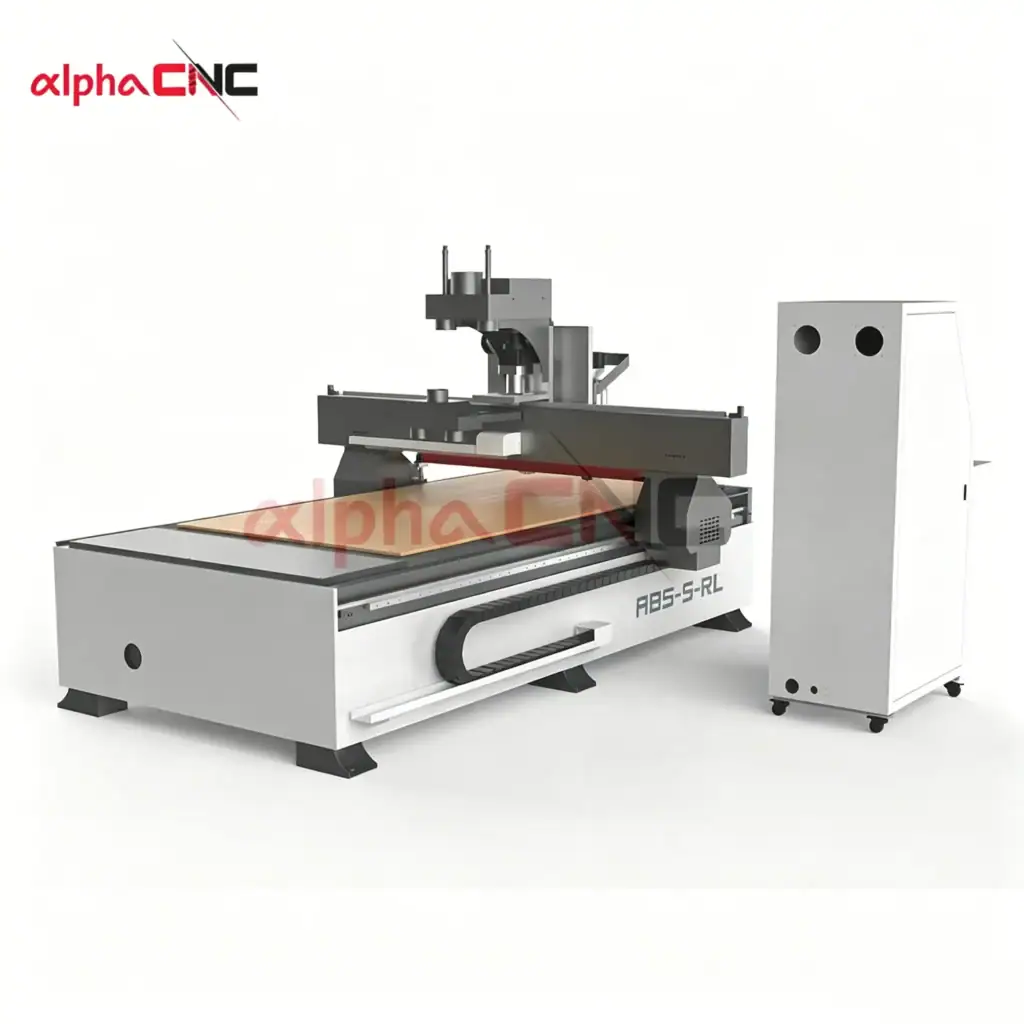
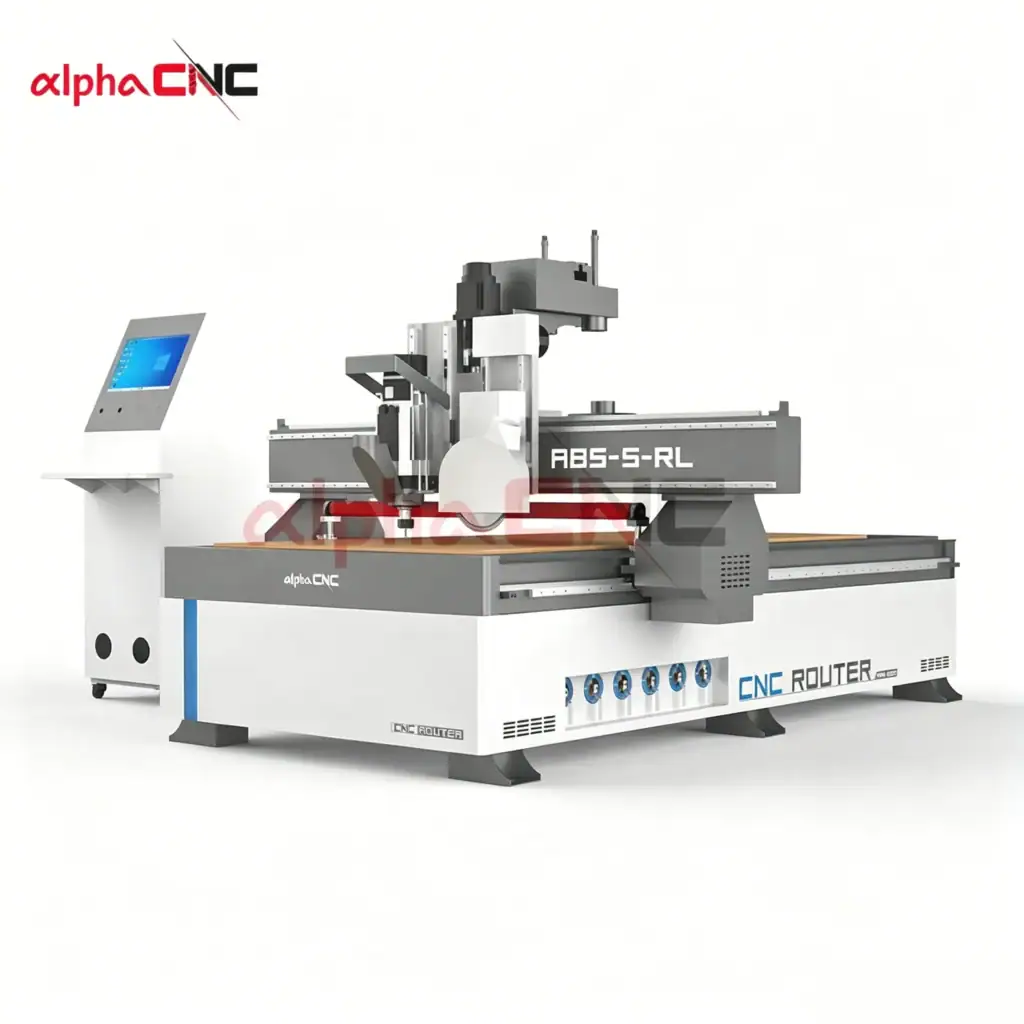

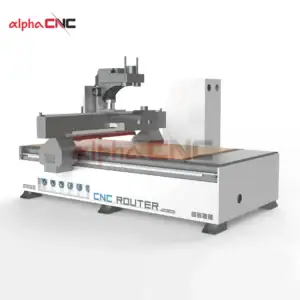
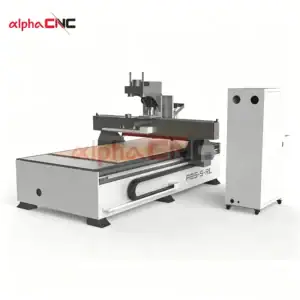
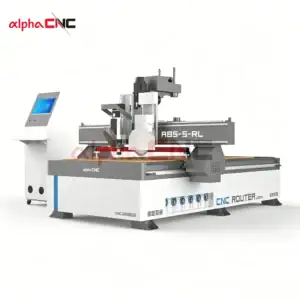
ABS-S-RL 1325 CNC Router with Spindle, Saw Blade & Press Roller – Carving, Cutting, and Pressing for Thin & Flexible Materials
Description
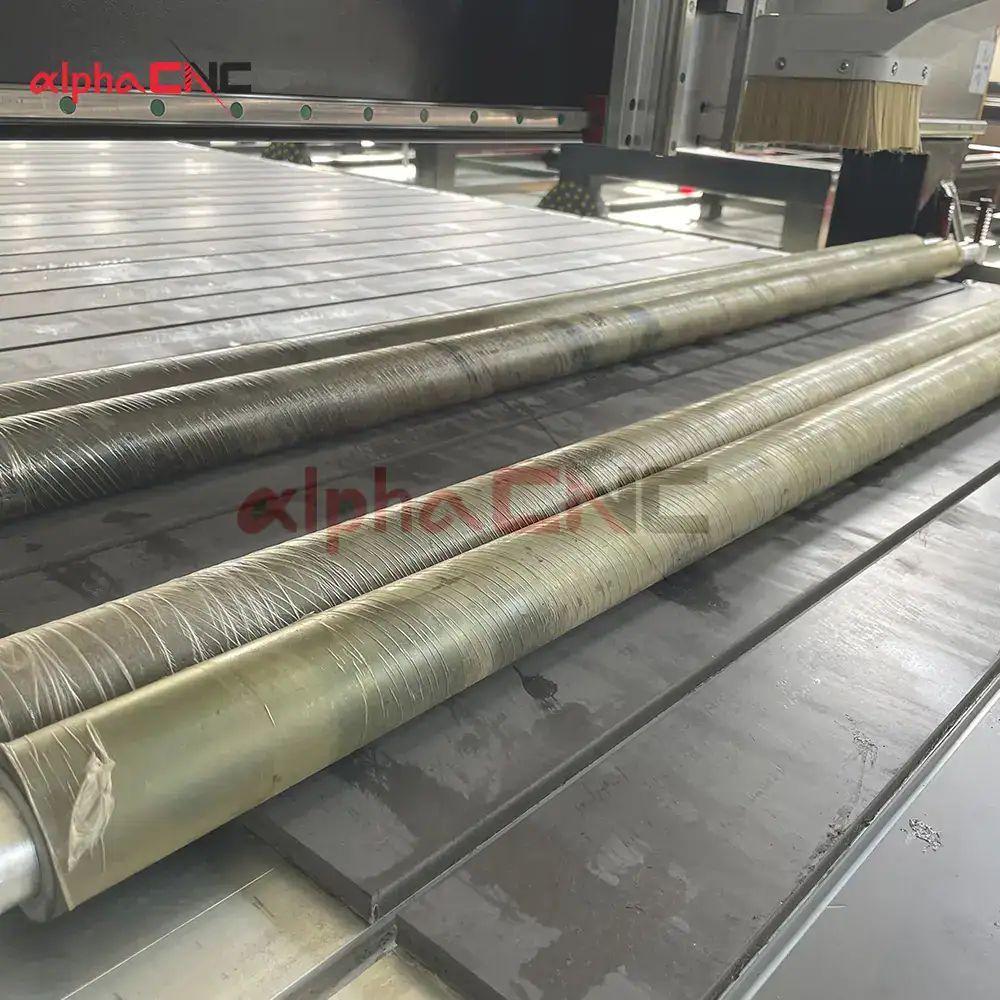
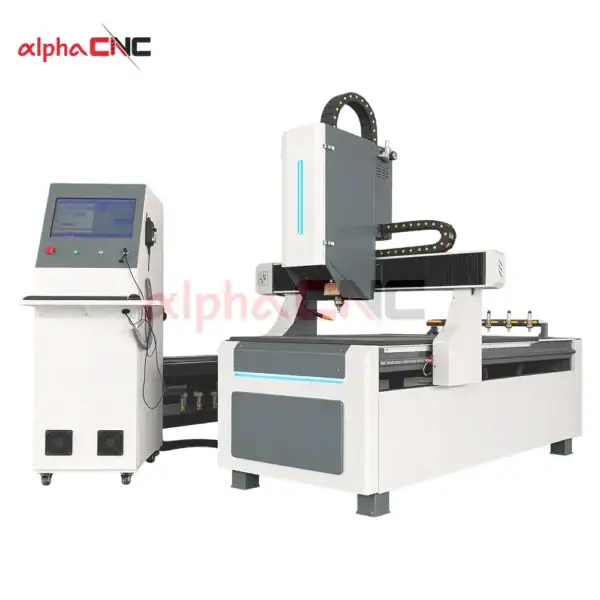
The ABS-S-RL 1325 combines three functions in one machine: a spindle for detailed carving, a saw blade for straight-line cutting, and a press roller system that holds down thin or easily warped materials. This setup is built for workshops that process acrylic, PVC foam board, aluminum composite panels, plywood, and other sheets that tend to lift or vibrate during machining. The press roller applies even pressure across the working area, reducing material bounce and keeping thin panels flat. No more taped edges or extra clamping for flimsy stock.
Features
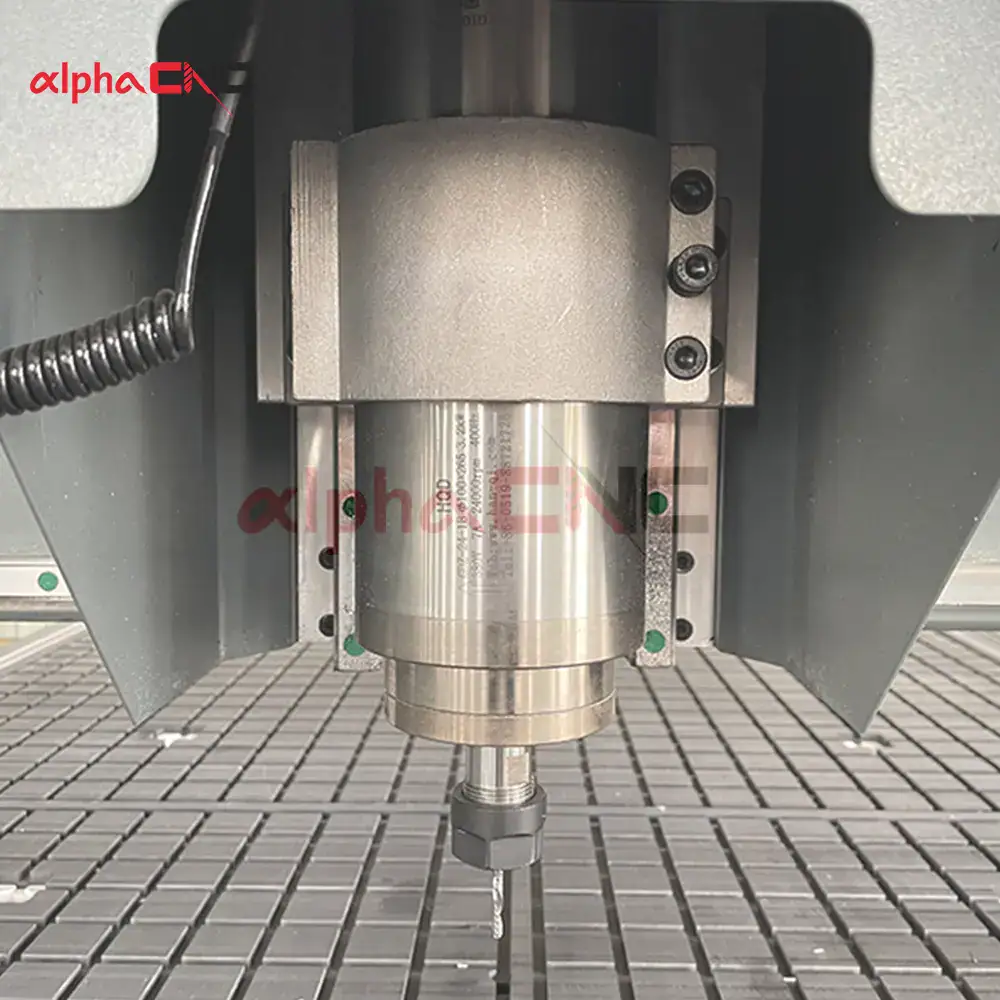
Three-in-one working head – Spindle (carving), saw blade (cutting), and press roller (material hold-down) on the same gantry. Switch between functions without tool changes.
Press roller – Pneumatic press roller applies adjustable downward force. Stops acrylic, PVC, foam, and thin aluminum from chattering or lifting. Works especially well for sheets under 3mm.
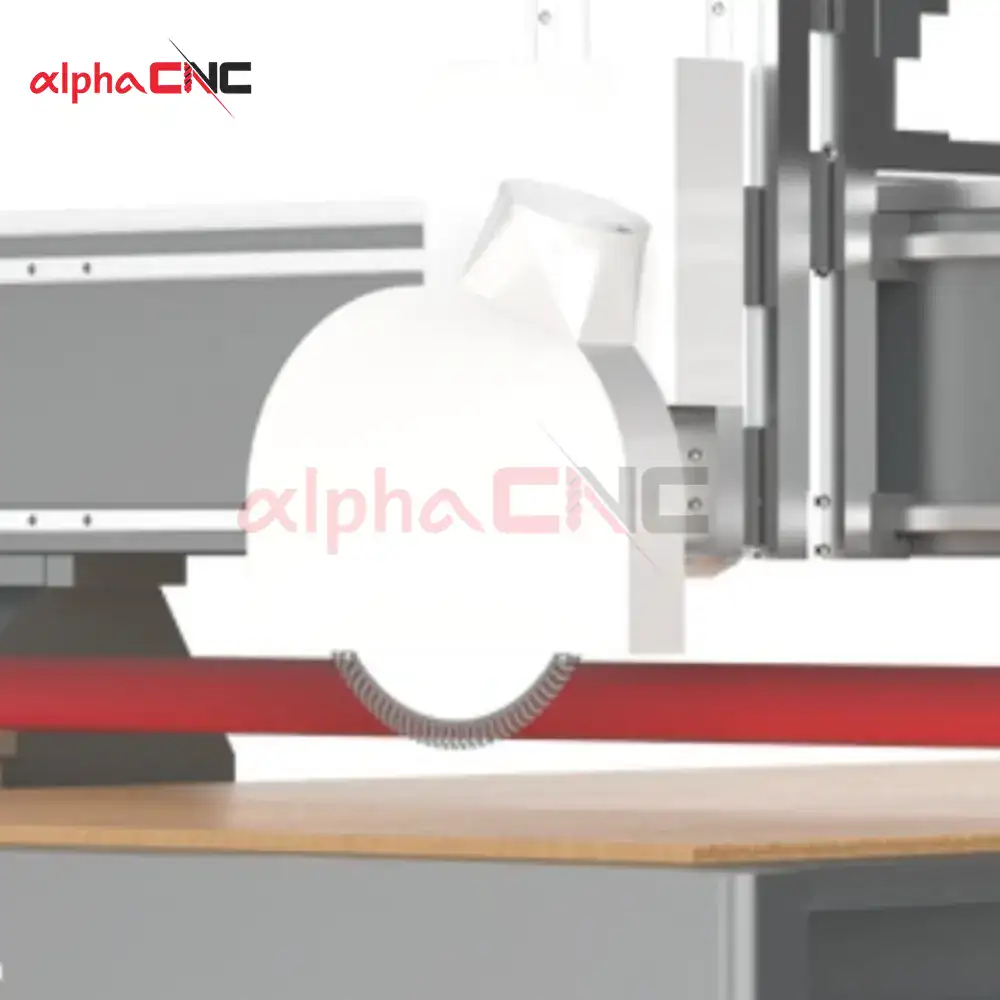
Saw blade cutting unit – Cuts through panels faster than a spindle, with cleaner edges on materials like honeycomb panels, corrugated plastic, and laminate. Reduces melt-back on plastics.
1325 working area – 1300mm x 2500mm (4′ x 8′) table handles full sheets. Saves secondary cutting before machining.
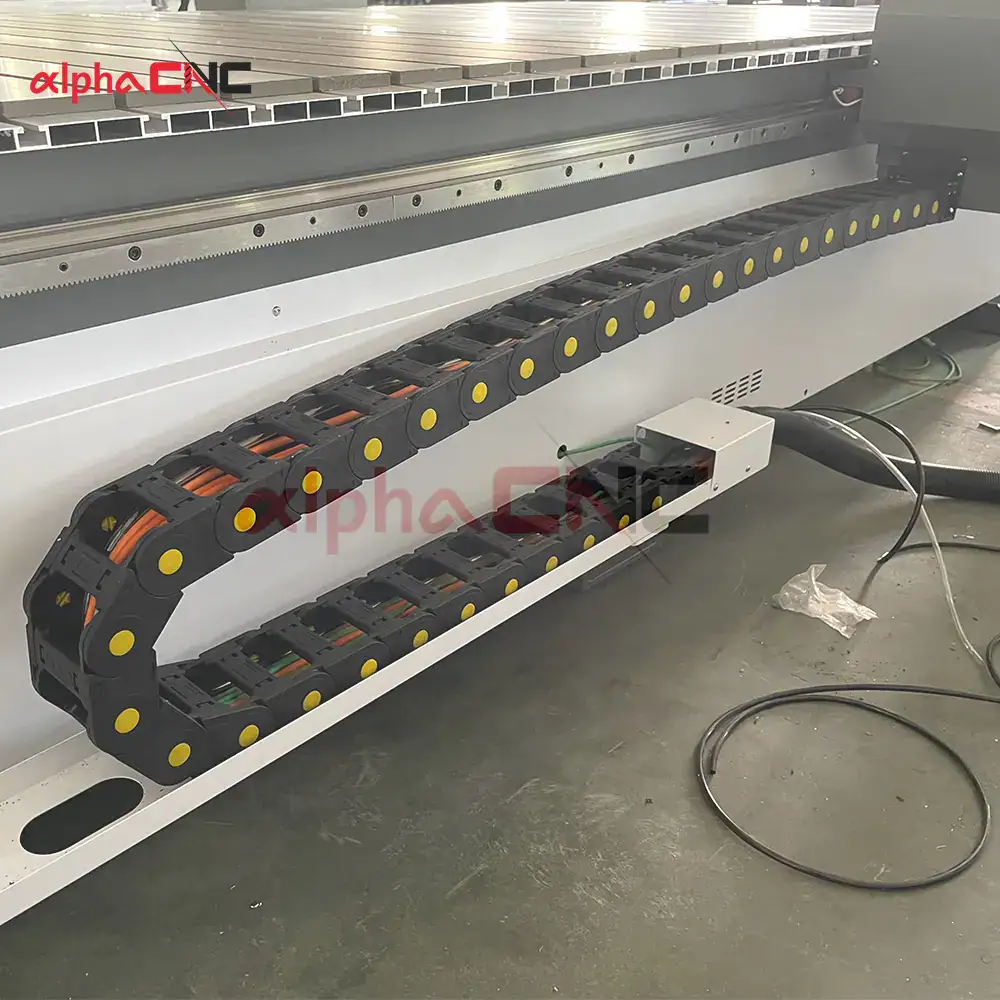
Dust-proof rails and ball screws – Sealed linear guides and precision ball screws on X, Y, and Z axes. Consistent accuracy even with wood dust or plastic chips.
Parameters
Model | ABS-S-RL 1325 |
Brand | Alpha CNC |
Feature | Spindle, Saw Blade and Press Roller |
X, Y, Z Working Travel | 1300 × 2500 × 200 mm |
Bed Structure | Heavy duty body with quenching treatment |
Z Axis Drive | Precision ball screw |
Spindle Type | Aircooling spindle |
Drive System | Stepper or servo motor (configurable) |
Voltage | 220V 1PH/3PH 50HZ/60HZ380V 3PH 50HZ/ 60HZ |
Other | Optional |
Optional items
Customized Solutions for Your Requirements
Vacuum bed – Can be added for materials that don’t need the press roller, such as solid wood or aluminum plate.
Rotary axis – For cylindrical carving on columns, tubes, or chair legs.
Automatic tool changer (ATC) – For workshops running multiple spindle tools without manual swaps.
Dust hood for saw blade – Dedicated dust collection nozzle mounted near the saw blade unit. Reduces cleanup for MDF and plastic cutting.
Vacuum pump with zoning – 5.5kW or 7.5kW pump, zone-controlled table for holding down warped sheets.
Frequent asked questions
Q: Do I still need a vacuum table if I use the press roller?
A: Not always. The press roller works well for materials that are too thin or warped to seal against a vacuum table. For solid sheets like wood or standard plastic, you can use the vacuum table alone. For foam or corrugated board, the press roller is more reliable. Many customers add the vacuum table as a secondary option.
Q: Can the press roller damage soft materials?
A: The downward pressure is adjustable via a regulator. For soft foam or thin acrylic, you set it just enough to stop vibration. The roller surface is smooth polyurethane – it won't leave marks.
Q: Does the machine require special training?
A: The control software is standard G-code. If you already run a CNC router, you'll learn the saw blade and press roller in about an hour. We include a setup video and toolpath samples for common materials.
3 Axis CNC Router details
Application
Materials that benefit from press roller + saw blade + spindle:
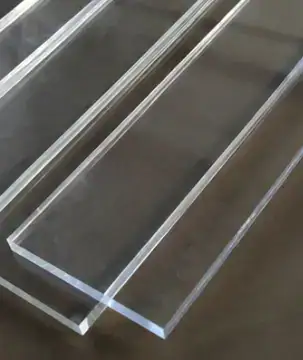
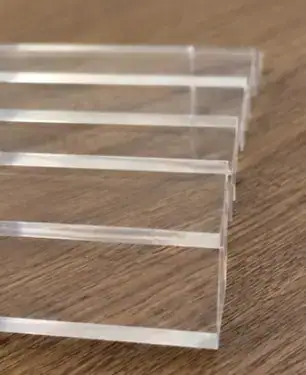
Acrylic sheets – no melting on cut edges, no cracking during carving.
PVC foam board – press roller stops the board from shifting under vacuum.
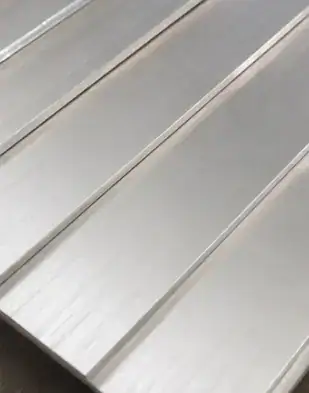
Aluminum composite panel (ACP) – saw blade gives burr-free cutting; spindle for V-grooving.
Honeycomb panels and corrugated plastic – press roller holds the raised surfaces flat.
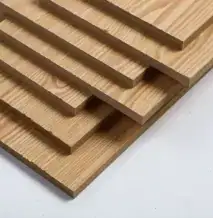
Thin plywood– reduces tear-out on the back side.
Typical jobs:
Sign making – carved letters, cut-out shapes, and V-grooved panels on the same sheet.
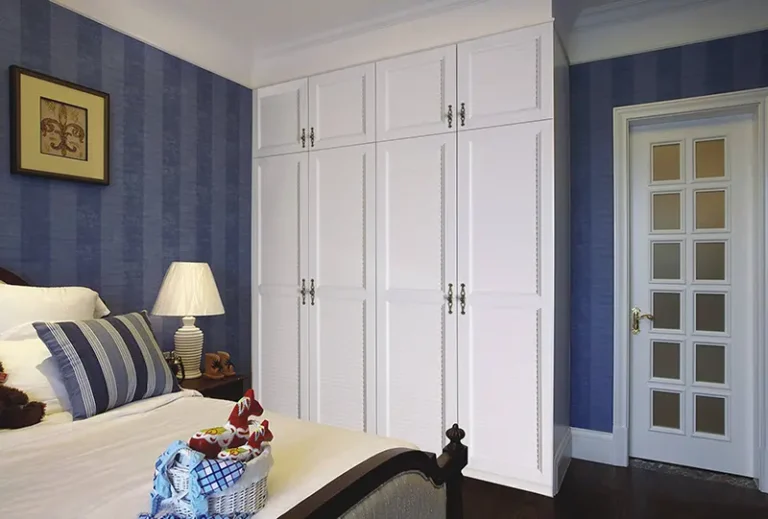
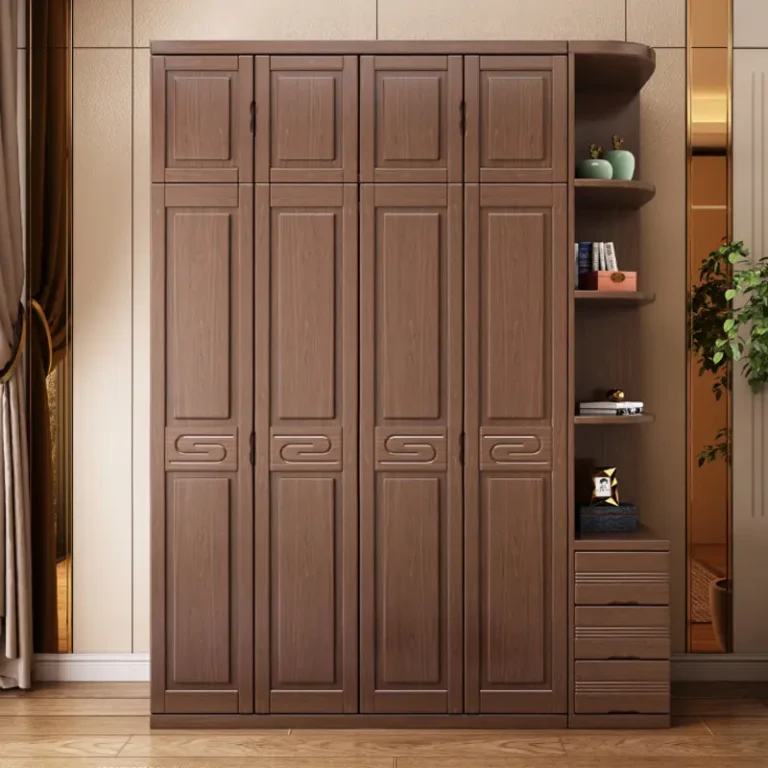
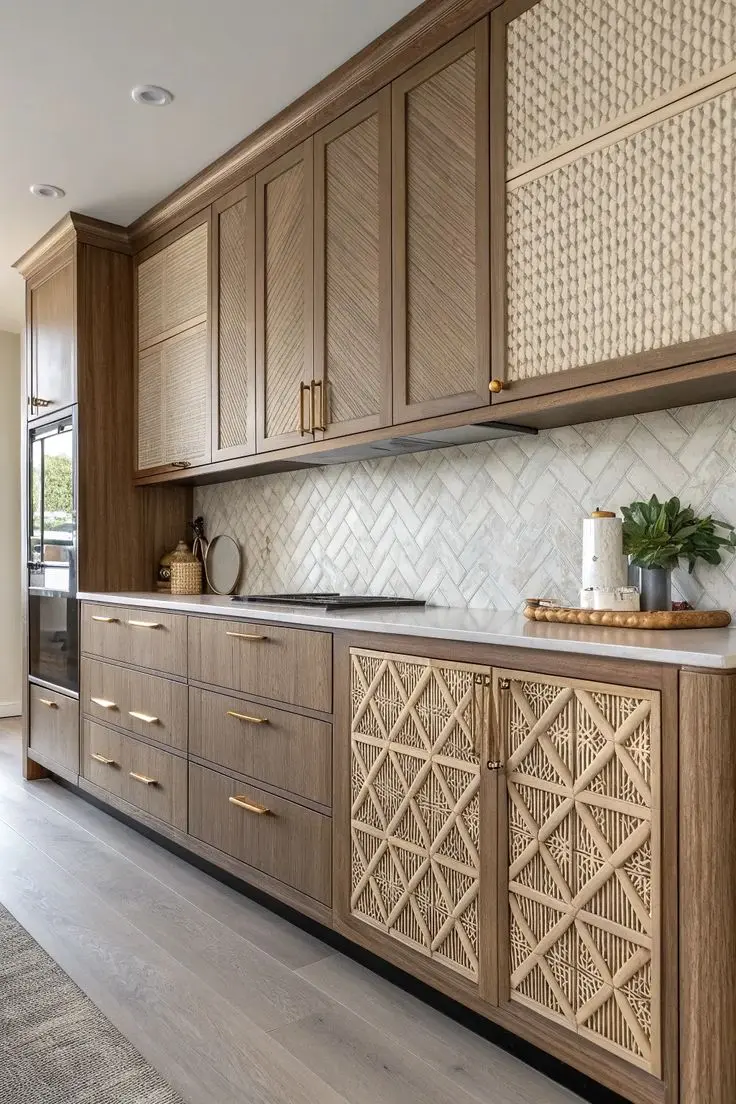
Furniture components – thin back panels for cabinets, flexible veneer cutting, soft foam backing.
Display and packaging – die-cutting style cuts on corrugated board, foam board, or plastic card stock.
Boat and RV interior – thin aluminum or PVC panels for wall cladding.

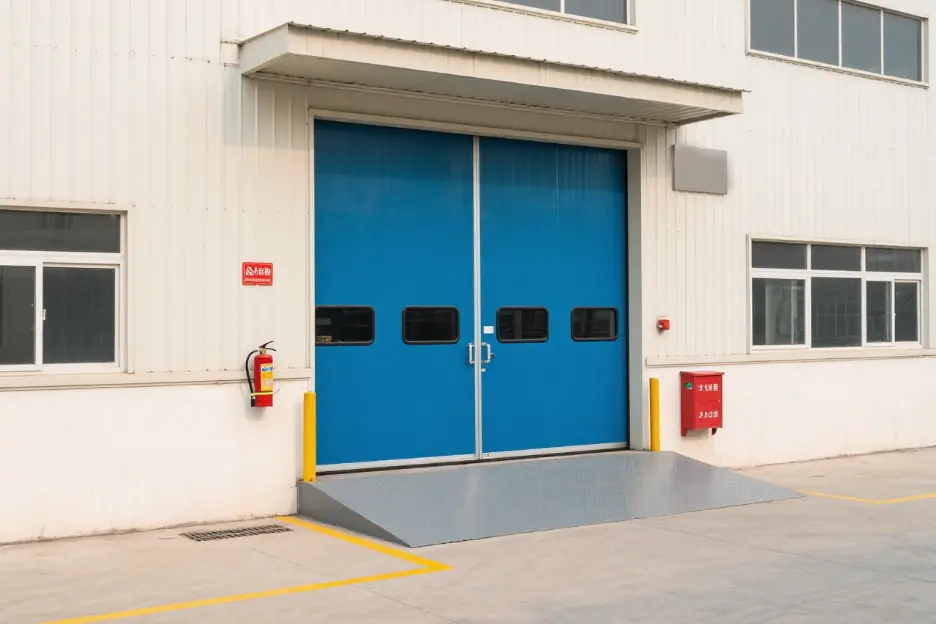
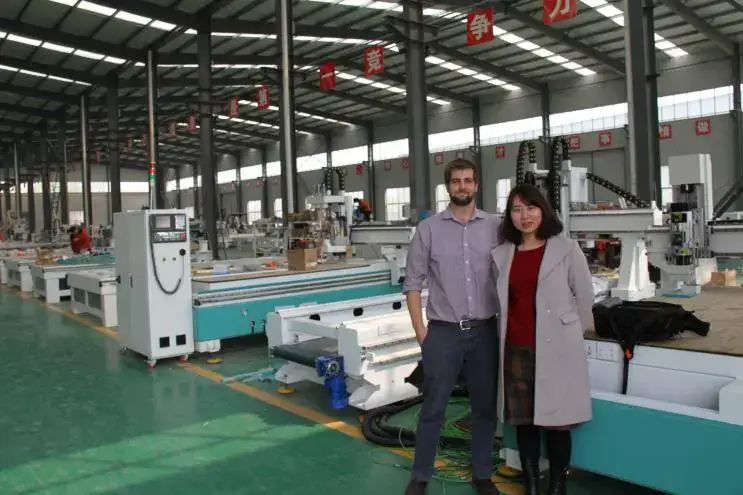
Production facility



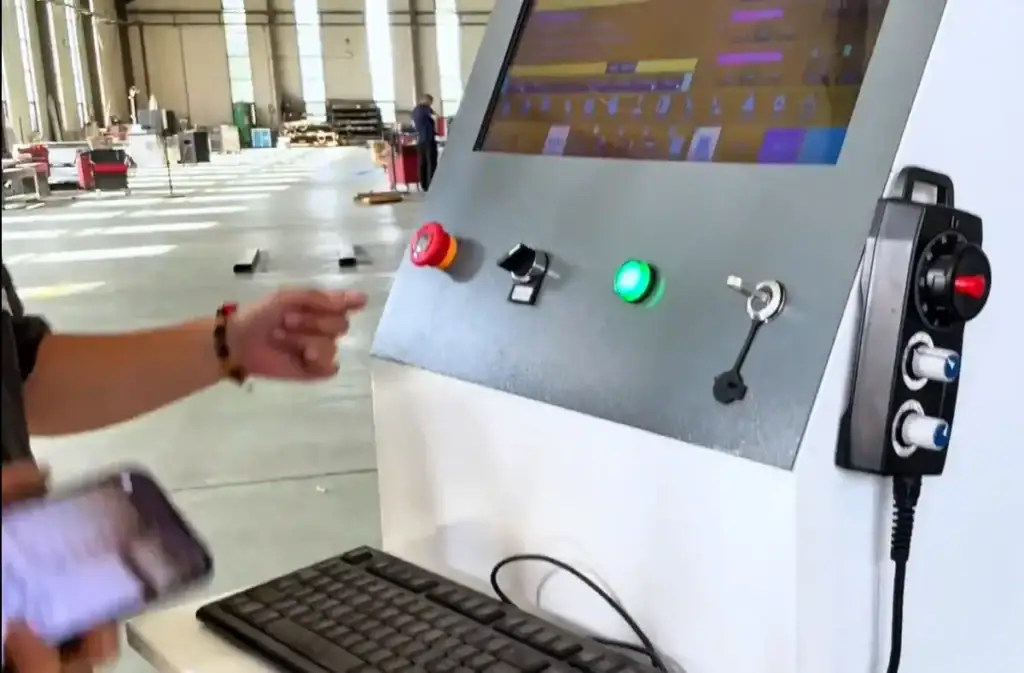
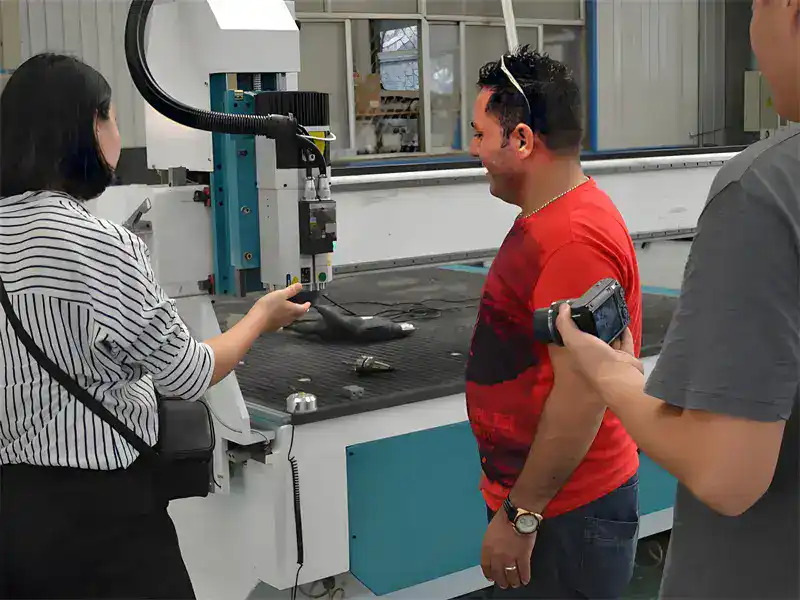
Quality control & testing


FAQ
Q: Do I still need a vacuum table if I use the press roller?
A: Not always. The press roller works well for materials that are too thin or warped to seal against a vacuum table. For solid sheets like wood or standard plastic, you can use the vacuum table alone. For foam or corrugated board, the press roller is more reliable. Many customers add the vacuum table as a secondary option.
Q: Can the press roller damage soft materials?
A: The downward pressure is adjustable via a regulator. For soft foam or thin acrylic, you set it just enough to stop vibration. The roller surface is smooth polyurethane – it won’t leave marks.
Q: Does the machine require special training?
A: The control software is standard G-code. If you already run a CNC router, you’ll learn the saw blade and press roller in about an hour. We include a setup video and toolpath samples for common materials.
Review
Daniel Herrera
February 18, 2026
No more taping down edges or fighting lifted corners during carving. Took us half a day to dial in the pressure settings, but once we got it right, it ran great.


