

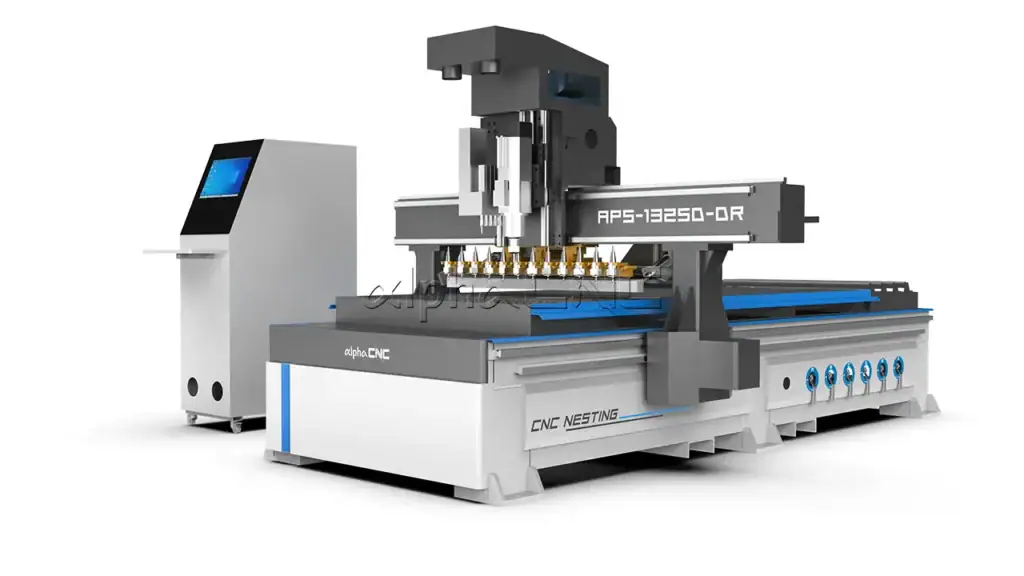
The 4x8 CNC router is usually one of the most common sizes in the woodworking industry. More and more furniture factories are looking to buy reliable CNC routers for woodworking to improve processing efficiency.
However, there are many types of CNC routers on the market, with different configurations, functions, and prices. This article compares the configurations of different models in detail to help your business choose best 4×8 CNC router that fits your production needs.
1. What Can You Do With a 4×8 CNC Router?
A 4×8 CNC router is a computer-controlled engraving machine. Its main feature is that the working area is a standard size of 4 feetx8 feet (about 1219mmx2438mm), which can just fit a full standard sheet.
A 4×8 CNC woodworking router is widely used for cabinet making, panel furniture production, wooden door processing, and other woodworking applications. Configurations can be added to the basic machine. They are suitable for processing flat panels, irregular-shaped parts, and jobs that need repeated batch processing. If your production mainly uses standard-sized raw materials, this table size is suitable.
- Cabinet and Panel Furniture Production
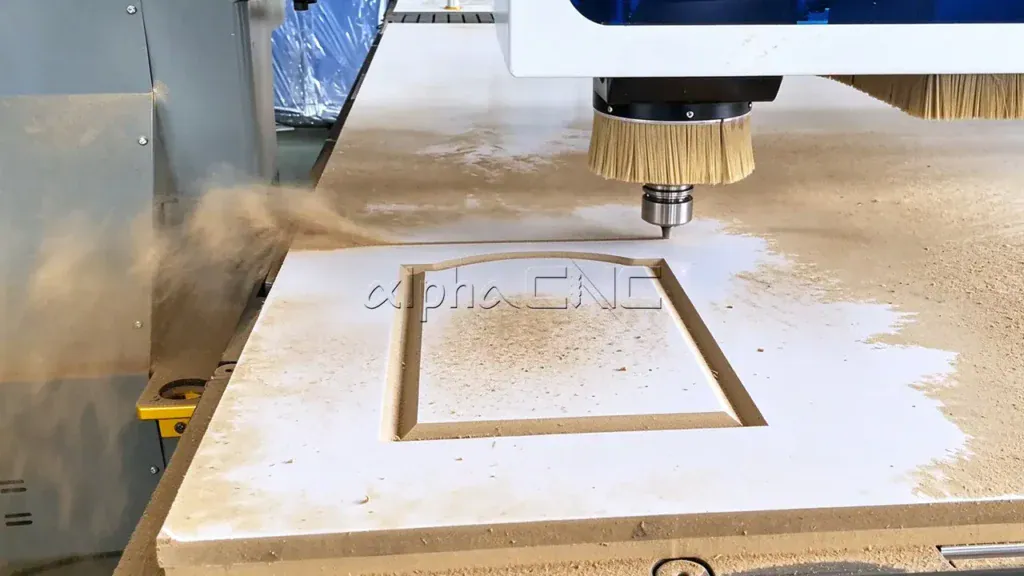
The 4×8 CNC routers mainly process furniture panels such as MDF, plywood, and particleboard. They are used to make furniture cabinets, panels at different angles, partitions, door panels, and various woodworking decorative parts.
4×8 CNC routers can be used for panel cutting and contour cutting, groove cutting, hinge hole and connector slot processing, and decorative carving. If a drilling unit is added, they can also drill holes.
For cabinet factories, the key point is not to look at just one function, but whether these processes can be smoothly connected to your existing production line.
- Wooden Doors and Interior Decoration

The best 4×8 CNC router needs to complete multiple processes, such as door panel shaping and pattern carving, continuously on a single sheet. Under the condition that the tools, clamping, and programs are compatible, once the program is set, the machine can complete them in one run.
These processes are more complex than those for ordinary panel furniture. Flat door panels can be fixed quickly by vacuum suction. For irregular-shaped workpieces, T-slots are reserved on the table for clamping.
- Signage and Decorative Woodworking

The 4×8 CNC router can also process wooden signs, decorative wall panels, display cabinet parts, and various custom interior decoration parts. Some models can also process acrylic, PVC, and aluminum composite panels, depending on the tool and processing parameters.
What materials the best 4×8 CNC router can process depends on the spindle, tools, fixtures, and processing parameters. Not all woodworking machines can cut all types of panels.
- Prototype and Model Making
The 4×8 CNC router is also suitable for design studios and model workshops. It is used to make prototypes, samples, and foam molds. It can perform cutting, grooving, carving, and 2.5D surface machining on MDF, foam board, plywood, modeling board, and acrylic. Common workpieces include product prototypes and functional samples, architectural models, thermoforming molds and casting prototypes, exhibition props, as well as test fixtures and assembly fixtures.
Multi-Industry Support for OEMs and Dealers
In addition to the furniture woodworking factories and small and medium-sized woodworking workshops mentioned above, for dealers, the best 4×8 CNC routers are no longer limited to one industry.
Wooden door factories and panel furniture factories are stable basic customers for importers. If the machine spindle power and tool magazine configuration are well matched, the processing efficiency is high, and sales of 4×8 CNC routers are stable.
You can also promote mid-to-high-end 4×8 CNC routers to prototype and model making factories to match their small-batch processing of irregular-shaped parts, such as casting prototypes, props, and other workpieces.
Simply put, the same 4×8 machine can meet the needs of different types of customers by adjusting the configuration. Therefore, dealers can also develop industrial support for customers to match the existing production lines or leading industries of factories.
2. Best Types of 4×8 CNC Routers for Woodworking
4×8 CNC routers support various optional hardware and can be flexibly configured to match the production requirements of different customers. The following are four configuration versions for your reference.
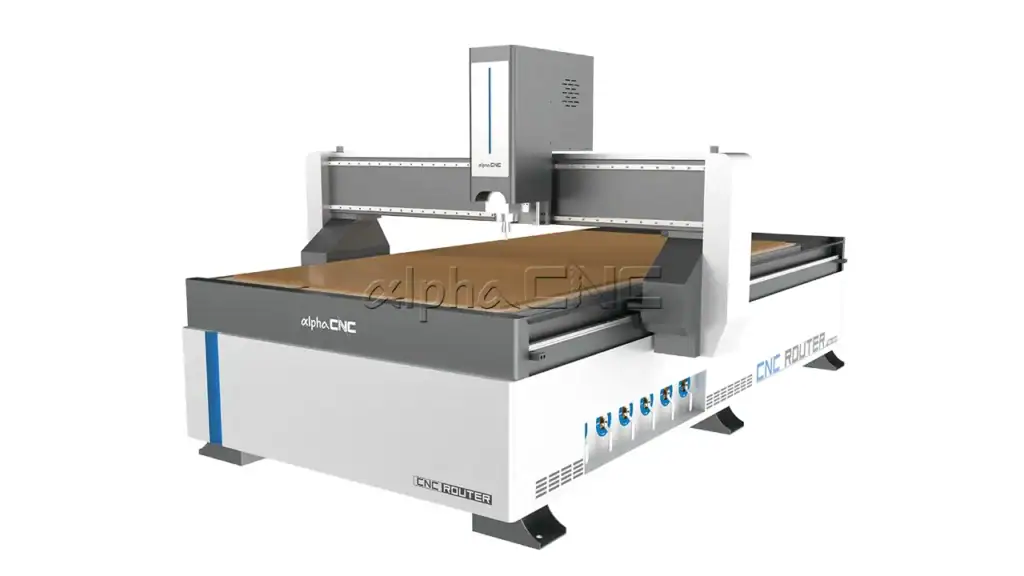
This standard 3-axis model travels along X, Y and Z axes. It comes with a 4×8 worktable and handles most regular woodworking jobs: cutting, grooving, carving and contour work. It’s our flexible base model.
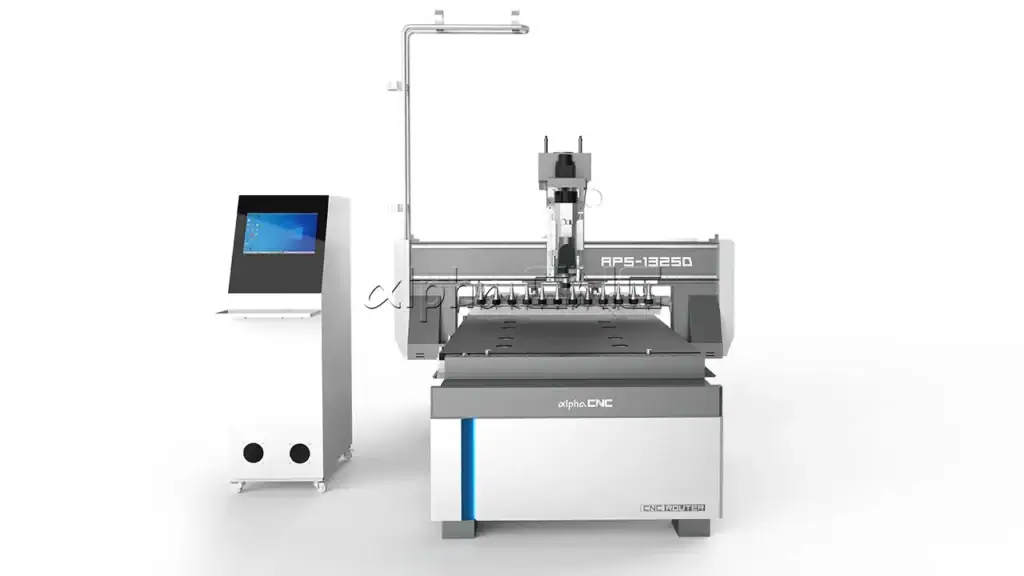
The best 4×8 ATC CNC router is equipped with a three-axis motion system and an automatic tool changing system. The machine can change tools automatically according to the set processing program.
The tool magazine has multiple tools, usually 8-16 tools. After one sheet is clamped, the 4×8 CNC woodworking machine can continuously perform different processes that require different tools, such as grooving, cutting, and relief carving, without stopping the machine to change tools manually.
The ATC automatic tool changing system has two types: carousel tool changing and linear tool changing.
Linear tool changing arranges tools in a straight line and is divided into rear linear tool changing and moving linear tool changing.
Carousel tool changing uses a circular tool disc, with tools arranged around the disc. Tool changing is completed by rotating the disc to the tool position.
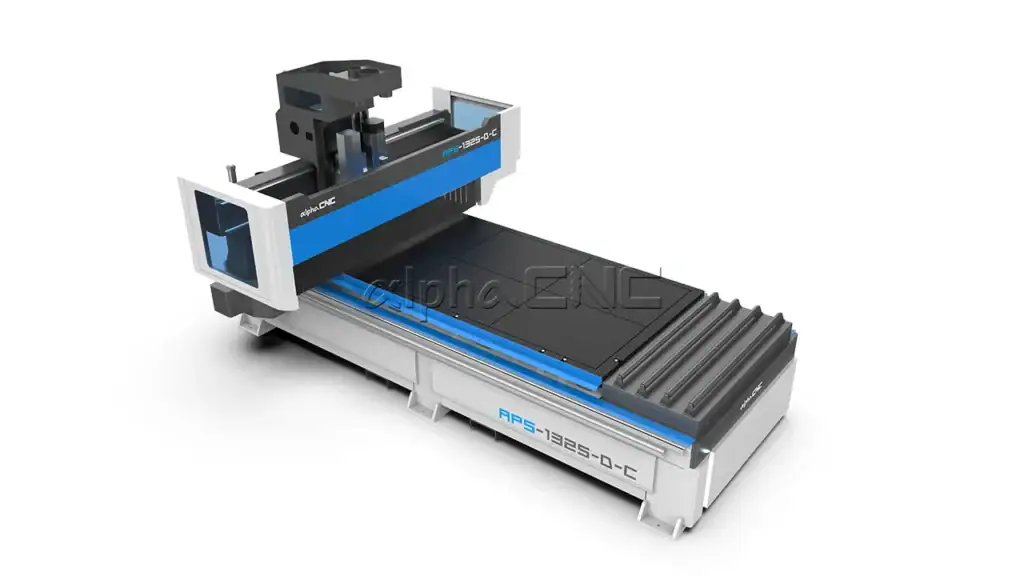
This 4×8 CNC router comes with a drill bank fitted onto the standard table. The drill bank holds multiple bits of different sizes set in a fixed pattern.
It can run on its own or work alongside the main spindle. Once a panel is clamped in one position, it drills many holes in a single setup.
The drill bank has its own control channel. Program commands handle its up/down movement and on-off operation. It works as a separate processing unit from the routing spindle.
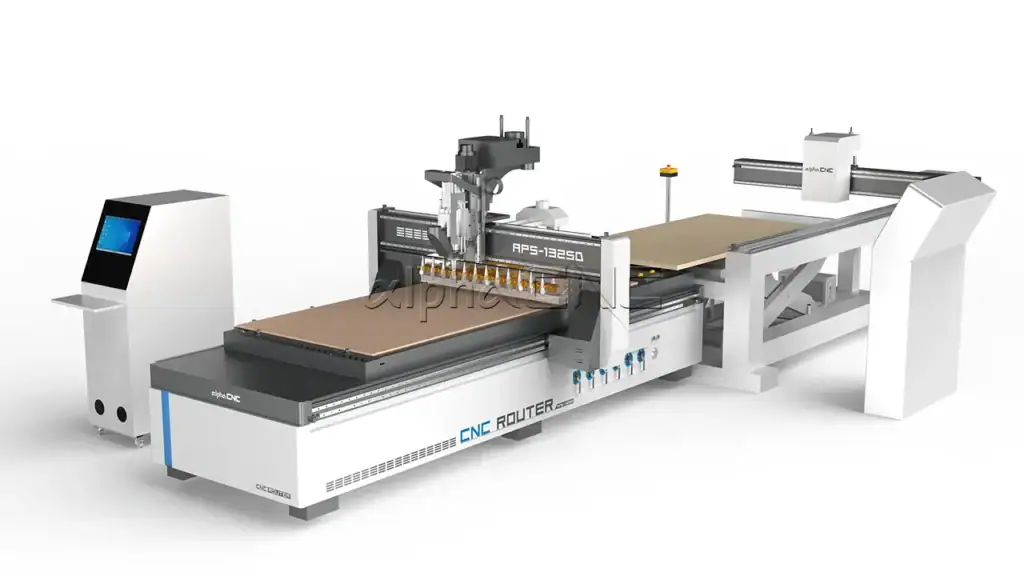
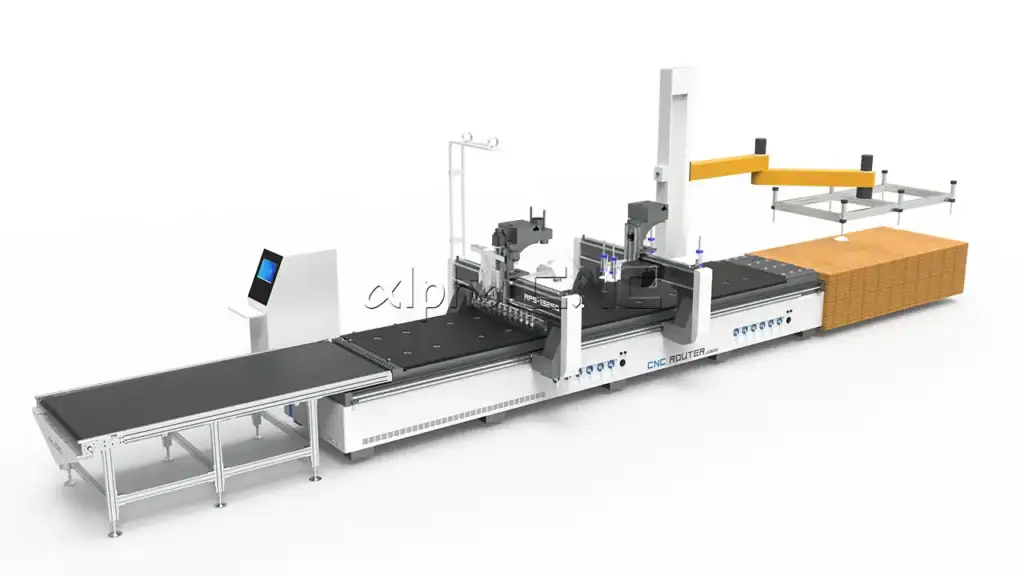
This 4×8 CNC router features independent sheet handling on the 4×8 ft 3-axis frame.
Its load-unloading system connects directly to the machine control, with all movements managed by your program.
The spindle handles cutting, milling, and grooving work. Loading, machining, and unloading can cycle automatically as programmed.
| Model | Main Configuration | Main Functions | Applications |
| Standard 3 Axis CNC Router | 3 axis structure, standard spindle | Cutting, grooving, carving | Basic sheet processing, simple furniture production |
| ATC CNC Router | Automatic tool changing system | Automatic tool changing, reducing manual tool changes | Multi-process machining, batch furniture production |
| CNC Router With a Drilling Bank | Spindle, drilling bank | Milling and multi-hole drilling | Cabinet panels, connection holes and hinge hole processing |
| 4×8 CNC Router With a Loading and Unloading System | 4×8 ft worktable, automatic loading and unloading system | Automatic loading, processing, unloading | Batch production of panel furniture, reducing manual handling |
In addition, the 4×8 CNC Router can be customized according to the actual processing needs of the workpieces.
Optional features include a fourth rotary axis, a dust collection system, and a labeling module. The fourth rotary axis is used for processing rotary workpieces, the dust collection system collects wood chips and dust during processing, and the labeling module can apply labels to panels. Heavy-duty 4×8 CNC routers can be fitted with these additional components according to the machine structure, space layout, and existing configuration.
3. See 4×8 CNC Routers in Action
This 1325 (4×8 ft) ATC CNC Router integrates gantry suction cup loading, automatic labeling, and saw cutting functions. It is designed for panel furniture production, helping automate material handling and combine multiple processing steps into one workflow.
4. Key Features to Consider When Choosing the Best 4×8 CNC Router
How to choose the best 4×8 CNC router for your processing needs? Besides the price, you should also pay attention to the machine’s configuration and specifications.
- Processing Area and Z-Axis Clearance
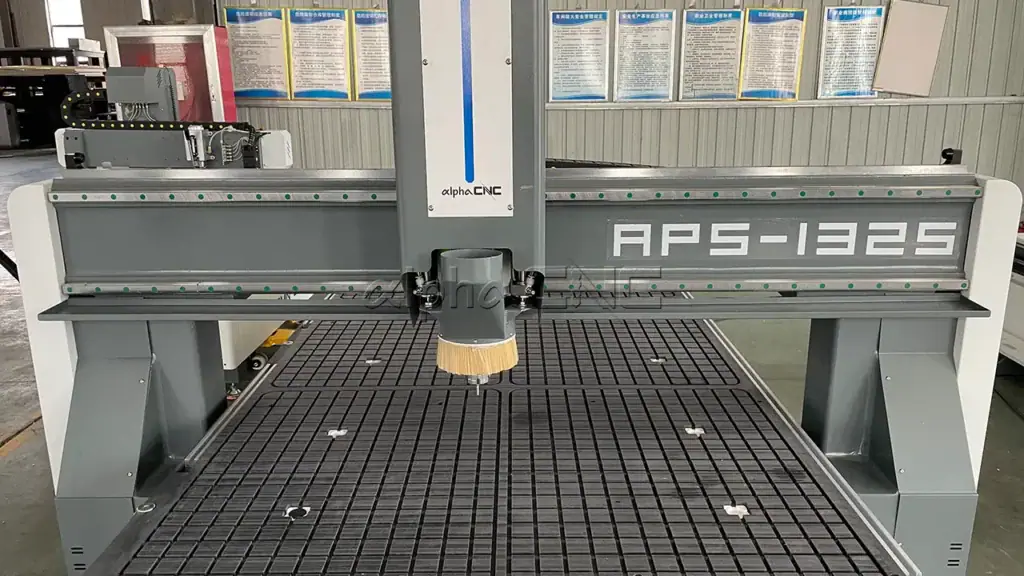
The 4×8 ft model is usually marked as 1219×2438 mm, but the actual X/Y travel and usable processing area vary between manufacturers and models. Before placing an order, ask the manufacturer for the actual X, Y, and Z travel to avoid buying a machine that cannot fit your materials.
If you often process full sheets, make sure the machine can fit the panels, including the space needed for the fixtures. If the workpieces are thick, pay attention to the Z-axis clearance and leave enough space for the tool length, including the part of the tool that extends out of the tool holder.
- Spindle Power and Speed
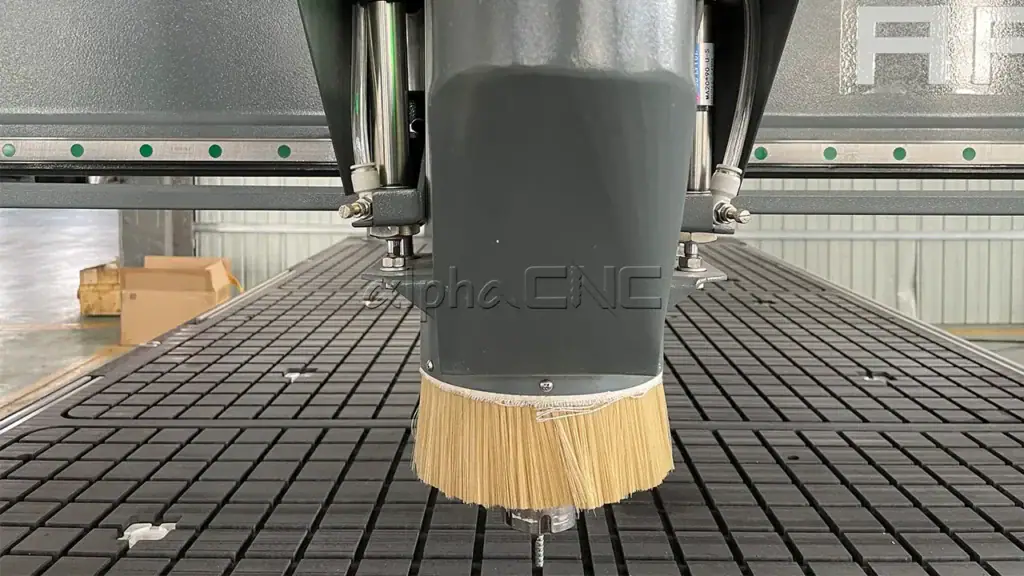
Spindle power affects the 4×8 machine’s cutting ability, cutting depth, the processing load it can handle, and processing stability.
Spindle speed affects cutting speed and surface finish. Spindle power and speed affect the processing ability of the CNC Router and the results of material processing.
When choosing, you need to consider the processing material, cutting depth, tool size, and processing requirements, rather than simply looking for higher power.
When purchasing, you should also confirm the spindle power, speed range, and cooling method (air-cooled or water-cooled) to make sure the 4×8 CNC machine configuration meets the end customer’s production needs and to reduce configuration errors during the purchasing process.
- Automatic Tool Change System
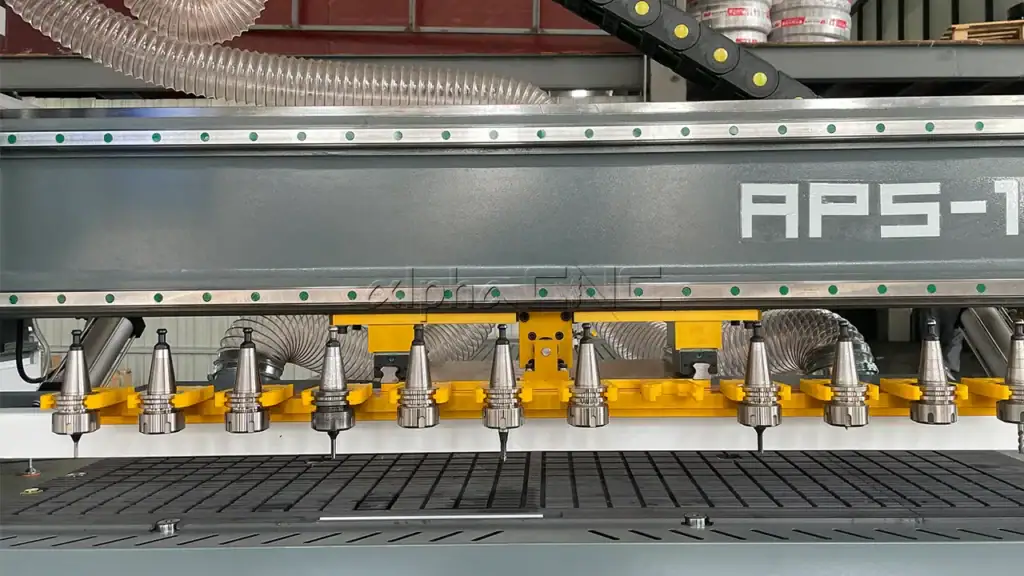
Don’t shop for an ATC router based only on how many slots the tool carousel has. Pick the magazine size to match the tools your cutting sequence actually requires, so you don’t end up with too few slots or pay for extra slots you won’t use.
Your spindle has to work with the collets, tool sizes and the ATC unit you choose. Check the real tool change time. Faster tool changes don’t automatically mean faster production, you have to look at the whole job cycle.
- Drive System and Structural Design
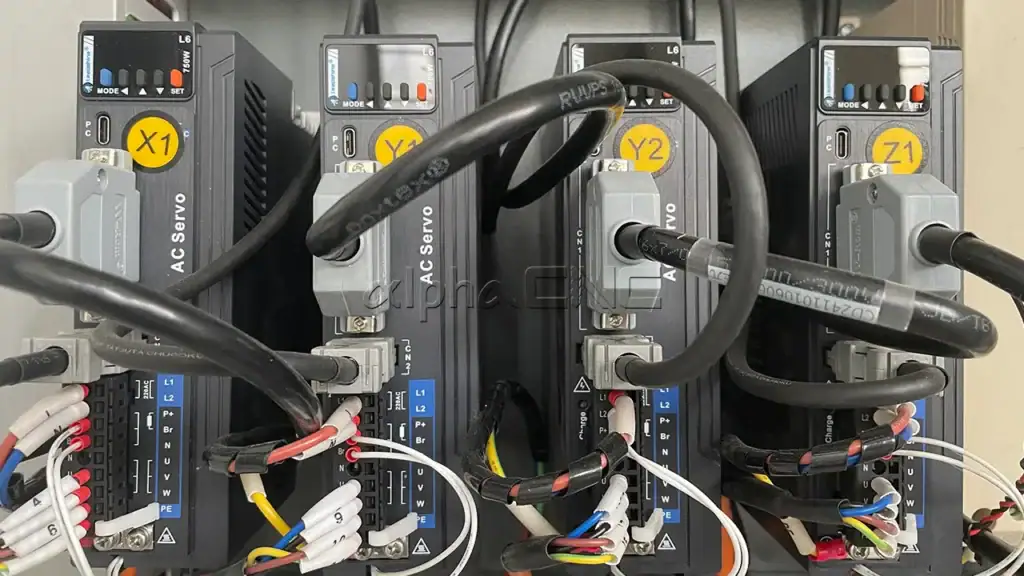
Drive system, linear rails, transmission components and machine frame together decide how steadily the best 4×8 CNC machine moves and cuts. Linear rail brands such as Hiwin, along with a helical rack and pinion drive, can contribute to smooth and stable motion.
When comparing stepper and servo drives, match them against your required motion performance, workload and control setup.
For heavy or high-precision production jobs, ask your supplier for positioning accuracy and repeatability data, frame construction details and their quality control steps. You can also request cut samples or application videos of similar work before buying.
- Vacuum Table
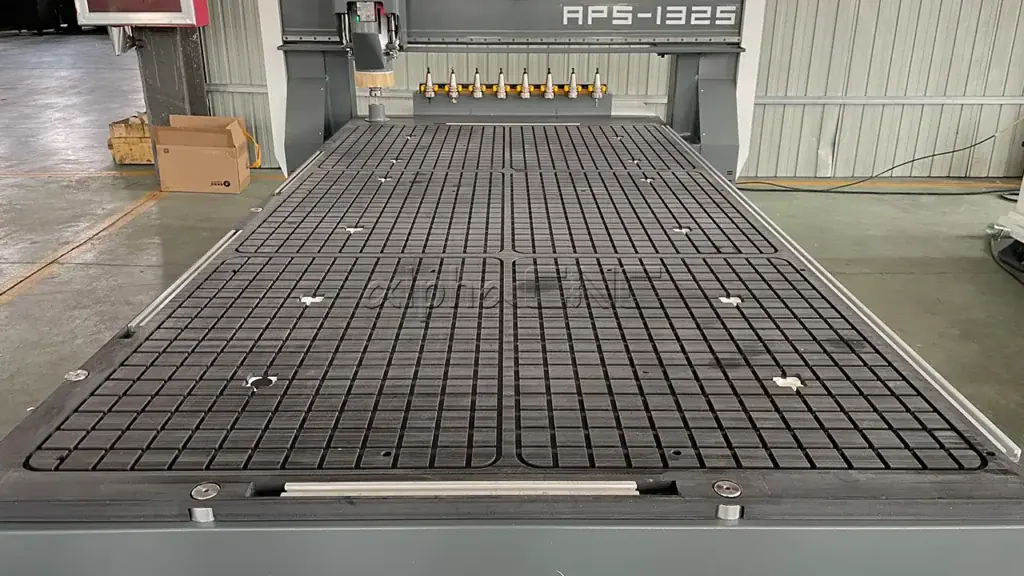
Vacuum tables are a good fit for sheet materials like MDF and plywood. With a 6-zone or 8-zone table, you can activate only the zones that match the size of the panel you are working on.
When choosing a vacuum pump, factor in how porous your material is, the working area, the holding force you need, and the build of the vacuum table itself.
If your workpiece includes small cutouts, narrow strips, or irregular workpieces, a table built with both vacuum zones and T-slots will give you more clamping flexibility.
- CNC System and Software Compatibility
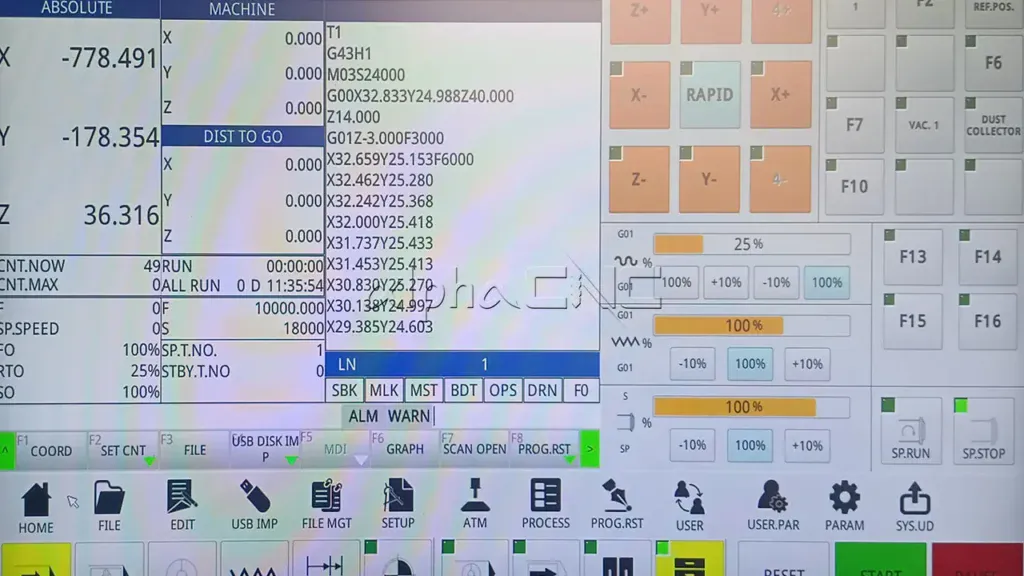
Don’t just focus on the controller brand. The system you need changes with your 4×8 CNC machine setup. Make sure the controller works with auto tool change, drill banks, saw cutting and multi-axis movement.
Also check if it can open files straight from your usual CAD/CAM program and match your toolpath format. This stops you running into import errors or constant file conversion work.
5. How to Choose the Best 4×8 CNC Router Manufacturer
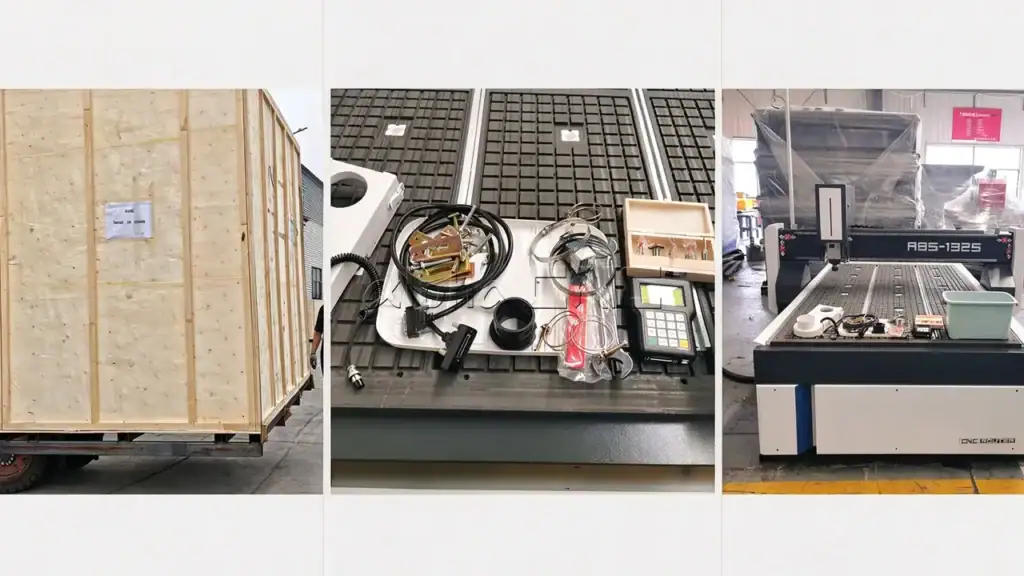
When you buy a 4×8 CNC router from a manufacturer in China, spec sheets alone won’t tell you everything. Picking the right CNC machine factory makes your decision a lot clearer. Their years of experience, available upgrade options, quality checks, shipment plans and aftersales service all matter for your final call.
- Manufacturing Capability
Check whether the supplier produces the machines themselves or mainly resells machines from other factories.
You can ask the supplier for a live video factory inspection or visit the factory in person. Manufacturers with their own production capability may be more flexible in machine configuration, component selection, and technical communication. Also, check whether accuracy, spindle operation, and all functions are tested before delivery to reduce the risk of machine failures.
- Compare the Full Configuration
Two 4×8 CNC Routers from different suppliers with the same marked specifications may have similar working sizes, but their components and capabilities may be very different.
Ask for a detailed quotation covering the spindle, controller, drive system, tool changer, drill bank if needed, workpiece clamping system, dust collection configuration, and included accessories.
For bulk orders, make sure the approved specifications remain the same across all machines supplied.
- Export and Delivery Arrangements
Before purchasing, confirm whether the CNC router manufacturer can provide the required export customs clearance documents, and clarify the production time, shipping time, packaging method, and shipping arrangements.
At the same time, check the costs and responsibilities under trade terms such as FOB, CIF, or DDP, and whether the machine meets the certification and electrical standards of the destination country to avoid extra costs or delivery problems later.
- After-Sales Support
Buying the 4×8 machine does not mean everything is finished. The supplier’s after-sales service is also important. Different suppliers offer different warranty periods. Also, confirm whether the supplier provides spare parts and troubleshooting to avoid problems after production starts that may cause factory downtime and losses.
You should also find out the response time for technical support and how problems are handled when a machine breaks down. These will all affect the later production stage.
6. Frequently Asked Questions about Best 4×8 CNC Router

What Is a 4×8 CNC Router?
A 4×8 CNC Router is a computer-controlled processing machine designed with a nominal working area of 4×8 ft. It is usually used for cutting, grooving, carving, and profile processing of panels, such as MDF, plywood, and other suitable panels.
How Much Does a 4×8 CNC Router Cost?
The 4×8 CNC Router price typically ranges from $2,500 to $12,000, from standard models to models equipped with an automatic tool change system.
The exact 4×8 CNC machine price depends on the machine frame, spindle specifications, drive system, controller, workpiece clamping system, and optional automation configurations.
The machine cost is not just the machine price itself. Shipping, installation, tariffs, and other import-related costs may also affect the total budget.
Ask for a detailed quotation based on the configuration you need, rather than simply comparing machine prices without checking what is included.
Is a 4×8 CNC Router Suitable for Cabinet Making?
Yes. While designed for standard 4×8 ft (1220×2440 mm) sheets, industrial 4×8 CNC machines typically feature an actual working travel of 1300×2500 mm (standard 1325 CNC Router). It works well with standard cabinet panels including MDF, particleboard, plywood and acrylic.
You can cut cabinet components, engrave decorative panels, and run sign work on it.
If you make cabinets in batches, pick a version with auto tool change and drill bank. It saves time spent swapping tools and re-clamping material.
Should You Choose a Standard CNC Router or an ATC Model?
If the jobs are relatively simple or the number of tool changes needed during production is limited, a standard 4×8 CNC Router may be enough. When a program needs several tools and manual tool changes interrupt production, an ATC CNC Router is worth considering.
Compare the extra investment with the time and labor used in your actual production process.
Can You Buy a Customized 4×8 CNC Router Directly From a Manufacturer in China?
Yes. Many Chinese CNC Router manufacturers offer factory-direct sales and configuration options. The configuration is flexible, and you can choose electrical requirements, an automatic tool change system, a drill bank, a vacuum table, and other options.
Communicating directly with the manufacturer about the configuration and budget can reduce unnecessary configuration costs. You can directly confirm the technical specifications, customization requirements, delivery arrangements, and after-sales service, reducing the need for communication through intermediaries.
Final Thoughts

The best 4×8 CNC router needs to match your processing materials, production needs, and budget, rather than just looking at the machine specifications.
With over 10 years of industry experience, Alpha CNC offers the best 4×8 CNC router options with customized configurations to meet different woodworking needs.
Browse our 4x8 CNC Router product page to learn about different models. Tell us about your processing materials, processing requirements, and expected production volume. Get a customized tooling layout and detailed factory quote.


